World War IIThe global conflict of 1939—1945: six years, ~70 million dead, the dawn of the nuclear age, the end of European colonial empires.
The French RevolutionThe event that destroyed the old regime in Europe: 1789—1799 — the Bastille, the Declaration of the Rights of Man, the king's execution, the guillotine, and the rise of Napoleon.
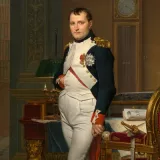
The Napoleonic WarsThe fifteen years that redrew Europe: 1799—1815 — Marengo, Austerlitz, the Civil Code, Borodino, Leipzig, Waterloo, Saint Helena.
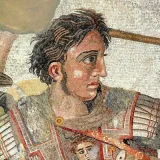
Alexander the GreatThirteen years that changed the world: 336—323 BC — the Granicus, Issus, Gaugamela, Tyre, Alexandria, the Hydaspes, death at Babylon at age 32.
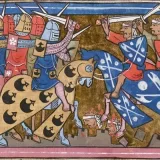
The CrusadesTwo hundred years of religious war between West and East: 1095—1291 — Clermont, Antioch, Jerusalem, Hattin, Saladin and Richard, the sack of Constantinople, the fall of Acre.
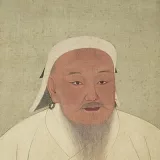
Genghis Khan and the Mongol EmpireThe largest contiguous empire in history: 1206—1260 — from Temüjin's unification of the steppe to the Kalka, Kyiv, Baghdad and Ain Jalut.
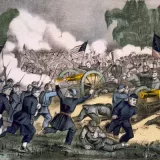
The American Civil WarThe war that ended slavery: 1861—1865 — Sumter, Antietam, the Emancipation Proclamation, Gettysburg, Appomattox, Lincoln's assassination.
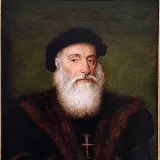
The Age of DiscoveryThe era that made the world global: 1419—1543 — Sagres, the Cape of Good Hope, Columbus, Vasco da Gama, Magellan, the conquest of the Aztecs and Incas.
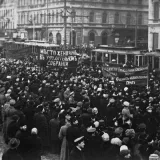
The Russian Revolution and Civil War1917—1922: the February and October revolutions, Brest-Litovsk, the Red Terror, the Ukrainian People's Republic and Makhno, Kronstadt, the founding of the USSR.
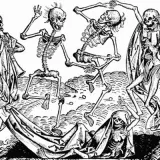
The Black Death1346—1353: the Black Death from the Mongol steppes through Caffa to Europe; 30—50% of the population dead, the end of serfdom, Tyler's revolt, the first quarantines.