In just about five years — between the bread riots in Petrograd in February 1917 and the proclamation of the Union of Soviet Socialist Republics in December 1922 — the territory of the former Russian Empire was engulfed by the bloodiest political catastrophe in 20th-century Europe: the three-hundred-year-old Romanov dynasty perished, private ownership of land was abolished, the empire fell apart and was gathered up again under a new banner. In these years, by various estimates, about 10 million people died — from combat, famine, typhus and Red and White terror. The first communist regime in history was born, one which would last until 1991 and shape the fate of half the planet during the Cold War. This page is about exactly how it happened, and why what began as a democratic spring in 1917 turned into dictatorship, a war of all against all, and the destruction of an entire old world.
The eve: the late Romanov empire and the Great War
By 1914 the Russian Empire was the largest state in the world by area and one of the most backward in Europe by standard of living. On the throne sat Nicholas II (since 1894) — a soft, religious and politically helpless man, convinced of the divine origin of autocracy. Industry was growing rapidly, but 80% of the population were peasants, the majority living in poverty. The Revolution of 1905 had forced the tsar to grant the country a Duma, but all the real levers remained in the hands of the court, the bureaucracy and the police.
In the summer of 1914 Russia entered the First World War on the side of the Entente. By 1917 the army had lost more than 2 million dead, with another million in captivity. The home front was cracking: transport could not cope, in Petrograd there were shortages of bread, sugar and firewood. The empress Alexandra Feodorovna, German by origin, in effect ran the government in the absence of the tsar at the front; at the throne hovered the Siberian mystic Rasputin (murdered by aristocrats in December 1916). By the beginning of 1917 the capital was muttering: "It cannot go on like this."
Phases of the Russian Revolution
The story of the Russian Revolution breaks naturally into several acts. February 1917: a strike of women workers on International Women\'s Day grows into a mutiny of the garrison, Nicholas II abdicates the throne, a Provisional Government is formed and alongside it — the Petrograd Soviet (so-called dual power). Spring—summer: Lenin\'s return from Switzerland in the "sealed train," the April Theses, the July Days, the attempted coup by General Kornilov. October 1917: the Bolsheviks take the Winter Palace, issue the Decree on Peace and the Decree on Land. 1918: the obscene Treaty of Brest-Litovsk, the dispersal of the Constituent Assembly, the shooting of the Romanovs, the Red Terror. 1918—1920: Civil War — Kolchak in the east, Denikin in the south, Yudenich in the north, Wrangel in Crimea; at the same time — the Ukrainian struggle for independence (UNR, the Hetmanate, the Directory, Makhno), the Polish-Soviet war. 1921—1922: the Kronstadt rebellion, the Volga famine, the NEP, the Treaty of Riga, the formation of the USSR. The page closes with sections on the legacy of all this and an epilogue.
February 1917: the women\'s strike that brought down the empire
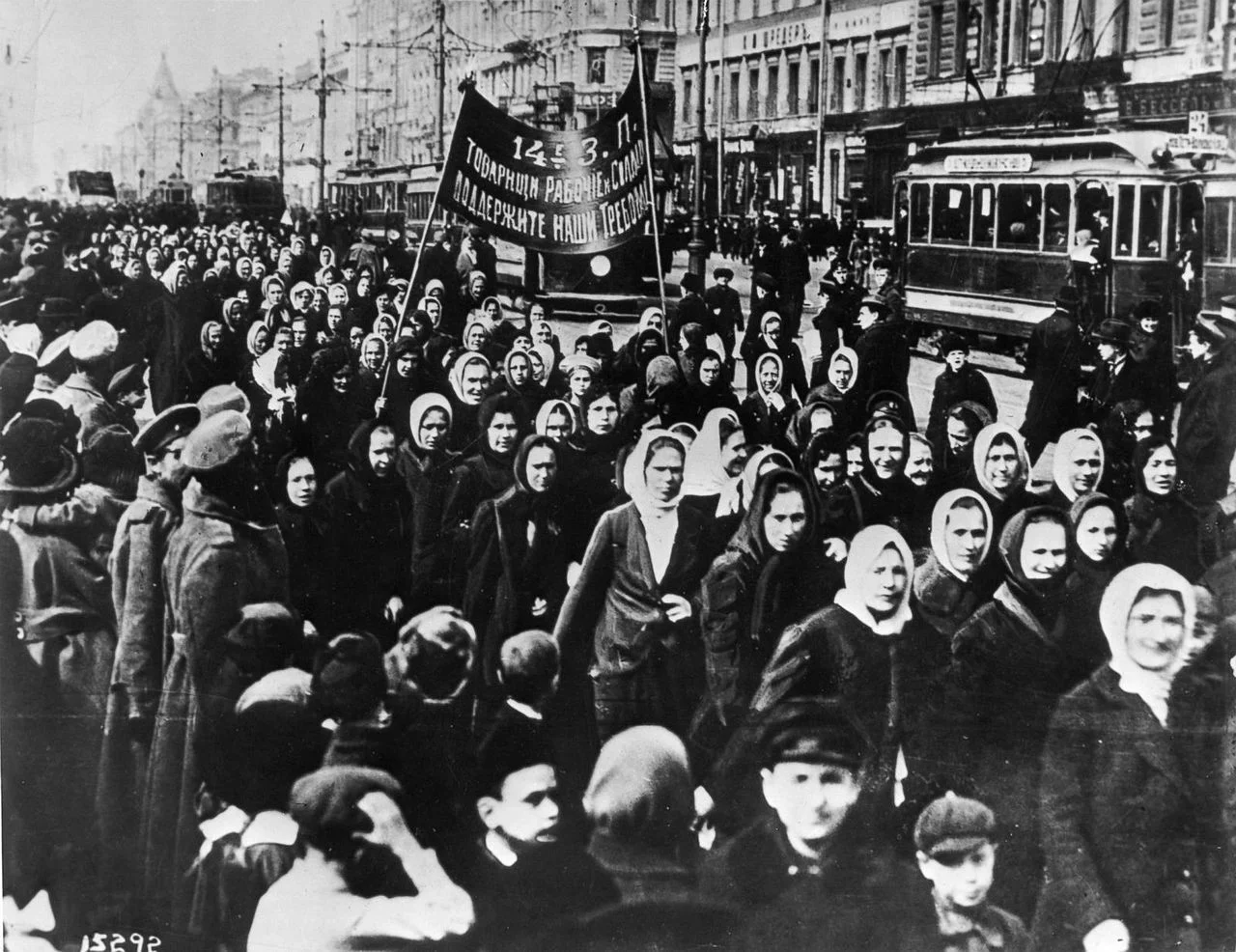
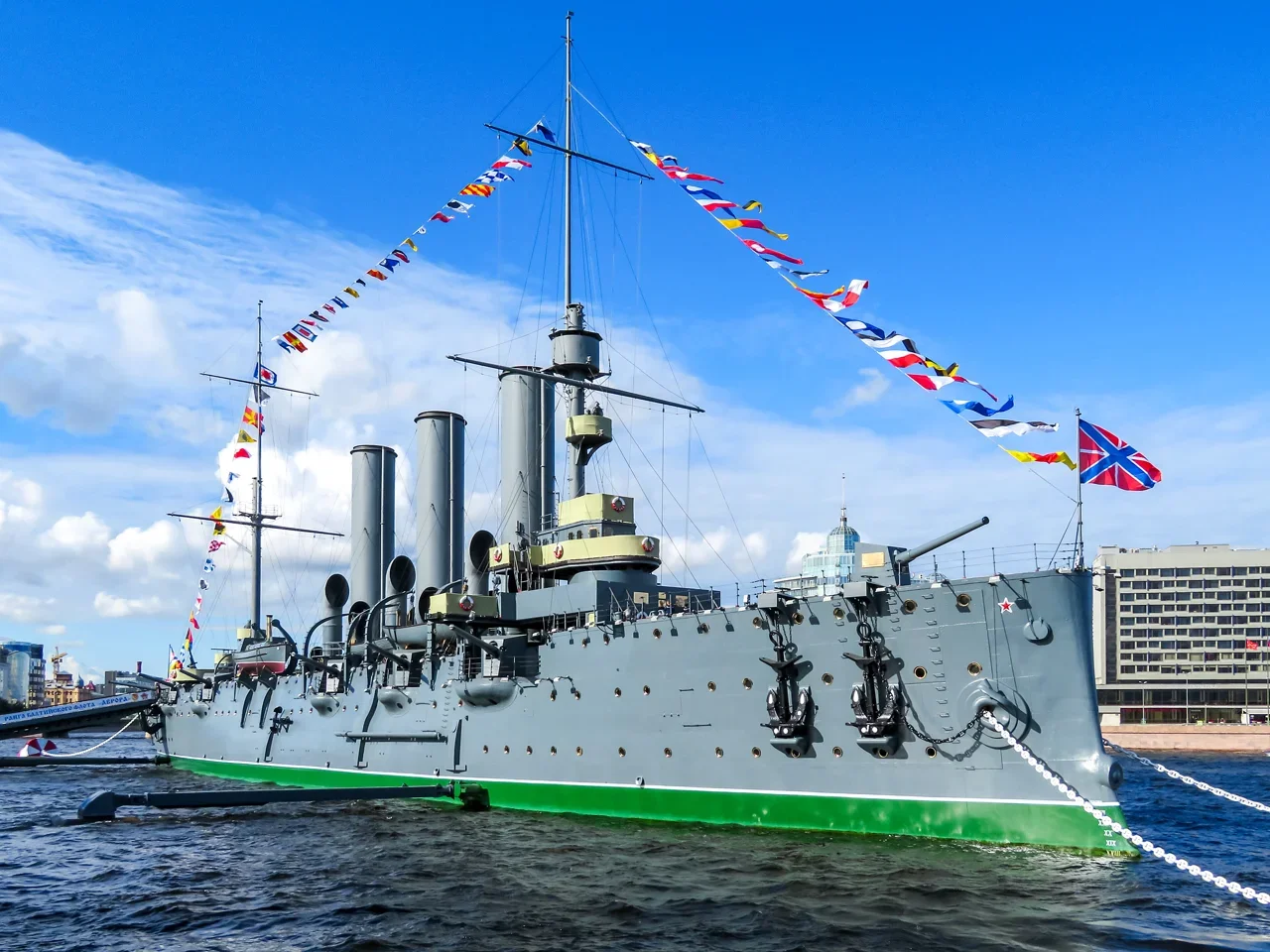
The Great Russian Revolution did not begin with a shot from the Aurora, nor with a decree by Lenin. It began with empty shelves in the bread shops of Petrograd — and with several thousand women workers walking out into the streets on International Women\'s Day, 23 February 1917 (8 March New Style).
From bread riot to the abdication of the tsar
On 23 February 1917 the women of the textile mills of the Vyborg district of Petrograd went on strike: officially for International Women\'s Day, in reality for bread and against the war. The workers of the Putilov plant joined them. Two days later all Petrograd was on strike — about 200,000 people. The tsar, who was at Stavka in Mogilev, ordered the commander of the garrison to "put down the disorders by force." On the evening of 26 February soldiers fired into the crowd; on the morning of 27 February those same soldiers went over to the side of the insurgents. That was the moment when everything was decided: the army was no longer obeying.
The Duma, having no right to sit, formed a Provisional Committee; at the same time, in the Tauride Palace, workers and soldiers formed the Petrograd Soviet of Workers\' and Soldiers\' Deputies. On 2 March 1917, in the carriage of his staff train at Pskov station, Nicholas II signed the act of abdication — first in favour of his son, then of his brother Michael. The next day Michael too refused. So in a few days and without a battle, the three-hundred-year-old Romanov dynasty came to an end.
The Provisional Government and dual power
After the abdication of Nicholas II a unique political situation arose in the country — dual power (Russian dvoyevlastiye). On one side stood the Provisional Government headed by Prince Lvov, mostly liberal-Kadet in composition, which officially took over the functions of the state and promised to convene a Constituent Assembly. On the other side stood the Petrograd Soviet, in which the SRs and Mensheviks held the majority, and which actually controlled the capital\'s garrison, the railways and the telegraph. The famous "Order No. 1" of the Soviet, issued as early as 1 March 1917, gave full power within military units to soldiers\' committees — in effect destroying military discipline in the Russian army in a single day.
The Provisional Government took on three fatal obligations: war to a victorious end on the side of the Entente, the postponement of land reform until the Constituent Assembly, and the preservation of a single indivisible Russia. Each of these obligations would in six months\' time turn into a knife in the back: the soldiers were tired of fighting, the peasants wanted land "now," and the national borderlands — from Finland to Ukraine — wanted to leave. To all these questions the Bolsheviks already had a simple and deadly answer: peace, bread, land.
The sealed train: Lenin returns
At the moment of the February Revolution the leader of the Bolsheviks, Vladimir Lenin, was sitting in Zurich, Switzerland, and learning about events from newspapers. He was 47 years old, had been living in emigration for 17 years and only a month earlier had been telling young people at lectures: "We, the old, may not live to see the decisive battles of this coming revolution." And now the revolution was on the doorstep — and he was thousands of kilometres away and could not get through war-torn Europe.
Here the German General Staff made a bet that would change the 20th century. Berlin calculated: if Lenin came back to Russia and pulled her out of the war, Germany would be able to move troops to the Western Front. In April 1917 the Germans let through their territory the "sealed train" with Lenin and 32 of his comrades — a train with diplomatic status which passengers had no right to enter. Through Sweden and Finland, on 3 (16) April 1917, Lenin arrived at the Finland Station in Petrograd — and right from an armoured car proclaimed his famous April Theses: no support for the Provisional Government, an immediate exit from the war, "all power to the Soviets."
Summer 1917: Kerensky, the July Days, Kornilov
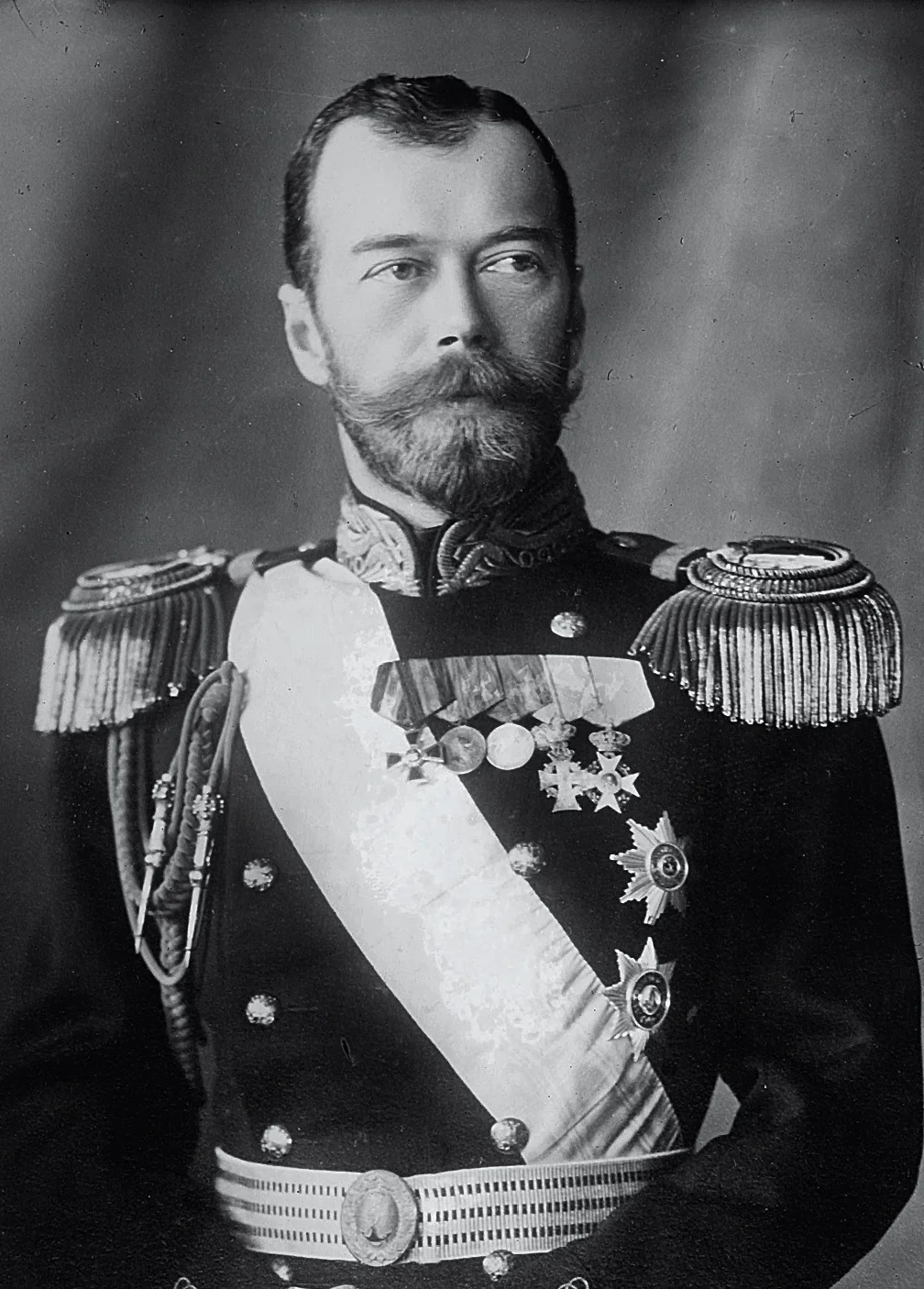
In July 1917 the Provisional Government was led by the SR Alexander Kerensky — a brilliant orator, striking in his army jacket and breeches, but a weak statesman. His one serious attempt to achieve something — the June Offensive on the Austrian front — ended in catastrophe: soldiers refused en masse to go into the attack. In response to this, in the July Days (3—7 July 1917) armed sailors and workers came out into the streets of Petrograd with the slogan "All power to the Soviets." The rising was suppressed; Lenin had to go into hiding at Razliv disguised as a hayworker, and the other Bolshevik leaders — Trotsky, Kamenev — were thrown into prison. It looked as if Bolshevism was finished.
A month later — in August 1917 — the commander-in-chief of the army, General Lavr Kornilov, marched troops on Petrograd, supposedly to "restore order." Kerensky himself first came to an arrangement with Kornilov, and then in panic declared him a mutineer and — the fatal mistake — turned for help to the Bolsheviks: he asked them to arm the workers so that they could defend the capital. Kornilov\'s troops were stopped (often without a single shot fired: the railwaymen simply refused to let the trains through), Kornilov himself was arrested. But the Bolshevik Red Guard received weapons, authority — and was not about to give them back.
October 1917: "The Winter Palace has been taken"
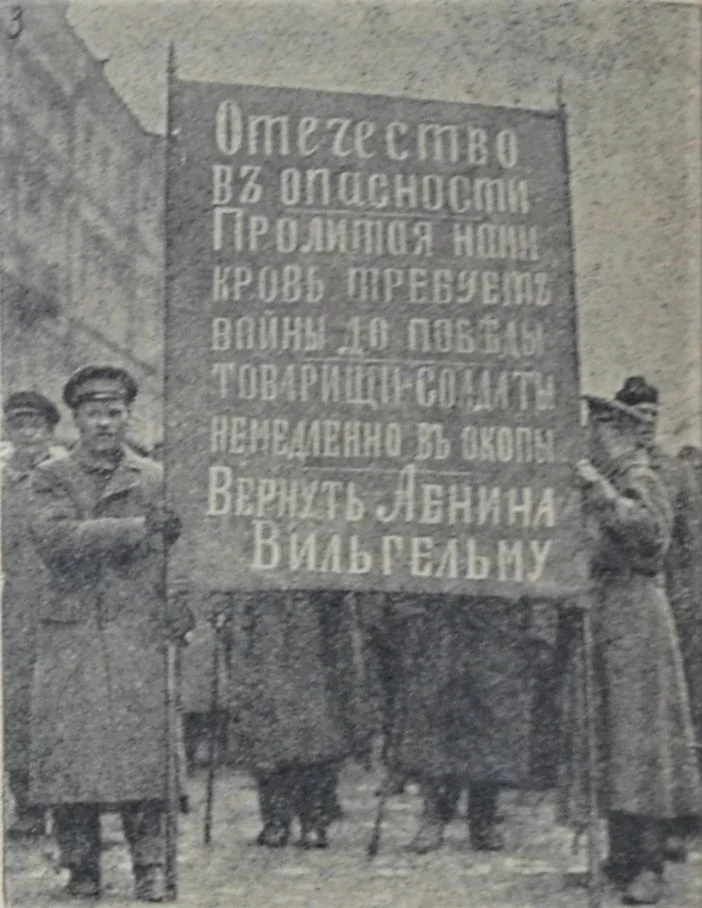
By the autumn of 1917 the Bolsheviks held the majority in the Petrograd and Moscow Soviets. Leon Trotsky, who had openly joined Lenin\'s party for the first time, headed the Military Revolutionary Committee of the Petrograd Soviet — and this committee was the body that actually planned the rising. On the night of 24—25 October (6—7 November New Style) 1917, units of the Red Guard, revolutionary sailors and soldiers occupied practically without a fight all the key points of the capital: the stations, the telegraph, the bridges, the banks. The Provisional Government was sitting in the Winter Palace, guarded by a handful of cadets and a women\'s volunteer battalion.
The famous "storming of the Winter Palace," which Sergei Eisenstein would later film so dramatically in 1928, was in fact a thoroughly unheroic event: a signal from the cruiser "Aurora" (a single blank shot), a few dozen dead on both sides, the Bolsheviks simply walked in through the side doors. Kerensky himself managed to escape from the palace in a car supposedly borrowed from the American embassy. On the night of 26 October the Second All-Russian Congress of Soviets proclaimed the Decree on Peace (immediate negotiations for a peace without annexations or indemnities) and the Decree on Land (abolition of landlord ownership, transfer of land to the peasants). The Bolsheviks had come to power.
Brest-Litovsk: "the obscene peace"
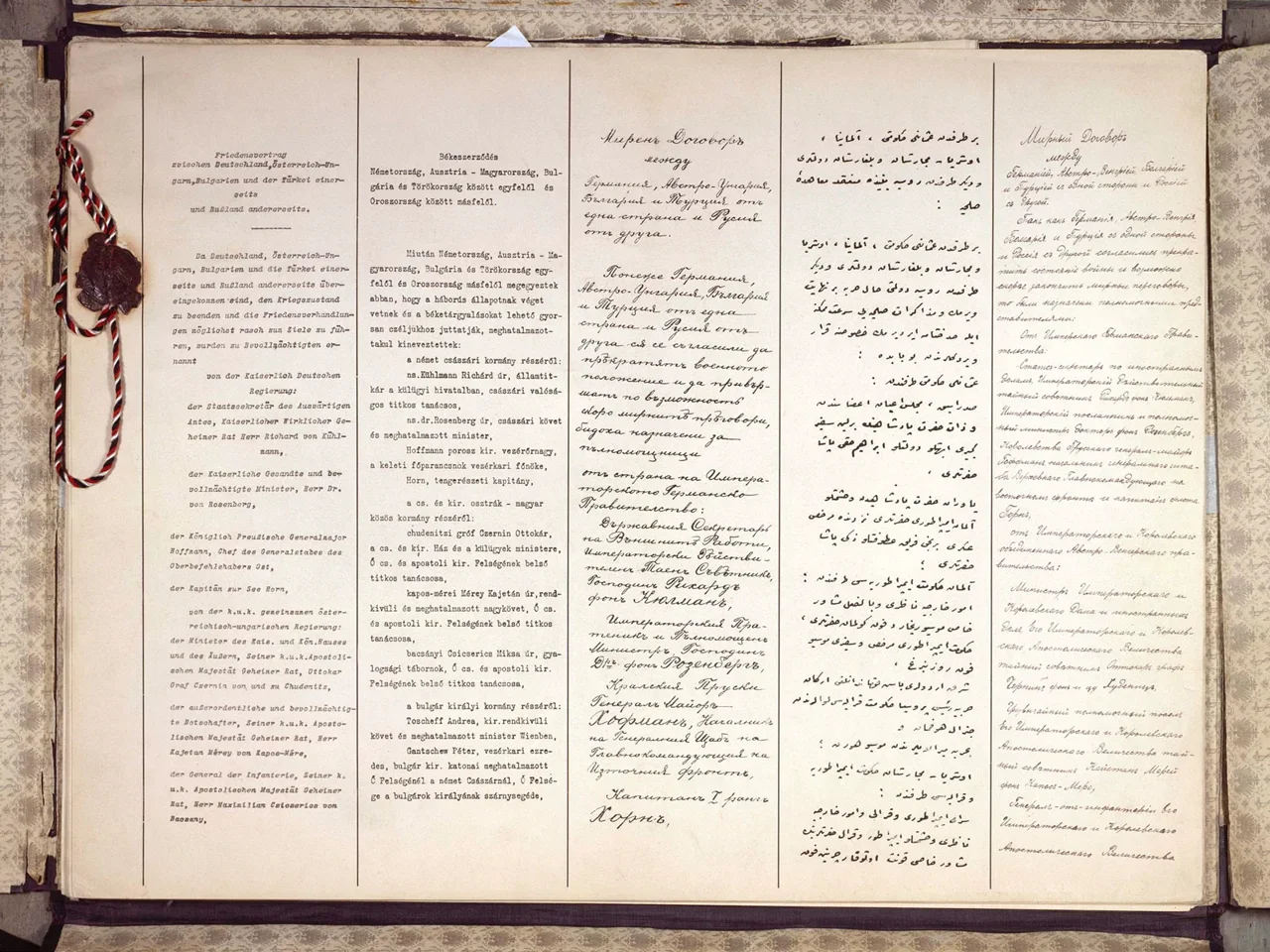
The Decree on Peace looked fine on paper, but the Entente did not respond: neither Britain, France nor the United States had any intention of stopping the war immediately. In December 1917 the Bolsheviks began separate negotiations with Germany and Austria-Hungary in the Polish town of Brest-Litovsk. Trotsky led the Soviet delegation; his famous formula ran: "Neither war nor peace, dissolve the army." The Germans took this formula literally and in February 1918 sent their troops deep into Russia, meeting practically no resistance.
Lenin had to accept the "obscene peace," as he himself called it. On 3 March 1918 a treaty was signed at Brest by which Soviet Russia lost Ukraine, Belarus, the Baltic, part of the Caucasus and Poland — about 1 million square kilometres of territory, on which lived 34% of the population of the former empire, worked 54% of the industry and was mined 89% of the coal. Ukraine, by a separate agreement with Berlin, also gave the Germans millions of tons of grain. This was the price Lenin paid to keep power. Eight months later, with the capitulation of Germany in November 1918, the Brest-Litovsk treaty would be annulled — but many of the lost lands would never come back.
The Constituent Assembly: "the guard is tired" (5 January 1918)
The Constituent Assembly — a parliament elected by universal, equal, direct and secret ballot — was to be the real democratic body of the new Russia. The elections took place in November 1917, after the Bolsheviks had already taken power. The result was crushing for them: the SRs received 40%, the Bolsheviks just 24%. Peasant Russia voted for those who had long promised it land — and that was not the Bolsheviks, who had merely stolen the slogan.
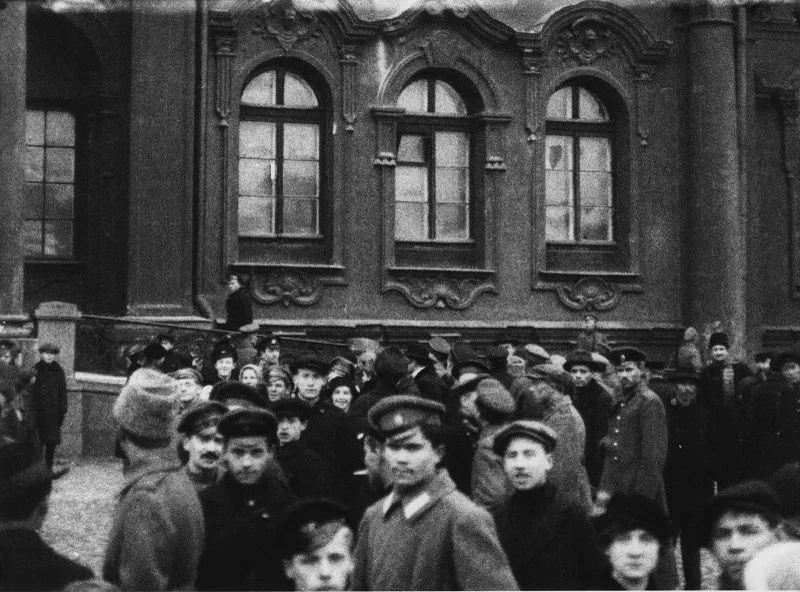
The Constituent Assembly met in the Tauride Palace on 5 (18) January 1918, lasted a single day and that same night. The Bolsheviks demanded that the parliament recognise their decrees; it refused. About four o\'clock in the morning of 6 January, the head of the palace guard, the anarchist sailor Anatoly Zheleznyakov, climbed the rostrum and uttered his famous line: "I request you to leave the hall immediately, because the guard is tired." This was the end of the first and only universally elected parliament in Russian history right up to the 1990s. The Bolsheviks dissolved the Constituent Assembly by decree — and from that moment on, SRs, Mensheviks and liberals became "counter-revolutionaries" in their eyes.
The Romanovs at Yekaterinburg: the night of 17 July 1918
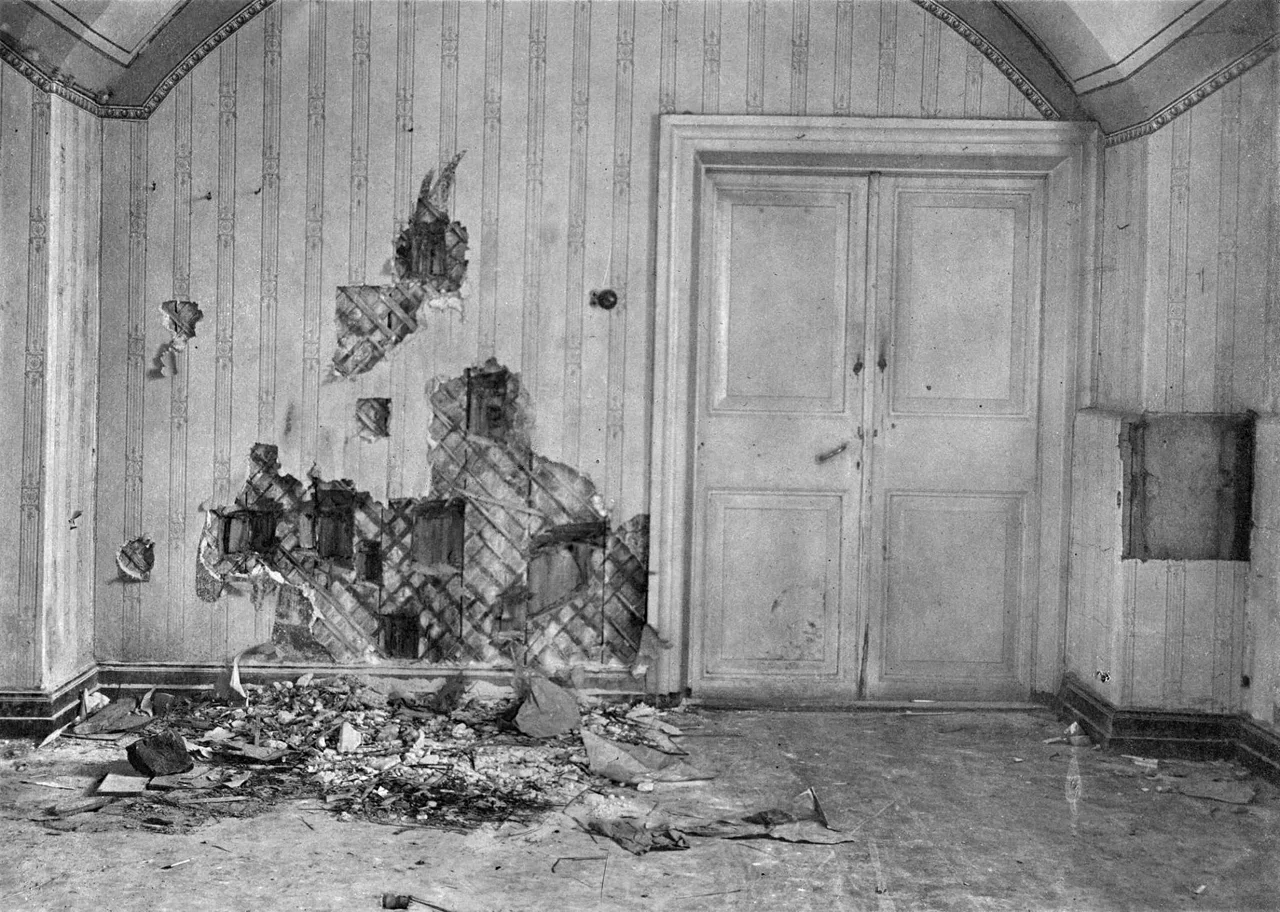
Nicholas II together with his family — his wife Alexandra, his daughters Olga, Tatiana, Maria, Anastasia and his haemophilic 13-year-old son, the tsarevich Alexei — were after the abdication first placed under house arrest at Tsarskoye Selo. In the summer of 1917 the Provisional Government sent them to Tobolsk in Siberia. After October the Bolsheviks moved the family further on — to Yekaterinburg, to the house of the engineer Ipatiev, which was at once renamed the "House of Special Purpose."
By the summer of 1918 the troops of Admiral Kolchak and the Czechoslovak Legion were approaching Yekaterinburg. The Bolsheviks feared that the tsar would be liberated and become a banner of the White movement. On the night of 16—17 July 1918 the commandant of the Ipatiev House, Yakov Yurovsky, woke the family, took them all down to the cellar "for evacuation" — and there shot them with a squad of Chekists. The tsar, the empress, the four daughters, the son, Dr. Botkin and three servants were killed. The bodies were burned and buried in the forest. Soviet power denied this for decades. The remains were not found until 1991; in 2000 the Russian Orthodox Church canonised the Romanovs as holy passion-bearers. Thus ended the three-hundred-year dynasty — in mud, in blood, without any official trial.
The Red Terror and the Cheka: Dzerzhinsky, Kaplan, terror as policy
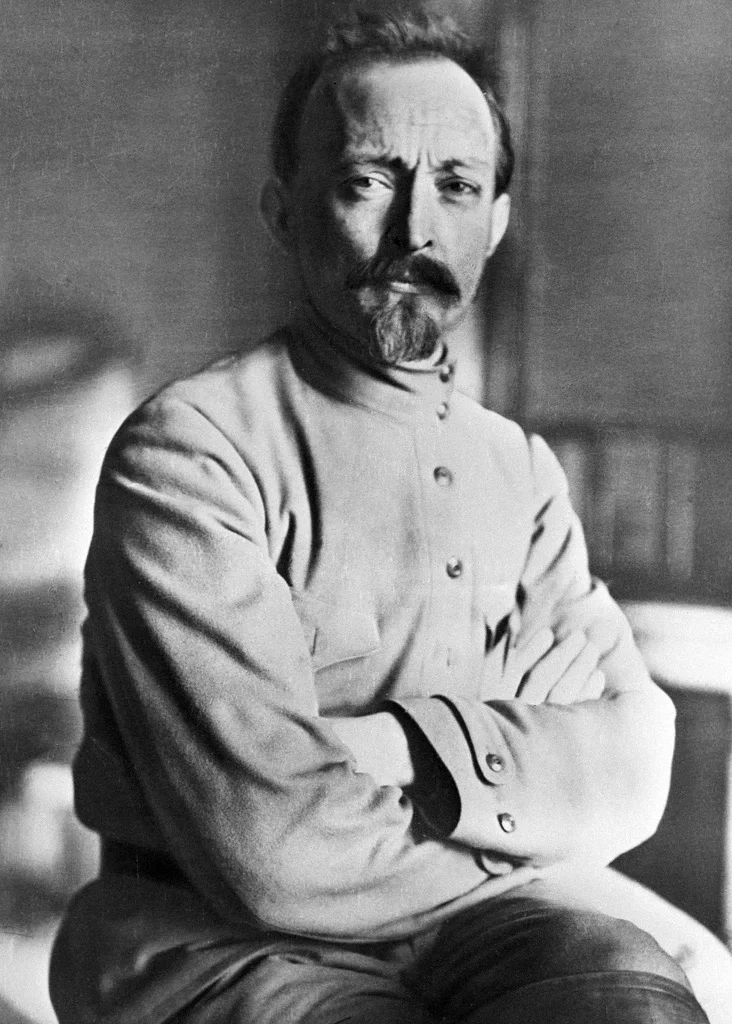
Already in December 1917 the Council of People\'s Commissars set up the All-Russian Extraordinary Commission for Combating Counter-Revolution and Sabotage — the famous Cheka. It was headed by "Iron Felix" — the Polish revolutionary Felix Dzerzhinsky. The Cheka was given the right, without trial or investigation, to arrest, interrogate and shoot "enemies of the revolution." Already in the spring of 1918 shootings became a matter of routine.
On 30 August 1918 in Moscow the SR Fanny Kaplan shot at Lenin near the Mikhelson factory; on the same day in Petrograd the head of the local Cheka, Moisei Uritsky, was murdered. In reply the Council of People\'s Commissars declared the Red Terror an official state policy. In September—October 1918 alone, by official figures, around 15,000 hostages were shot from among "the bourgeoisie, the clergy, former officers"; the real figure was probably much higher. The terror was not an excess — it was a system: the Bolshevik leaders said openly that the destruction of whole classes was a necessary condition for the building of a new society. This is what set the Red Terror apart from the White terror, which was largely spontaneous.
The Civil War: White armies on four fronts
From 1918 to 1920 the bloodiest war in Europe of the 20th century before the Second World War raged across the territories of the former Russian Empire. White armies attacked from four directions at once: Kolchak from the east, Denikin from the south, Yudenich from the north-west and finally Wrangel in Crimea. The Whites were also joined by interventionists: British, French, Americans, Japanese, Czechoslovaks. It would seem that the Bolsheviks had no chance at all. Yet they won — and below we shall see why.
Kolchak, Denikin, Yudenich, Wrangel
Admiral Alexander Kolchak, the celebrated polar explorer and former commander of the Black Sea Fleet, in the autumn of 1918 in Omsk declared himself "Supreme Ruler of Russia." His army controlled Siberia and the Urals; in the spring of 1919 he was advancing on the Volga. By the autumn of that same year the Red Army had crushed him; in January 1920 Kolchak himself was handed over to the Bolsheviks at Irkutsk — and shot without trial on 7 February.
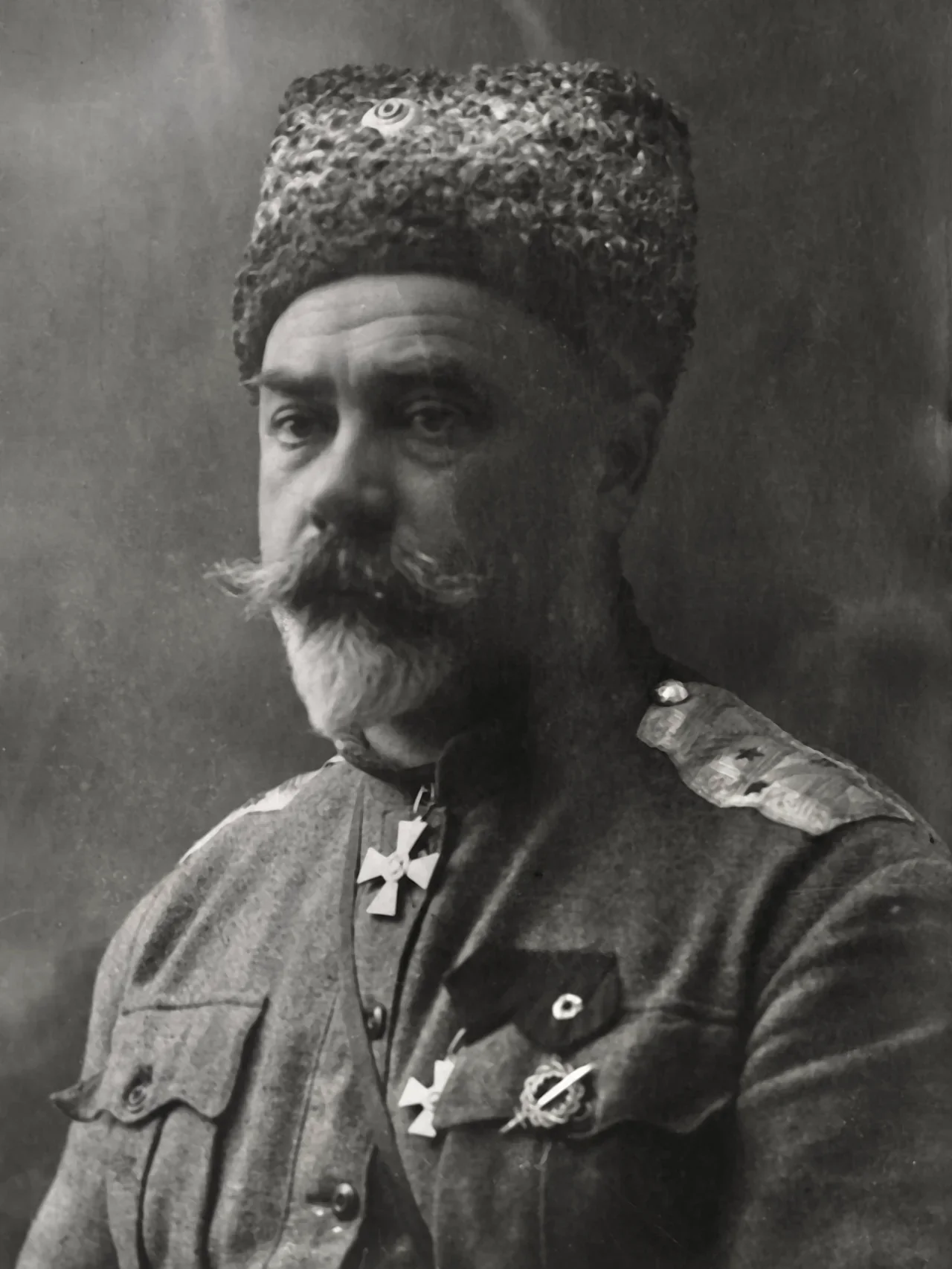
General Anton Denikin, commander of the Armed Forces of South Russia, in the autumn of 1919 marched from the Cossack steppes on Moscow. His vanguard reached Orel — 380 km from the capital. But there the spring snapped: overstretched communications, peasant uprisings in the rear, the blow of the Red cavalry of Budyonny. Denikin retreated to the Black Sea; in the spring of 1920 he handed over the command to Baron Pyotr Wrangel and went into emigration. General Nikolai Yudenich, based in Estonia, in the autumn of 1919 reached the very suburbs of Petrograd — but was stopped by the Red Army and broken. Wrangel retreated into Crimea, where he held out until November 1920 — about which more below.
Why the Whites lost: the fatal weakness
The White armies had better officers, better weapons (through the interventionists), and controlled the grain and coal regions. They should have won. Why then did they lose?
First — geographical dispersal: the four White fronts never coordinated with each other; the Bolsheviks held the centre and struck each front separately. Second — ideological confusion: Kolchak and Denikin were monarchists, but did not say so officially (because that would have alienated the republicans); the Kadets wanted a parliamentary Russia; the Cossacks wanted autonomy. Everyone quarrelled. Third and most important — refusal of land reform: the White generals promised the peasants that the land question would be settled "after victory," that is, with the participation of the landlords. The peasant understood perfectly what this meant: the return of the landlord, the return of the land. So the peasant went to fight for the Reds — not out of love for the Bolsheviks, but out of fear of the master\'s return. Fourth — nationalities policy: the slogan "one and indivisible Russia" meant that Belarus, Ukraine, Georgia, Poland in the event of a White victory would once again become provinces. So all the national borderlands supported, as best they could, the Reds — or at least neutrality. The Bolsheviks, by contrast, promised "the right of nations to self-determination" (later, of course, forgotten).
Trotsky\'s Red Army and War Communism
The creator of the Red Army was Leon Trotsky — People\'s Commissar for Military Affairs. He did two things which were heretical from an ideological standpoint, but life-saving from a military one. First: he introduced universal military conscription instead of a "volunteer workers\' militia" — and in two years created an army of 5 million men. Second: he brought in tens of thousands of former tsarist officers (so-called "military specialists") as staff officers and commanders, giving them "commissars" — political watchdogs. Without these officers the Red Army would have lost.
The economic policy was called "war communism." Its principal instrument was prodrazvyorstka — the forced requisition from the peasants of "surplus" grain for the army and the cities. In practice everything was taken, including the seed corn. In response, across all of Russia and Ukraine peasant uprisings broke out — the Antonov rising in Tambov, risings in Western Siberia and on the Middle Volga. By 1921 it had become clear: feeding the country by armed force was impossible. Famine and peasant resistance forced Lenin to proclaim the New Economic Policy (NEP).
The Ukrainian dimension: the Central Rada and the UNR
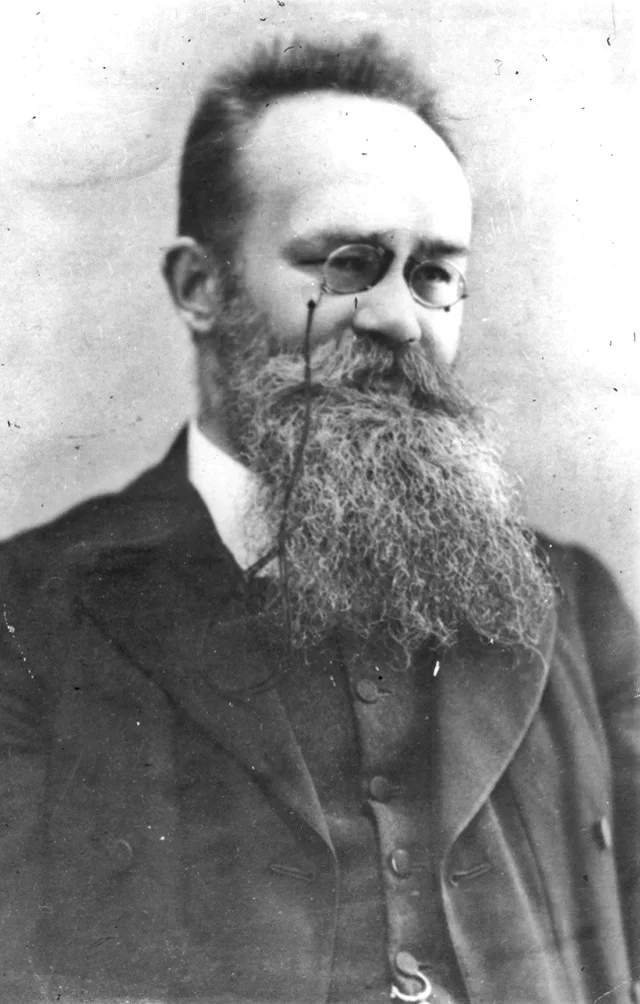
While power was being divided up in Petrograd, in Kyiv a completely different revolution was unfolding — a national one. As early as 4 (17) March 1917, in Kyiv the Ukrainian Central Rada was set up, led by the historian Mykhailo Hrushevsky. For the first time in two hundred and fifty years Ukraine was taking her own fate into her own hands.
Hrushevsky, the Universals and the proclamation of the UNR
The Central Rada proclaimed its programmatic documents in the form of Universals — an old Cossack form brought back to life. The First Universal (10 June 1917) proclaimed the autonomy of Ukraine within a democratic federative Russia. The Third Universal (7 November 1917, a week after the October coup in Petrograd) — the creation of the Ukrainian People\'s Republic (UNR) in federative connection with the Russian. And finally the Fourth Universal (9 (22) January 1918) — full independence for Ukraine.
Mykhailo Hrushevsky (1866—1934) — the greatest Ukrainian historian, author of the multi-volume History of Ukraine-Rus, chairman of the Central Rada. He was an academic intellectual, neither a soldier nor a dictator. That became one of the tragedies of the UNR: at the very moment when the young state needed to be defended by arms, in Kyiv sat professors arguing about a constitution. The government of the UNR was led by the Social Democrats Volodymyr Vynnychenko and Symon Petliura. The UNR had practically no army of its own — and when in January 1918 from Kharkiv the Red troops of Mikhail Muravyov set out for Kyiv, the capital had to be defended by hastily formed units of students and high-schoolers.
The Battle of Kruty (29 January 1918): a symbol
At the railway station of Kruty, 130 kilometres from Kyiv, on 29 January 1918, several hundred students of Kyiv University and Kyiv high-schoolers, united in a hastily formed Student Company, together with cadets of the First Military School, met the Bolshevik detachment of Muravyov. The forces were unequal: about 400 defenders against 4,000—5,000 Red Guards with cannon and armoured trains. The students fought for half a day and then retreated; several dozen fell into captivity and were shot by the Reds at Kruty.
Strategically the battle changed nothing — a week later Muravyov took Kyiv and organised in the city a bloody massacre of "counter-revolutionaries." But symbolically Kruty became for Ukraine what Thermopylae was for Greece: an image of the young, the unready, but ready to die for the homeland. In modern Ukraine 29 January is the Day of Remembrance of the Heroes of Kruty, a state holiday. The bodies of the executed students were later moved to Kyiv and buried at the Askold\'s Grave. Hrushevsky wrote about them: "We shall forget neither them nor this deed." They have not been forgotten.
The Hetmanate of Skoropadsky and the Directory
Under the Treaty of Brest-Litovsk the Germans entered Ukraine and drove out the Bolsheviks. But the socialist government of the Central Rada turned out to be too left-wing for the Germans — they were not getting the promised grain. On 29 April 1918 German bayonets put on the throne a former tsarist general, a descendant of Hetman Ivan Skoropadsky — Pavlo Skoropadsky, proclaimed "Hetman of all Ukraine." The Hetmanate was a conservative, right-liberal project: private ownership of land was restored, censorship was brought back, refugee Russian officers were taken into service. In Kyiv cultural life flourished — the Ukrainian Academy of Sciences (led by Vernadsky), universities and libraries opened.
But as soon as Germany capitulated in November 1918, Skoropadsky was left without bayonets — and within weeks he fell. He was replaced by the Directory — an insurgent government led by Vynnychenko and Petliura. The Directory restored the UNR, but was now fighting on four fronts at once: against the Bolsheviks, against Denikin\'s Whites, against the Poles in the west, against Makhno\'s men in the south. The UNR government moved from city to city (Kyiv, Vinnytsia, Kamianets-Podilskyi); it was ironically called the "government on wheels." In these years Ukraine became an arena of atrocities: Jewish pogroms were carried out by all warring sides except the Reds; everywhere there was looting, typhus, ruin. By various estimates between 100,000 and 250,000 Jews perished. This was the largest antisemitic genocide in Europe before the Holocaust.
Makhno and the free Ukraine of the anarchists
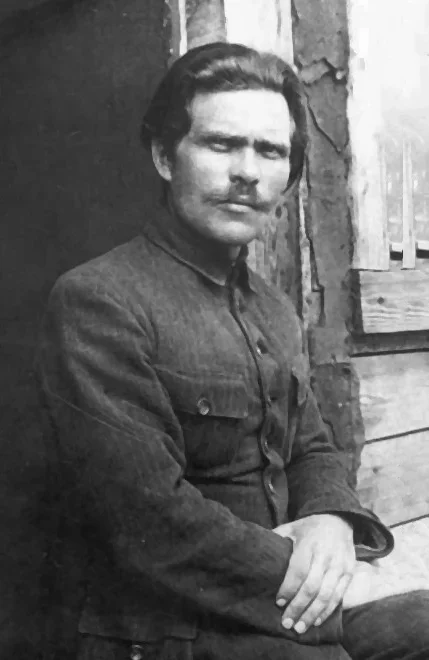
In the south of Ukraine — in the steppes of Yekaterinoslav province, around his native Hulyaipole — another wholly separate project was at work: Nestor Makhno (1888—1934) and his Revolutionary Insurgent Army of Ukraine, known as the Black Army. Makhno was a peasant anarchist — a disciple of Kropotkin; his project was called the "Free Territory" and had as its ideal a stateless federation of peasant communes, without government, without landlords and without Bolshevik commissars.
The Black Army reached 40,000—100,000 fighters at its peak. Makhno three times entered into alliance with the Reds against the Whites — and three times the Bolsheviks betrayed him as soon as the common enemy disappeared. The most resonant of the Makhnovist operations was the raid into Denikin\'s rear in the autumn of 1919, which broke the White advance on Moscow. Without this raid, the Red Army might well have lost the Civil War. After the defeat of Wrangel, Trotsky gave the order to "finally settle the Makhno question"; in 1921 the Black Army was crushed by the Red, Makhno himself with a few hundred fighters broke through to Romania and died in poverty in Paris in 1934. Anarchist Ukraine ceased to exist — but the memory of it lives on to this day.
The Polish-Soviet War: the "Miracle on the Vistula" (1920)
In April 1920 Józef Piłsudski, head of the resurrected Poland, concluded with Petliura the Treaty of Warsaw: a joint campaign on Kyiv against the Bolsheviks in exchange for Polish supremacy in Western Ukraine. In May Polish-Ukrainian troops entered Kyiv. But the fine banner did not last long: the Red Army under the young Mikhail Tukhachevsky moved in reply, and in two months drove the Poles back across all of Ukraine and Belarus, right up to Warsaw itself.
In August 1920 it seemed that the Red Army would take Warsaw and carry "the revolution on bayonets" further — to Berlin, to Paris. Tukhachevsky was already issuing orders for the storming of the Polish capital. But on 13—25 August 1920, in the battle near the Vistula (called in Poland "Cud nad Wisłą," the "Miracle on the Vistula"), Piłsudski with a brilliant flanking manoeuvre crushed the Red Army. Soviet losses — around 25,000 dead, 60,000 captured (most of whom perished in Polish camps). Under the Treaty of Riga in March 1921 Poland secured Western Ukraine and Western Belarus. Ukraine ended up divided in two — and so it would remain until 1939.
Wrangel\'s last stand: the evacuation of Crimea (November 1920)
The last organised force of the White movement in southern Russia was Baron Pyotr Wrangel — a man of outstanding administrative ability, who in Crimea tried to do what neither Kolchak nor Denikin had been able to: land reform. In the autumn of 1920, the Wrangel army, swollen to 40,000—50,000 men, advanced out of Crimea and even achieved some success in northern Taurida. But after the Treaty of Riga with Poland the Red Army transferred its best divisions — Budyonny\'s First Cavalry, the shock groups of Frunze — to the south.
In November 1920 the Red Army broke through the isthmus of Perekop and burst into Crimea. In Sevastopol and Yalta the last great evacuation of the White movement began: 126 ships, around 146,000 refugees — soldiers, officers, civilians, the wounded, women, children — were carried over to Constantinople. This was the end of the White movement in European Russia. Those who did not get away were dealt with: a special tribunal headed by the Hungarian Communist Béla Kun and the Latvian Rosalia Zemlyachka in December 1920 — January 1921 shot in Crimea, by various estimates, between 50,000 and 120,000 "former people" — officers, officials, doctors, nurses. This is one of the cruellest reprisals of the entire Civil War.
Kronstadt 1921: the sailors who rebelled against their own
The war was over, but the Soviet economy lay in ruins. Industrial output stood at 13% of the 1913 level; in the cities people were starving; in the villages there was nothing left to sow with. In March 1921 there occurred an event that was for Lenin a greater shock than all the White armies put together: the Kronstadt rebellion — at that same naval fortress whose sailors in 1917 had been the shock fist of the October coup.
The Kronstadt sailors put forward demands: real free elections to the Soviets, freedom of speech for the socialist parties, the abolition of prodrazvyorstka, the right of peasants to trade their produce. These were socialist demands, not counter-revolutionary; the slogan was: "Soviets without Bolsheviks!" The reaction was instant and merciless. The Red Army under Tukhachevsky stormed the fortress over the ice of the Gulf of Finland. The defenders fought back heroically, but by 18 March it was all over. Several thousand sailors escaped over the ice to Finland; several thousand were shot. Kronstadt became the tombstone of the illusion that the October Revolution still "belonged to the people." Now it belonged to the party alone.
The Volga famine: 5 million dead (1921—1922)
In 1921—1922 across vast territories of the Volga, the Southern Urals and parts of Ukraine, a famine broke out the like of which Europe had not seen since the Thirty Years\' War. The immediate cause was the drought of 1921, but the real one was several years of prodrazvyorstka, which had deprived the peasants not only of their reserves but of their seed corn. About 30 million people were starving; by various estimates about 5 million died. Numerous cases of cannibalism were recorded; whole villages died out.
The Soviet government, for the first time since 1917, was forced to ask for help from the "imperialist" West. The help came chiefly from the United States — from the American Relief Administration (ARA) headed by the future president Herbert Hoover. Over 1921—1923 the ARA fed about 10 million people in Soviet Russia; historians reckon that without this help several more million would have died. Soviet textbooks later mentioned the ARA only very sparingly. In 1923, when the famine was over and the ARA was winding up its work, its employees were accused of espionage and expelled from the country. Gratitude, as always, turned out to be bitter.
The NEP: Lenin\'s tactical retreat
At the Tenth Congress of the RCP(b) in March 1921 — in the very days that Kronstadt was being stormed — Lenin announced the New Economic Policy (NEP). This was an outright tactical retreat: prodrazvyorstka was abolished and replaced by a tax in kind (much smaller and fixed); peasants got back the right to trade freely with what was left of their produce; small private trade was legalised; foreigners were given the right to take industrial enterprises under concession. Large enterprises, banks and foreign trade remained with the state — these were the so-called "commanding heights of the economy."
The NEP worked. By 1925 agriculture had recovered to the 1913 level; the "NEP-men" appeared — private traders, restaurateurs, small manufacturers. In the cities shops, cafés and theatres with a varied repertoire opened again. The Bolsheviks regarded the NEP as a temporary retreat: "Seriously and for a long time," Lenin used to repeat, but no one inside the party believed it was forever. When in 1928—1929 Stalin would unanimously "wind up" the NEP and bring in collectivisation, it would be the bloody continuation of the same project that had been temporarily set aside in 1921.
The birth of the USSR: 30 December 1922
By the end of 1922 the Civil War had ended in favour of the Bolsheviks. Soviet power held Russia, Ukraine, Belarus and the Caucasus — formally as four separate Soviet republics, in reality as a single party organism through the RCP(b). The question of how to formally arrange this unity provoked a sharp inner-party dispute. Stalin, then the People\'s Commissar for Nationalities, proposed the "autonomisation plan": all the republics to enter the RSFSR as autonomies. Lenin, despite his illness, objected: all the republics must enter as equals in a new federation — the Union of Soviet Socialist Republics. This was Lenin\'s famous last battle — and, as it turned out, his last victory.
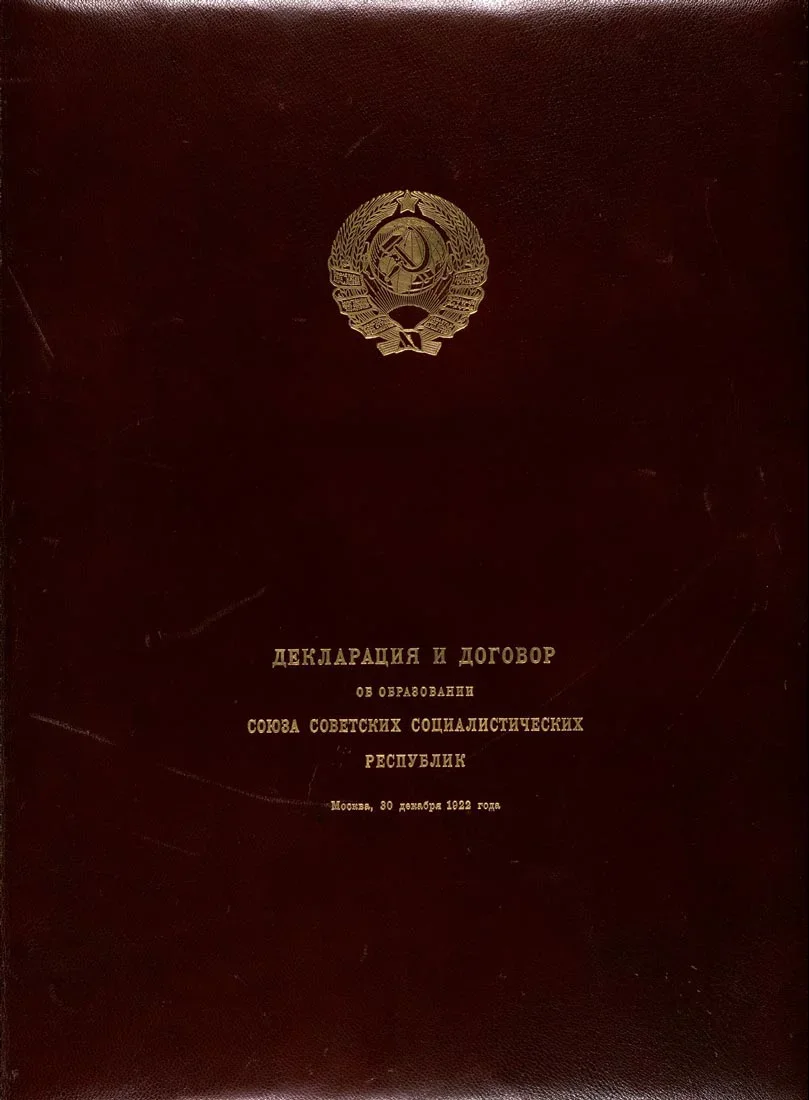
On 30 December 1922 at the Bolshoi Theatre in Moscow the First Congress of Soviets of the USSR was held, which solemnly proclaimed the Union of Soviet Socialist Republics. It included the RSFSR, the Ukrainian SSR, the Belarusian SSR and the Transcaucasian SFSR. The 1924 Constitution of the USSR formally gave each republic the right to free secession from the Union — a right of which over the following 69 years no republic took advantage, right up to 1991. A new political object had been finally marked on the map of the world, one that would exist until the very fall of the Soviet Union.
Legacy: the reckoning of five terrible years
Over five years of the Russian Revolution and Civil War, by various estimates, about 10 million people lost their lives — in combat (about 1.5 million), in the typhus and "Spanish flu" epidemics (about 5 million), in the famine of 1921—1922 (5 million), in the Red and White terror (hundreds of thousands). Another 2 million emigrated — among them most of the cultural, scientific and engineering elite of Russia. Bunin, Rachmaninoff, Sikorsky, Chagall, Zworykin, Nabokov — these are only the most famous names; the real list runs into the tens of thousands. The loss for the country was colossal and irreversible.
But the chief legacy was the birth of the first communist regime in history, which would become the model for analogous regimes in China, Vietnam, Cuba, Korea, Cambodia and the countries of Eastern Europe after 1945. The Bolsheviks invented and tried out in practice the tools that dozens of 20th-century governments would later use: the one-party system, the political police, the concentration camp, censorship, the planned economy, the cult of personality. The Soviet model of "revolution from above" — rapid industrialisation at the expense of the peasantry — would tempt many countries of the Third World. The Cold War of 1945—1991, with its 30 million victims, the nuclear arms race, the wars in Korea, Vietnam and Afghanistan — all of this is a consequence of those five years of 1917—1922.
Epilogue: why it still matters
The Soviet Union, proclaimed at the Bolshoi Theatre on 30 December 1922, lasted 69 years and broke up on 26 December 1991 — by precisely the same legal mechanism that Lenin had laid down in 1922: the republics made use of their right to secede. Onto the map of the world there returned 15 new (or, more accurately, forgotten old) states — among them an independent Ukraine, the final settling of the account with what had begun in 1917 in Kyiv with Hrushevsky and failed then through weakness and lack of time.
But the wounds of this epoch heal slowly. The current war of Russia against Ukraine, which began in 2014 and broke out on a full scale in 2022, has its roots precisely there — in 1917—1922, when Moscow for the first time (after several interruptions — Brest, the Hetmanate, the Directory) gathered Ukraine by force back into the empire, only in a new ideological wrapping. The Russian imperial reflexes that a hundred years ago killed the UNR and swallowed up the Makhnovshchina are at work today in the trenches of the Donbas and the missile strikes on Kyiv. To understand what happened in Petrograd, Kyiv, Kronstadt, Kakhovka — is to understand why we stand today where we stand. History does not repeat itself — but it rhymes; and the rhyme of 1917 still rings in our ears.