Study materials
Nine years that redrew the map of Eastern Europe. Ukrainian Cossacks under the leadership of Bohdan Khmelnytsky forced the Polish-Lithuanian Commonwealth — one of the largest states in Europe at the time — to recognize a separate Cossack autonomy, and then brought it under the protectorate of the tsar of Moscow. Six major battles, four peace treaties, alliances with the Tatars, the Swedes and the Moldavians; an uprising that became a war that became a state — and the death of the hetman in 1657, which shattered that state forever.
Who the Cossacks were and why they rose up
The Cossacks were free warriors who lived on the southern frontier of the Polish-Lithuanian Commonwealth, near the Zaporozhian Sich. The state entered some of them into a "register" and paid them for their service, but most remained outside the law. The Polish szlachta oppressed the Ukrainian peasants and Cossacks ever more harshly and persecuted the Orthodox faith. In 1648 the Zaporozhian Cossacks, led by Bohdan Khmelnytsky, launched an uprising that grew into a great war.
1648: lightning victories
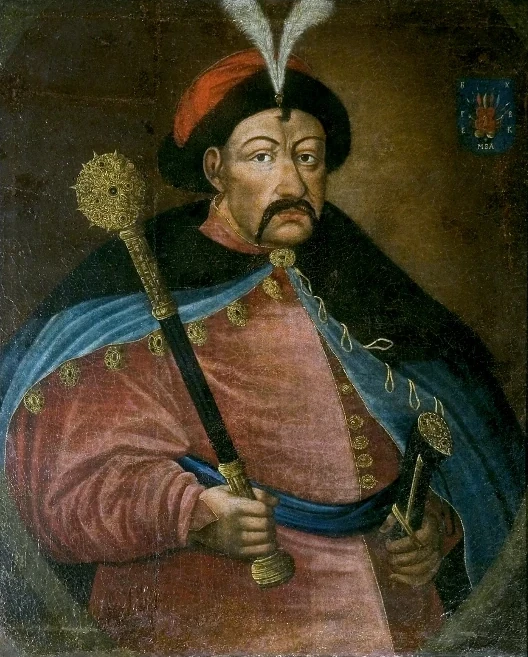
Khmelnytsky formed an alliance with the Crimean khan — and this gave the Cossacks a powerful force of Tatar cavalry. As early as the spring of 1648 they utterly routed the Polish armies at Zhovti Vody and Korsun, and in the autumn at Pyliavtsi. Within a few months the uprising had spread across the whole of Ukraine, and Khmelnytsky had become its de facto ruler.
The triumphal entry into Kyiv
At the end of 1648 Khmelnytsky was welcomed in Kyiv as a liberator and the "new Moses" of the Ukrainian people. It was then that a new idea was born: not merely to win Cossack rights, but to build a Ukrainian state of their own, free from Polish rule.
The Treaty of Zboriv: the first autonomy
In 1649, at Zboriv, the Cossacks pressed the Polish king into making peace. Under the Treaty of Zboriv the Zaporozhian Host gained autonomy over three voivodeships, and the Cossack register was increased to 40,000. For the first time an actual Cossack state had come into being, headed by a hetman.
Berestechko: the greatest defeat
In 1651, at Berestechko, the largest battle of the war took place. At the decisive moment the Crimean khan betrayed the Cossacks and abandoned the battlefield, taking Khmelnytsky with him. Without the Tatar cavalry the Cossacks suffered a heavy defeat, and their gains had to be scaled back.
Pereiaslav 1654: the alliance with Moscow
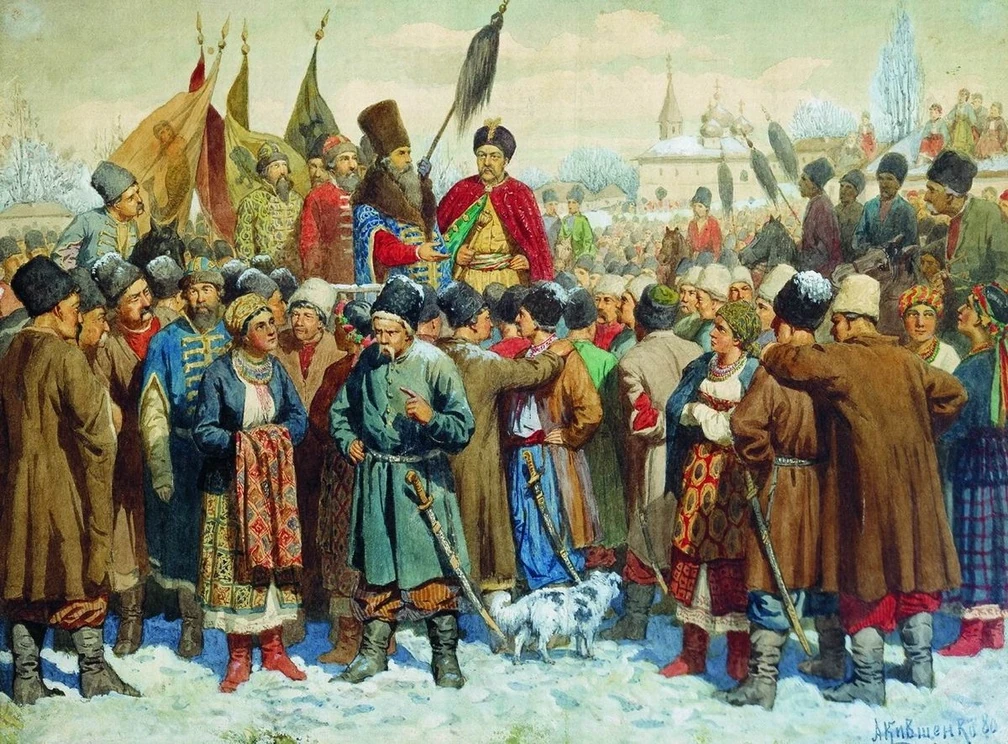
Realizing that he could not defeat Poland on his own, Khmelnytsky began to look for a strong ally. In 1654, at the Council of Pereiaslav, the Cossacks swore an oath to the tsar of Moscow, who promised protection and the preservation of Cossack rights (the "March Articles"). This alliance changed the fate of Ukraine forever — and in time turned into the loss of its autonomy.
The death of the hetman and his legacy
Bohdan Khmelnytsky died in 1657, worn out by wars and setbacks. Without him the young Cossack state sank into discord and decline, which would later be called "the Ruin". But the essential thing remained: the Khmelnytsky Uprising created the Cossack state (the Hetmanate), which lasted for more than a century and wrote the Ukrainians into history forever as a people capable of fighting for their own statehood.