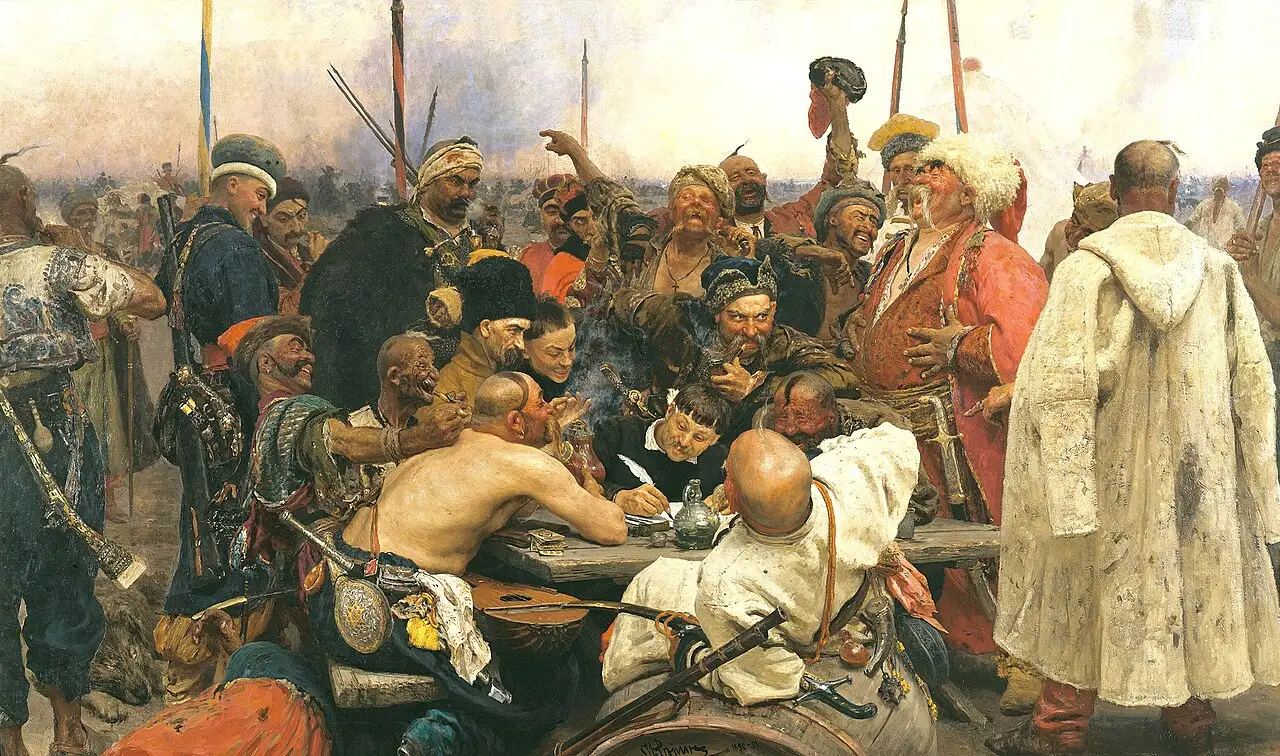
Nine years that redrew the map of Eastern Europe. Ukrainian Cossacks under Bohdan Khmelnytsky forced the Polish–Lithuanian Commonwealth — one of the largest states in Europe at the time — to recognise a separate Cossack autonomy, and then steered it under the protectorate of the Tsar of Muscovy. Six major battles, four peace treaties, alliances with Tatars, Swedes and Moldavians, an uprising that became a war that became a state — and the hetman's death in 1657, which broke that state for good.
Who fought whom
The Zaporizhian Host — registered Cossacks of the Zaporizhian Host, unregistered men from the Sich, peasants who joined the uprising en masse, plus burghers from Ukrainian towns. Led by the hetman elected at the Sich, Bohdan Khmelnytsky. Allies: Crimean Khan İslâm III Giray (with his murza Tugay Bey) — critical from 1648 to 1653, then a serial betrayer; the Principality of Moldavia under Vasile Lupu (1652–1653); later the Kingdom of Sweden under Charles X Gustav (1656–1657).
The Polish–Lithuanian Commonwealth — a federal union of the Crown of Poland and the Grand Duchy of Lithuania. Led by King Władysław IV (until 1648), then John II Casimir. Military elite: Crown Grand Hetman Mikołaj Potocki, Crown Field Hetman Marcin Kalinowski, Prince Jeremi Wiśniowiecki — the wealthiest magnate of the Left Bank. Toward the end of the war the conflict drew in Muscovy (1654) and Sweden (1655) — each with its own agenda.
Phases of the Khmelnytsky Uprising
The Khmelnytsky Uprising was not one war but several wars that grew together. We split it into five phases: 1648 (the explosion and three great victories), 1649 (the Zbarazh–Zboriv campaign and the first treaty), 1651–1652 (Berestechko and the comeback at Batih), 1653–1654 (Tatar betrayal and the turn to Moscow), 1655–1657 (the Swedish Deluge and the hetman's death). After the chronology come several cross-cutting themes: the structure of the Cossack state, the Tatar factor, the Jewish tragedy, Chyhyryn as the capital and the dynastic plan, and the culture and religion of the era. Together they show how 17th-century Ukrainian society moved from being subjects of the Polish Commonwealth to being a political nation — and why that nation could not preserve itself in the form in which it first appeared.
Background: why 1648?
After the Kurukove (1625) and Pereyaslav (1630, 1638) agreements, the registry of the Zaporizhian Host was cut to 6,000. The remaining Cossacks were legally turned into "common subjects" — that is, serfs. The Polish Sejm steadily rolled back Cossack liberties. On the Dnipro stood Kodak Fortress (built in 1635) — its purpose was to block peasant escape to the Sich. The Orthodox Church was being squeezed by Catholic and Uniate expansion. On top of that, Polish nobles leased their estates on the Right Bank to Jewish managers who collected the taxes — including church taxes — which fed a chronic resentment that later exploded into pogroms.
The personal trigger: in 1647 the Chyhyryn deputy starosta Daniel Czapliński raided the homestead of the sotnyk Bohdan Khmelnytsky in Subotiv, beat his young son Ostap to death, and abducted his wife Helena. Khmelnytsky took his complaint to the Sejm in Warsaw, all the way up to King Władysław IV — and was told "you've got sabres of your own." He took the advice literally and in December 1647 fled to the Zaporizhian Sich.
January 1648: the uprising and the Crimean alliance
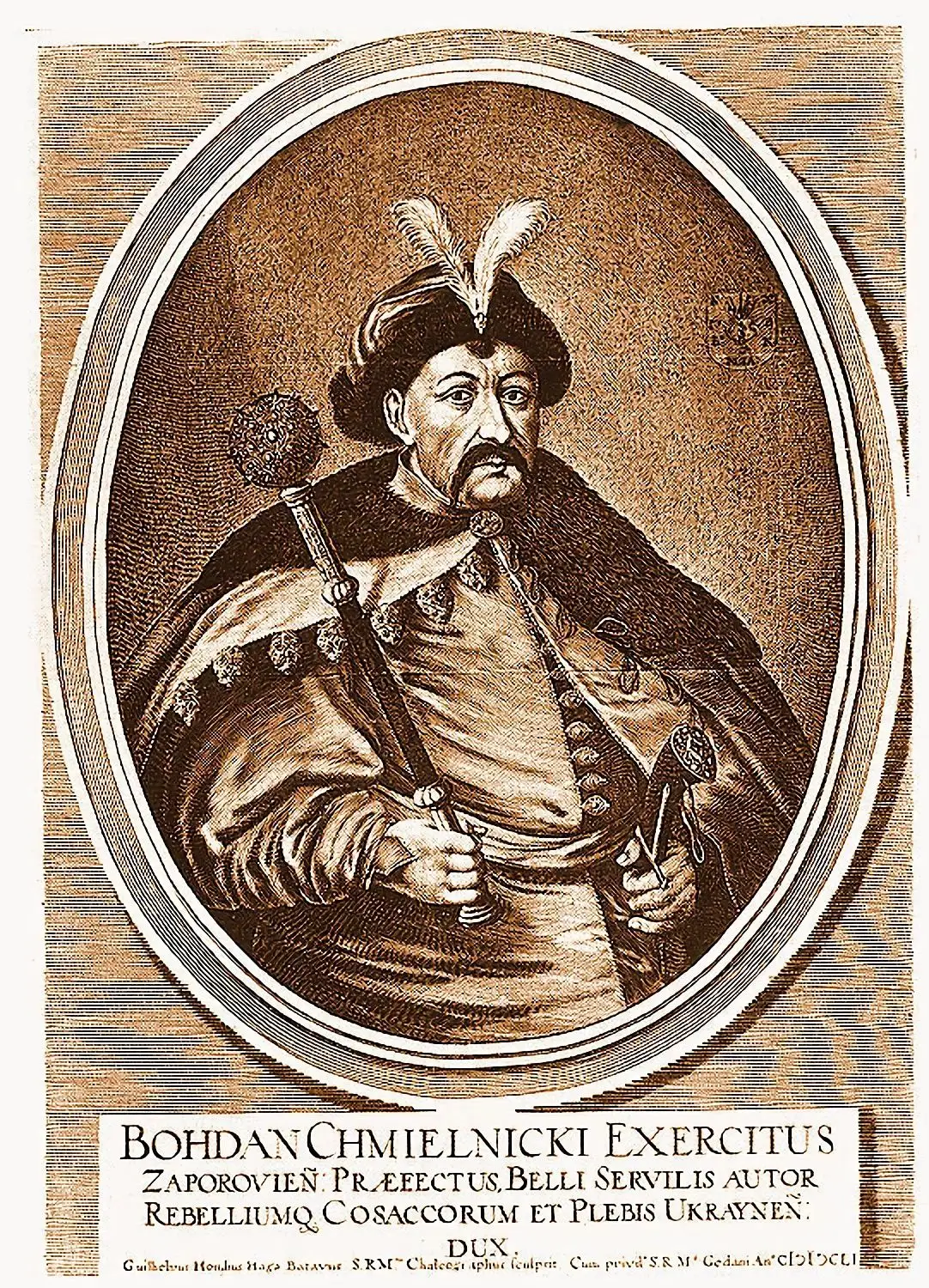
At the Sich, within weeks Khmelnytsky had gathered the discontented around himself — and in January 1648 he was elected hetman of the unregistered Cossacks. His first and most consequential decision was an alliance with the Crimean Khanate. Khan İslâm III Giray sent a force of about 4,000 sabres under murza Tugay Bey. Without Tatars Khmelnytsky had no cavalry, and without cavalry there could be no war against the Polish Commonwealth.
Poland sent two columns to the Sich: father and son Potocki, together about five to six thousand soldiers and registered Cossacks. Stefan Potocki (the son) marched overland; the registered Cossacks rafted down the Dnipro on chaiky longboats. At the locality of Yellow Waters (Zhovti Vody) in April–May 1648 Khmelnytsky met them. The registered Cossacks on the chaiky defected to the rebels. Stefan Potocki's column was wiped out on 16 May 1648; he himself was mortally wounded.
Korsuń and Pyliavtsi: two more catastrophes
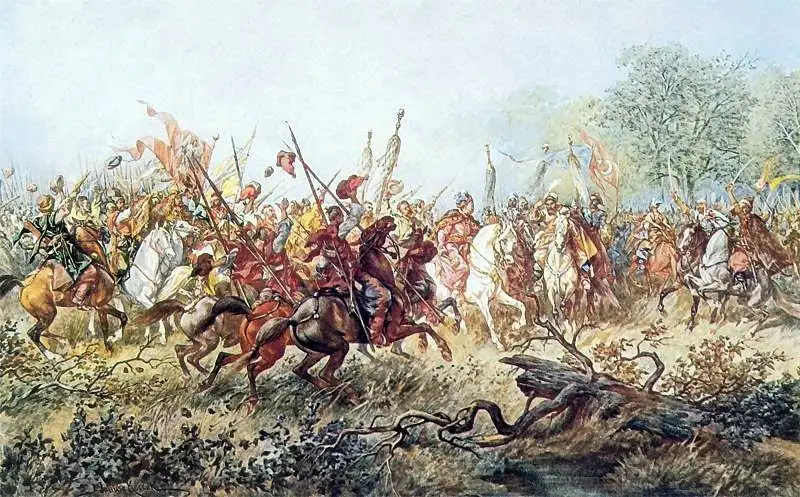
Ten days after Yellow Waters, on 26 May 1648, Khmelnytsky destroyed the main forces of the Commonwealth at Korsuń. Crown Grand Hetman Mikołaj Potocki (the father of the man who had died at Yellow Waters) and Crown Field Hetman Marcin Kalinowski were captured by the Tatars and taken to Bakhchisaray — Khmelnytsky handed them over to the khan as "living payment" for continued Tatar support. It was a shock: in two weeks the Commonwealth had lost both of its top commanders.
On 20 May 1648 King Władysław IV died in Warsaw. The interregnum lasted nearly six months. With no king and no hetmans, the Polish nobility raised a third army — about 30,000 — under the joint command of "the three Polacks": Dominik Zasławski, Mikołaj Ostroróg, Aleksander Koniecpolski. In September 1648 at Pyliavtsi this army fled in panic without ever joining a real battle. The road to Lviv and Warsaw was open.
Entry into Kyiv and a new self-understanding
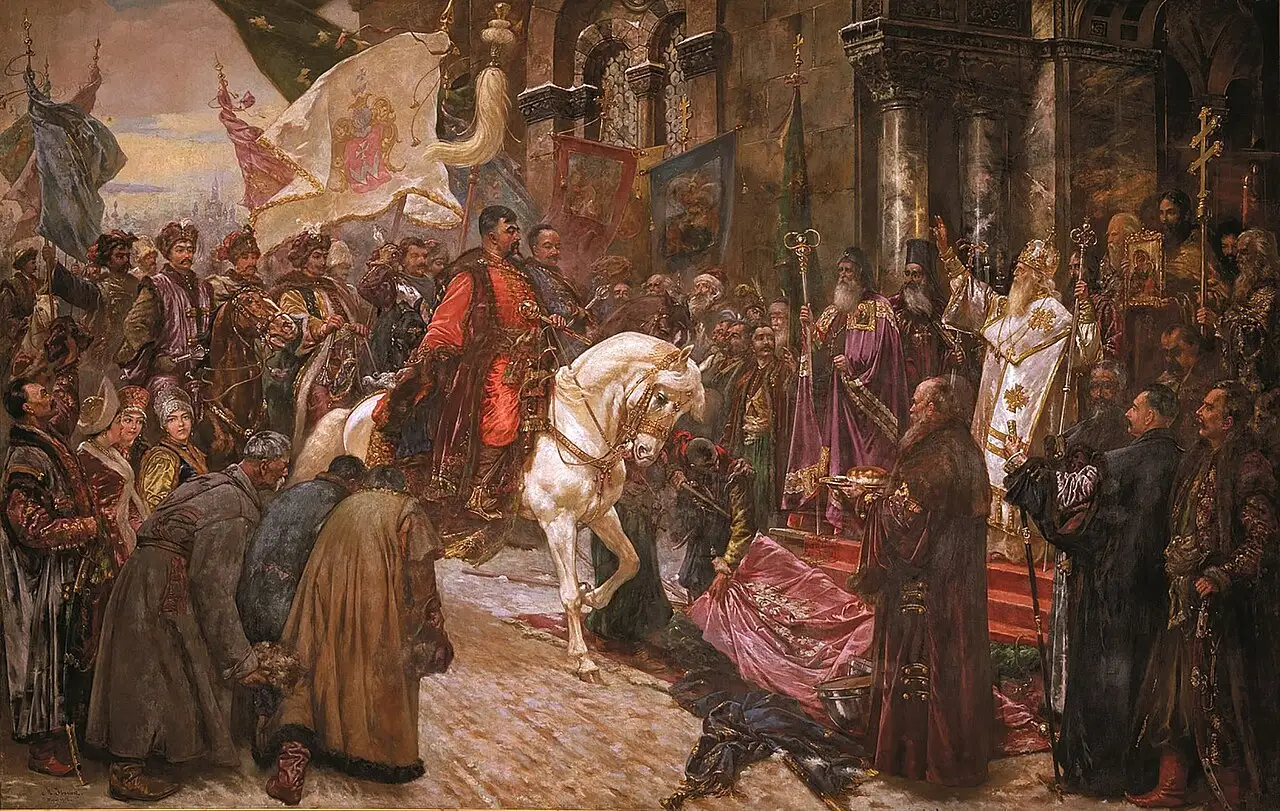
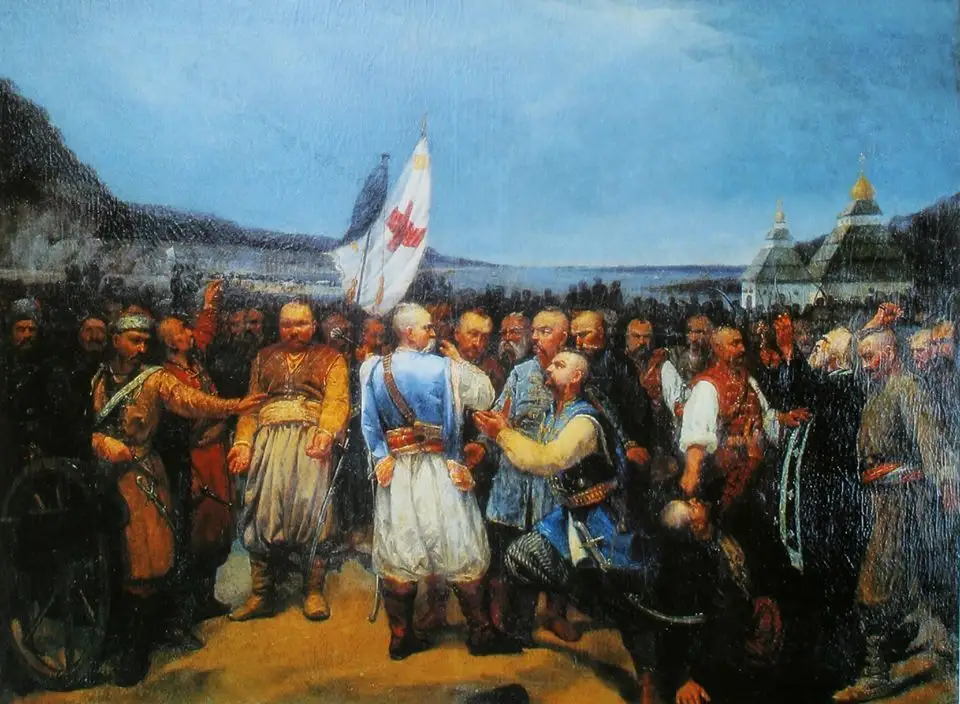
Khmelnytsky reached Lviv, took a ransom from it, marched on to Zamość — but went no further toward Warsaw. Instead, in December 1648 he turned back to Kyiv and entered the city as a victor. He was met by the professors of the Kyiv-Mohyla Collegium, headed by rector Innokentiy Gizel; the Patriarch of Jerusalem Paisios, who happened to be in Kyiv at the time, hailed him as a "God-given prince of Rus'."
Something important happened to Khmelnytsky in Kyiv. Before Kyiv he had been a rebel fighting for Cossack privileges. After Kyiv he became a leader who began to speak about a separate state of the "Rus' people." At negotiations with Polish commissioners in Pereyaslav in February 1649, he already declared he would liberate "all of Rus'", because "I will drive every last Pole from the Polish lands." This was no longer about the registry or sabre injuries — it was a new political programme.
Zbarazh and Zboriv: the first treaty
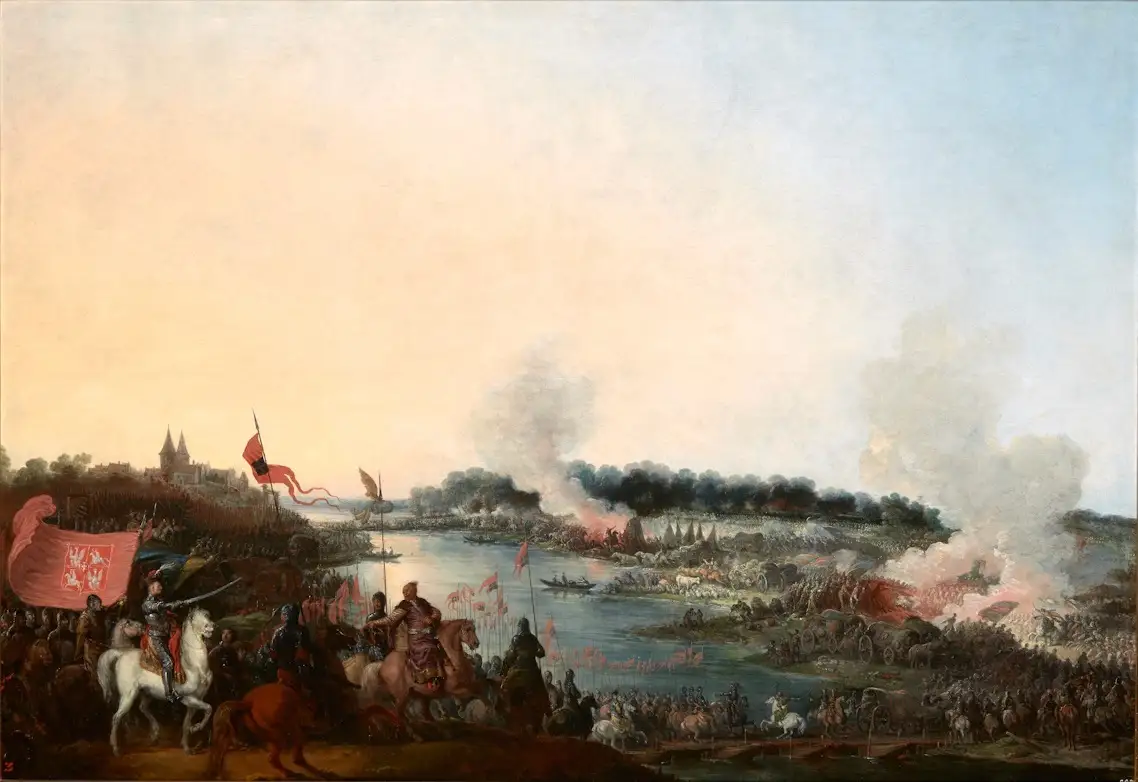
Summer 1649: the Commonwealth crowned a new king — John II Casimir — and assembled a new army. Polish forces under Prince Jeremi Wiśniowiecki shut themselves into the fortress of Zbarazh and held out under siege for six weeks (July–August 1649). Hunger, thirst, dysentery — the defenders ate their horses. King John II Casimir was on his way with the main army to relieve them. Khmelnytsky left part of his force at Zbarazh and rushed with the Tatars to meet the king.
On 15–16 August 1649 at Zboriv, the Cossacks and Tatars surrounded the royal army — a Commonwealth catastrophe seemed unavoidable. And then khan İslâm III Giray, having received from John II Casimir a secret ransom and a set of promises, proposed peace negotiations. Khmelnytsky was forced to agree — without the Tatar cavalry he could not have held out. The Treaty of Zboriv, 18 August 1649: the registry rises to 40,000; Cossack territory is the Kyiv, Chernihiv, and Bratslav voivodeships (with no separate Polish administration); the Uniate Church is restricted; Jesuits are barred from the Cossack voivodeships. The first formal autonomy in the history of the Ukrainian Cossack state.
Regiments, sotni, the hetman's capital
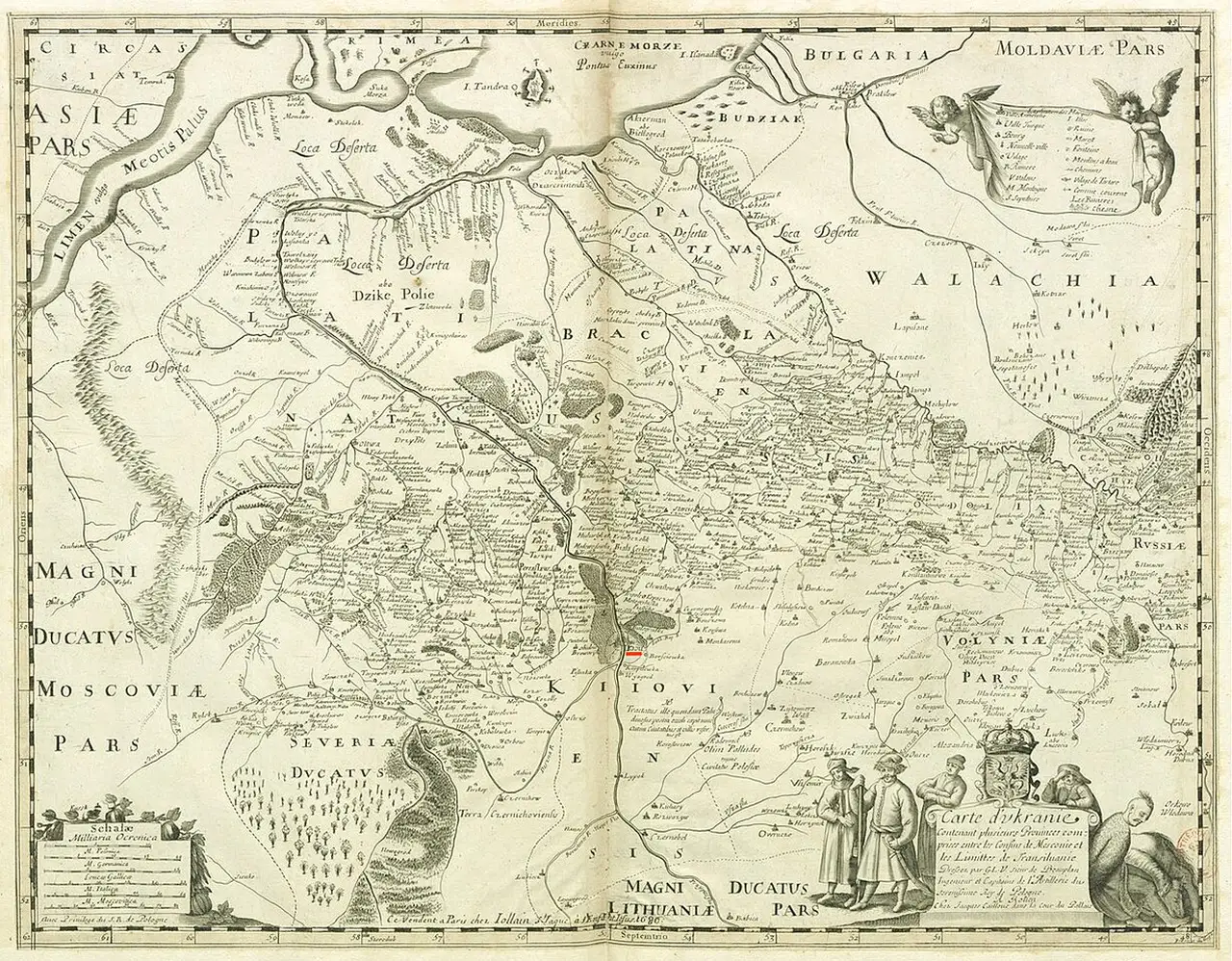
Under the Treaty of Zboriv the hetman gained authority over three voivodeships. Khmelnytsky divided this territory into 16 regiments (roughly today's districts): Chyhyryn, Cherkasy, Kaniv, Korsuń, Bila Tserkva, Uman, Bratslav, Kalnyk, Kyiv, Pereyaslav, Kropyvna, Myrhorod, Poltava, Pryluky, Nizhyn, Chernihiv. Each regiment was subdivided into sotni (companies). Colonels collected taxes, dispensed justice, and raised troops — the old Polish–Lithuanian administration of noble starostas vanished, and in its place came the Cossack regimental system.
The capital was Khmelnytsky's home town of Chyhyryn — a small Podolian settlement that for the next 30 years (until 1678) remained the heart of the Cossack state. Envoys came here from Moscow, Istanbul, Warsaw, Stockholm, and Bakhchisaray. Treaties were signed here, universals were drafted here, and ultimately Khmelnytsky himself died here.
What the Treaty of Zboriv did not solve
The Treaty of Zboriv was a victory — but a fragile one. The king signed; the Sejm in March 1650 refused to ratify the key clauses on the Orthodox Church. Magnates returning to their estates in Bratslav province began driving back peasants who had had two years of freedom. In 1650 the Tatars ravaged Podolia — formally as Khmelnytsky's allies, in fact as plunderers chasing slaves and personal scores. In September 1650 Khmelnytsky forced the Moldavian hospodar Vasile Lupu to redeem the family alliance: he pledged his daughter Ruxandra to the future Tymish. It was another sign that the hetman was building his own dynasty. War was coming back.
Berestechko: the greatest defeat
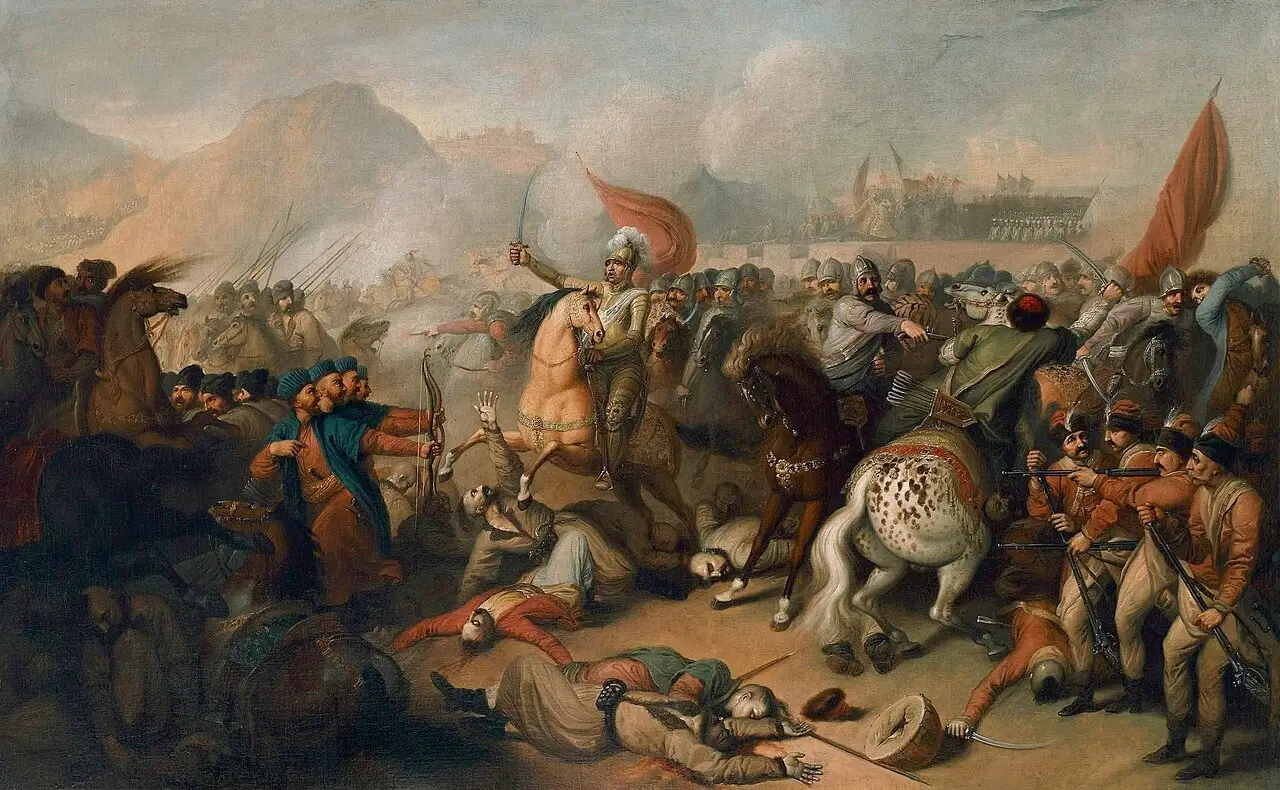
June 1651. On a flat field near the Volhynian town of Berestechko stood the largest armies the region had ever seen. Polish forces — about 100,000, with King John II Casimir in personal command. Cossacks and Tatars — about 100,000. The battle ran three days, 28–30 June 1651. On day three the king again paid the khan — and İslâm III Giray once more turned the Tatar cavalry around and rode off the field, taking Khmelnytsky with him as a hostage. The Cossack camp was left with no cavalry and no leader, surrounded by the Polish army.
For ten days colonel Ivan Bohun commanded the camp's defence amid the marshes, leading a night-time crossing on a causeway built of wagons and corpses. Most of the army escaped, but at a catastrophic price: tens of thousands killed, the artillery lost, faith in a quick victory shattered. Berestechko was the largest military disaster the Cossack army would suffer in the entire nine years of the war.
The Treaty of Bila Tserkva and a new occupation
After Berestechko the Polish army under Mikołaj Potocki (the same man captured at Korsuń and ransomed back) and the Lithuanian army of Janusz Radziwiłł advancing from the north (Radziwiłł took Kyiv in August 1651) marched on Bila Tserkva. With cavalry, manpower, and Tatars all gone, Khmelnytsky was forced to ask for peace.
The Treaty of Bila Tserkva was signed on 28 September 1651. The registry was cut from 40,000 to 20,000. Cossack territory was reduced to the Kyiv voivodeship alone — Bratslav and Chernihiv reverted to Polish administration. The hetman gave up independent foreign relations. It was almost a full rollback to the pre-1648 status quo. The peasant masses concluded that bargaining with the hetman was pointless — and through 1651–1652 began a mass migration to Slobozhanshchyna, on Muscovy's southern frontier, where land was abundant and serfdom did not yet exist.
Moldavia, Tymish, and the dynastic plan
While the ink was barely dry on the Bila Tserkva treaty, Khmelnytsky was preparing the next campaign. This time southward. In August 1652 his eldest son Tymish Khmelnytsky entered Moldavia with a 3,000-strong Cossack force and compelled hospodar Vasile Lupu to honour his 1650 pledge — to give up his daughter Ruxandra. The wedding in Iași in early September 1652 was no mere family event: it formally inscribed the Khmelnytskys into the dynastic network of Orthodox rulers in south-eastern Europe. Tymish became a potential heir to the Moldavian throne.
The hetman's logic was clear: marrying off the son secured Moldavia; the next move would be Wallachia. Ukraine would no longer be isolated; it would gain access to the Danube and weight in the Orthodox world. The plan was ambitious. It came undone with Tymish's death at Suceava in September 1653.
Batih 1652: the revenge
On 22–23 May 1652 Khmelnytsky's Cossack army met Crown Field Hetman Marcin Kalinowski at the river Southern Buh, on the left bank, at the locality of Batih. Kalinowski had about 20,000 soldiers and royal orders to block Tymish's march to Moldavia.
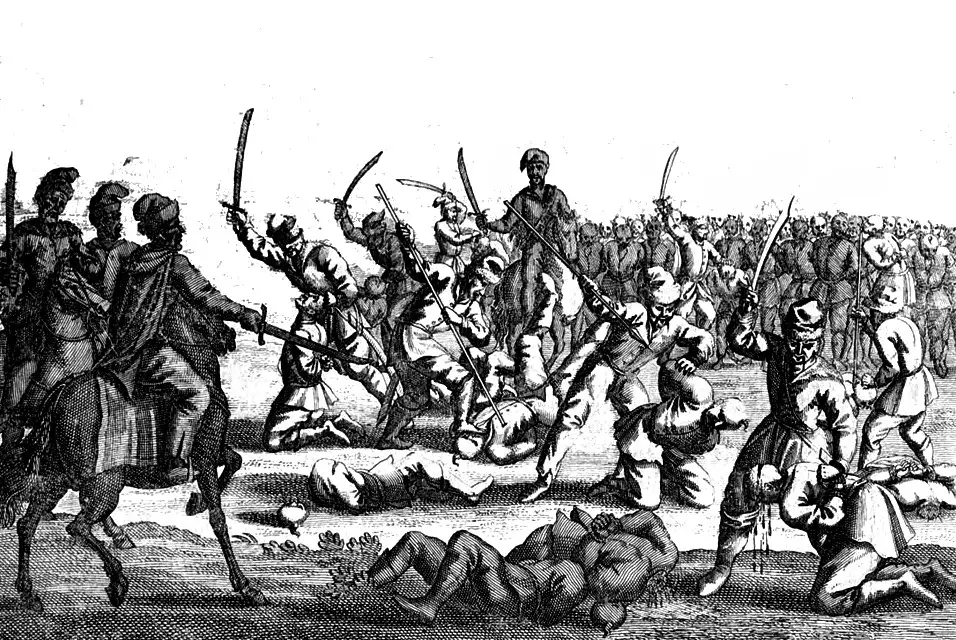
It was the second-most decisive battle of the war after Yellow Waters — and one of the worst catastrophes Polish arms suffered in the 17th century. The Polish army was wiped out. Kalinowski was killed. The thousands of Polish prisoners — among them the country's best soldiers — were ordered killed by Khmelnytsky, either because Kalinowski had broken the Bila Tserkva peace by leading the campaign, or in revenge for Berestechko (historians disagree). It was an unprecedented act — a mass execution of captured nobles, against the customary norms of European warfare at the time. The Treaty of Bila Tserkva was effectively dead. Cossack territory expanded back to the Zboriv lines.
Zhvanets: the khan's last betrayal
December 1653. Poland once again raises a major army — about 40,000 under the personal command of John II Casimir — and marches on Podolia. Khmelnytsky and the Tatars surround the royal army at the town of Zhvanets on the right bank of the Dniester. The Poles are trapped: hunger, frost, desertion. It looks like a Zboriv replay — total victory.
And again — as at Zboriv 1649, as at Berestechko 1651 — khan İslâm III Giray accepts a secret ransom from the king. The Treaty of Kamianets, 16 December 1653: the Tatars withdraw, taking the right to gather slaves on Ukrainian territory; the Cossacks are left alone with the Polish army. Khmelnytsky has to retreat. For the third time in four years, the Tatars have abandoned him at the decisive moment. This was the final push that drove the hetman to seek another ally — and he was already writing to Moscow.
Pereyaslav 1654: the eastern turn
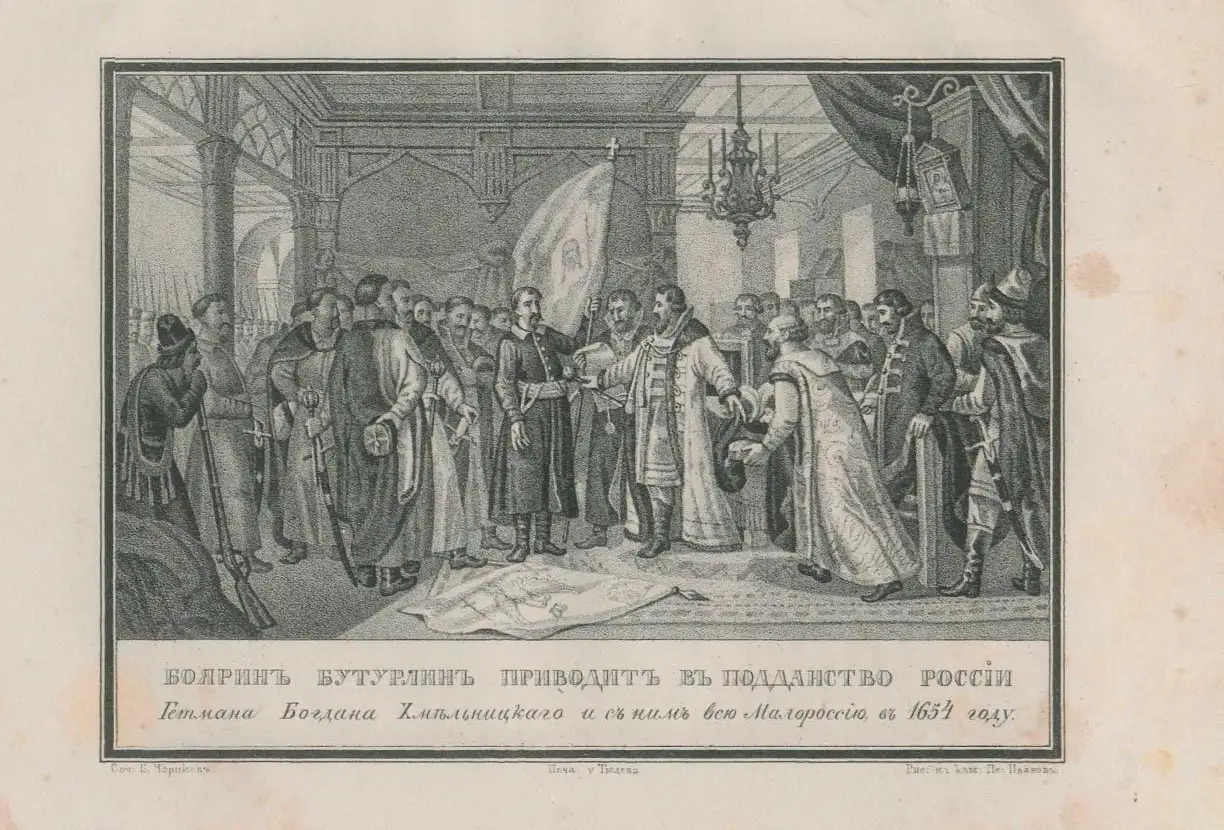
On 11 October 1653 the Muscovite Zemsky Sobor passed a resolution to take "hetman Bohdan Khmelnytsky and the entire Zaporizhian Host under his sovereign hand." On 8 January 1654, in Pereyaslav, the Pereyaslav Council took place: Khmelnytsky, the Cossack starshyna, and the envoys of Tsar Alexis of Muscovy. The Cossacks swore an oath to the tsar.
And immediately a conflict erupted. The starshyna demanded that the Muscovite envoy boyar Vasily Buturlin swear in return on behalf of the tsar — following the Polish king's model, where the king swore to defend the rights of his subjects. Buturlin refused: "the tsar is an autocrat, he does not swear oaths to his subjects." It was a signal the starshyna caught — but they no longer had a choice. The agreement was concluded as a one-sided oath, with no reciprocal obligations — a format that later allowed Moscow to interpret Ukraine in whatever way suited it.
The March Articles
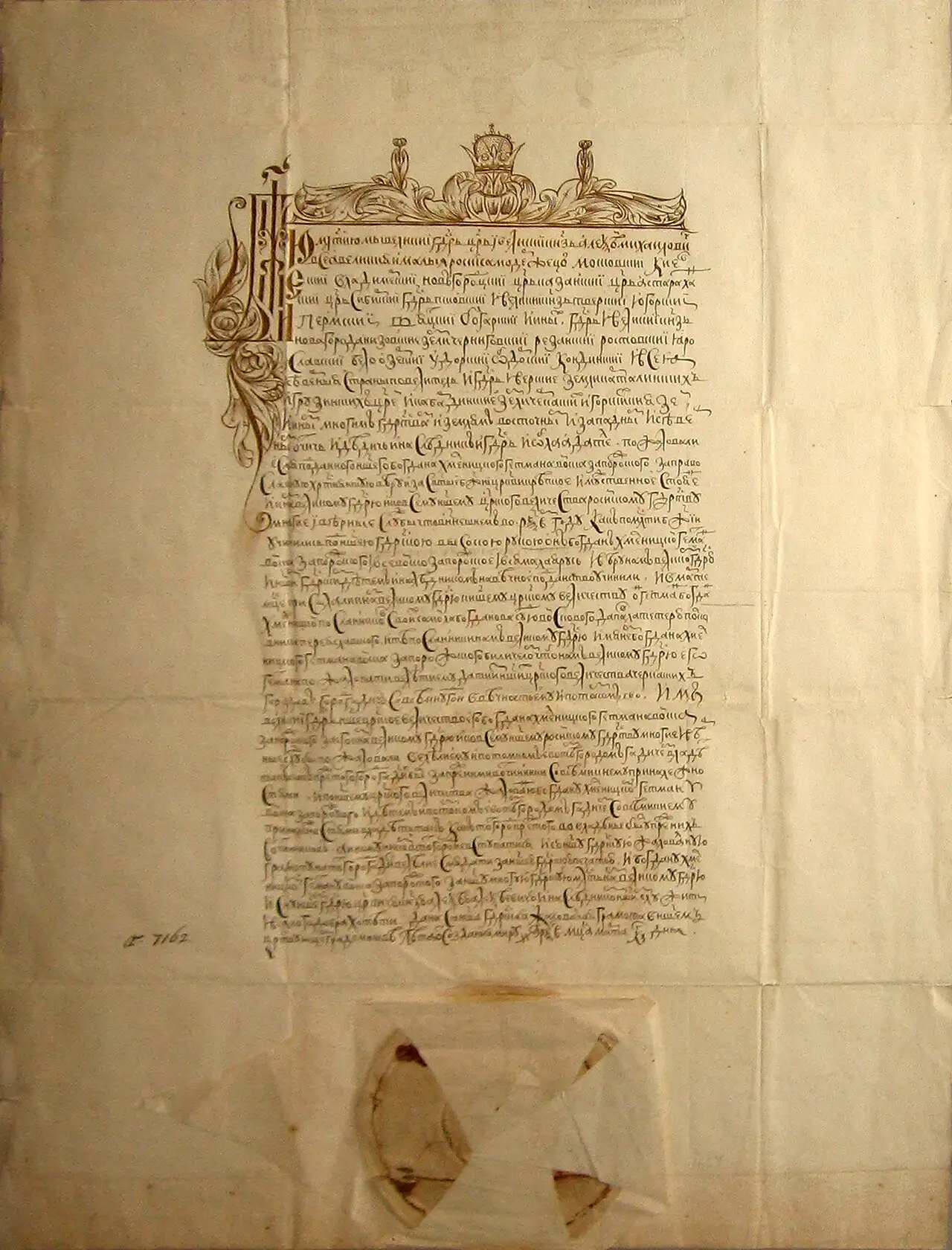
In March 1654 a Zaporizhian embassy in Moscow (led by Samiylo Bohdanovych-Zarudnyy and Pavlo Teteria) signed the March Articles — the official treaty on the terms of the transfer. The Zaporizhian Host received a registry of 60,000, the right to its own administration, courts, the election of its hetman, and the collection of taxes (with a share remitted to the tsar's treasury). Foreign relations were forbidden with Poland and the Ottoman Empire; with others they were allowed, but Moscow had to be informed.
In practice the treaty held in its original form for five years. Every subsequent hetman after Khmelnytsky (Vyhovsky, Yuriy Khmelnytsky, Briukhovetsky…) signed new "articles," each time losing a piece of the autonomy. By the end of the 18th century almost nothing of the March Articles remained — and the very format of "articles signed at the election of a new hetman" became the instrument by which Moscow gradually dismantled the Cossack state.
Zolotarenko's campaign in Belarus
Summer 1654: a 20,000-strong Cossack force under the Nizhyn colonel Ivan Zolotarenko (Khmelnytsky's brother-in-law — he was the brother of the hetman's second wife) entered Belarus alongside the Muscovite army. Across the summer of 1654 and the spring of 1655 the Cossacks took Homel, Chechersk, Novyi Bykhau, Mahiliou, Shklou, and reached the outskirts of Minsk. Some of the captured territory Khmelnytsky regarded as a future addition to the Zaporizhian Host — in his letters he writes of "White Rus'" as part of "Rus'." Zolotarenko was killed in combat at Stary Bykhau in October 1655. The Belarusian territories were later returned to Poland by the Treaty of Andrusovo in 1667 — part of a Muscovite–Polish bargain in which the interests of the Zaporizhian Host hardly mattered.
The Swedish Deluge: a new ally
In July 1655 Swedish king Charles X Gustav invaded a weakened Poland. In half a year the Swedes took Warsaw, Kraków, Poznań, Toruń — the Commonwealth had effectively ceased to exist. This period is known in Polish history as the Deluge. Khmelnytsky saw a chance to finish the job: he signed an alliance with Sweden, with the Transylvanian prince George II Rákóczi, and with the Brandenburg elector. The Treaty of Radnot emerged in 1656 — a plan to partition the Commonwealth into four parts, in which Ukraine would receive Volhynia, Podolia, and Polissia, all the way to Belarus.
And then — another betrayal. Moscow, seeing that Swedish success threatened its own plans, in November 1656 concluded the Truce of Vilnius with Poland. Ukraine was not even invited to the negotiations. Khmelnytsky was stunned: two years after Pereyaslav the tsar had made peace with the Polish king without the Cossacks — formally abandoning them in mid-war.
The hetman's death
Spring 1657. Khmelnytsky — exhausted, sick, and in chronic nervous attacks over the failure of the Radnot coalition and the Truce of Vilnius — spends his last months in Chyhyryn. His daughter Olena dies young. Tymish is already gone (killed in Moldavia in 1653). What remains is sixteen-year-old Yuriy — weak, irresolute, incapable of carrying on his father's work.
On 27 July (6 August new style) 1657 Bohdan Khmelnytsky died in Chyhyryn. The starshyna immediately elected Yuriy as hetman, but because of his youth they appointed the chancellor Ivan Vyhovsky as effective ruler. A year later, in 1658, Vyhovsky signed with Poland the Treaty of Hadiach — an attempt to return to the Commonwealth as a third equal partner (Poland, Lithuania, Ukraine). Moscow refused to accept this. So began the Ruin — thirty years of civil war between "pro-Muscovite" and "pro-Polish" hetmans, which ultimately destroyed the Cossack state.
The Registered State
Across nine years the Khmelnytsky era produced something Ukraine had never had before: a centralised military-administrative state. 16 regiments (later 17 with Uman), about 200 sotni, a unified judicial system (regimental court → general military court), its own chancellery, its own diplomacy, its own taxation, its own army, its own currency (though the minting of its own coin never started — Polish thalers and Muscovite roubles were used).
At the head — a hetman, elected by a general Cossack council. Around him — the General Staff: General Chancellor (chancellery, diplomacy — Vyhovsky under Khmelnytsky), General Quartermaster (artillery and logistics), General Judge, General Aide-de-Camp (Esaul), General Standard-Bearer (Khorunzhyi), General Mace-Bearer (Bunchuzhnyi). This was no longer the "ataman and his men" of the Zaporizhian Sich — it was a state apparatus. With modifications, this system held until 1764, when Catherine the Great abolished the hetmanate.
The Tatar factor
Without Tatar cavalry the Khmelnytsky Uprising would not have been possible. Poland had heavy armoured hussars who broke Cossack infantry in the open field. The Tatars were the only cavalry that could stand up to those hussars. Every great victory of 1648–1652 was a victory of the Cossack–Tatar coalition.
But the khan was an ally with his own agenda. He did not want Ukraine to become independent — a weak Ukraine under the Polish crown was more useful to Crimea (it could be raided, supplying slaves to the markets of Istanbul). So in every campaign that brought Khmelnytsky close to total victory, the khan betrayed him: at Zboriv in 1649 (a peace in exchange for ransom), at Berestechko in 1651 (withdrawal and abduction of the hetman), at Zhvanets in 1653 (the Treaty of Kamianets). Khmelnytsky learned the 1653 lesson — and turned to Moscow. After him Ukrainian hetmans occasionally made peace with Crimea, but never again the strategic alliance of 1648.
The Tulchyn tragedy and the Jewish catastrophe
Not every page of the Khmelnytsky era is heroic. In summer 1648, alongside the Polish garrisons, the rebel Cossacks and peasants slaughtered Jewish communities. The most notorious episode was Tulchyn in June 1648, where after the Polish garrison surrendered, the rebels massacred about 1,500 Jews. Similar pogroms struck Nemyriv, Uman, Polonne, Iziaslav, and Bar. Total Jewish losses are estimated at between 40,000 and 100,000 — by the standards of the time, a catastrophe.
In Jewish historical memory the Khmelnytsky era is remembered as "Gzeyres Tach v'Tat" (the calamities of 1648–1649) — the largest pogrom since the Crusades. Khmelnytsky in the Jewish tradition is a symbol of evil. Modern Ukrainian historiography treats these events as the tragedy of a peasant–religious uprising, driven by the social role of Jews as managers of magnate estates — without justification, but with context. The discussion continues.
Chyhyryn and the dynasty
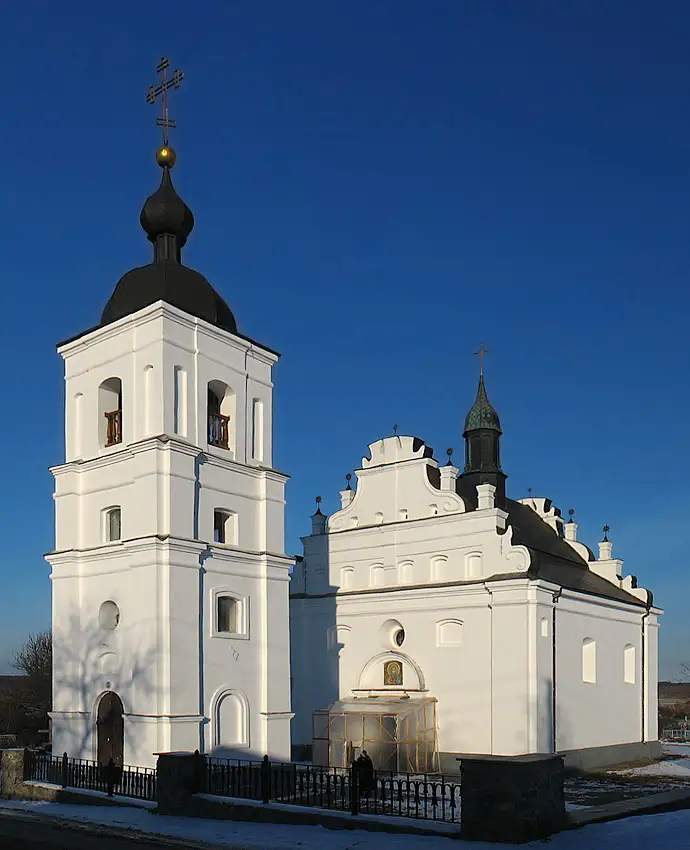
Chyhyryn was the hetman's capital but also the Khmelnytsky family seat. Just outside it lies the village of Subotiv, where the Illinska Church (1653) stands — built by Khmelnytsky as the family pantheon. Here he buried his son Tymish in 1653. Here he himself was laid to rest in 1657.
Chyhyryn and Subotiv are material proof that Khmelnytsky did not see himself as the elected ruler of a temporary republic. He was building a dynasty. Tymish was to inherit Moldavia through Ruxandra. Olena was a marriage card. Yuriy, after his brother's death, was meant to inherit the hetmanate from his father. The old Polish nobility had been turned out of the country, but he had quietly recreated the magnate family model from inside it — only with a Cossack rather than a Polish face. The hereditary principle was nothing exotic for the era: contemporary Holland, Sweden and the Ottoman Empire were all "family" states. But it did not fit the Ukrainian state: after Khmelnytsky's death, Yuriy could not hold power, and the Cossack republic returned to the elective format — with all of its pathologies (bribery of the starshyna, factional splits, Moscow's intrigues).
Kyiv-Mohyla and the culture of the era
In the background of the war, the Kyiv-Mohyla Collegium (founded in 1632 by Metropolitan Petro Mohyla) continued to operate in Kyiv, combining Latin scholastic education with Orthodox theology — a model unique to Eastern Europe. Its graduates wrote doctrinal works, compiled chronicles (the Eyewitness Chronicle, Hryhoriy Hrabianka, Samiylo Velychko), and worked in the hetmans' chancelleries. Innokentiy Gizel, Lazar Baranovych, Ioanikiy Galiatovskyi — these were the intellectuals who shaped what historians today call the "Ruthenian" (in modern terms, Ukrainian) Baroque culture.
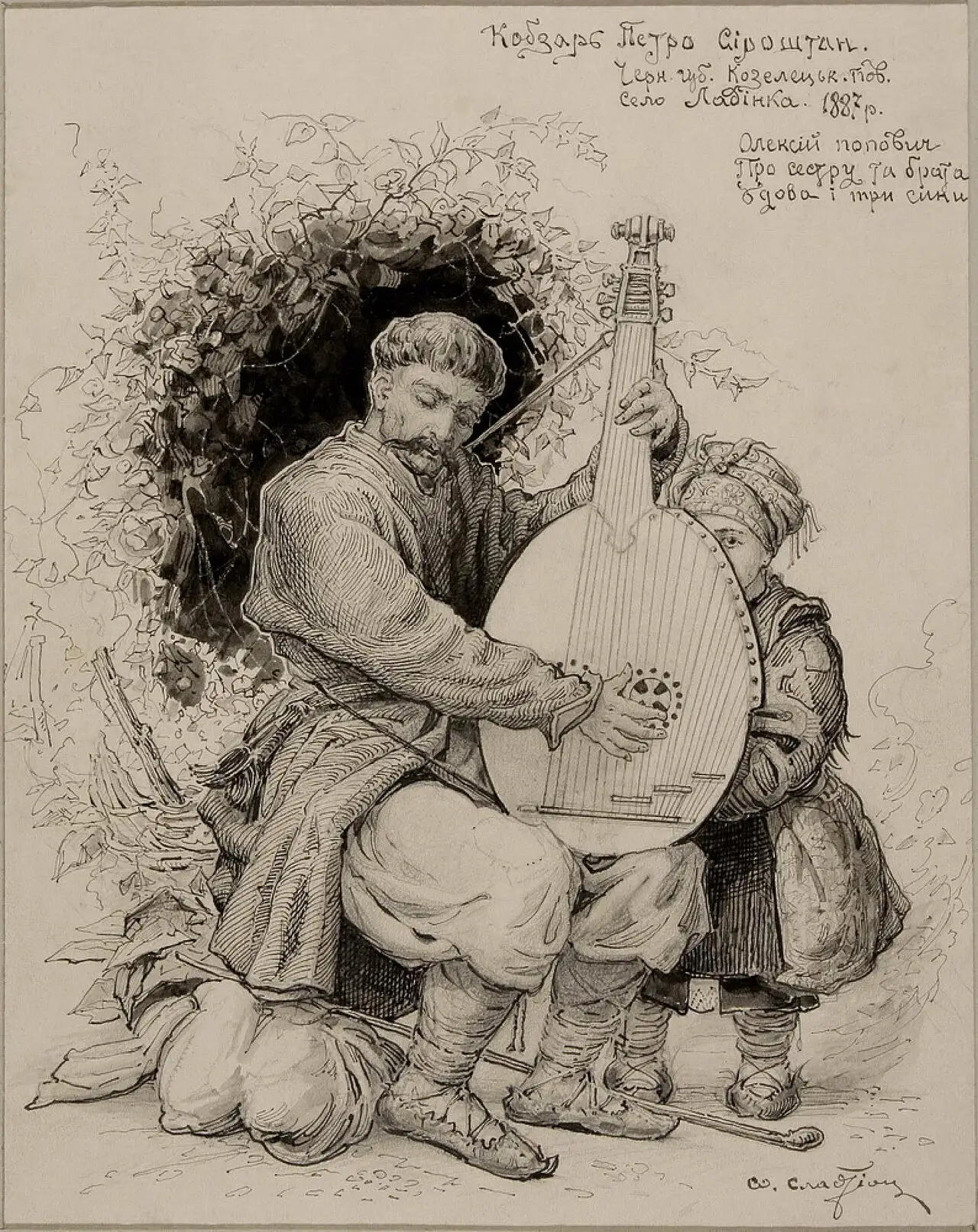
Alongside the scholarly culture there was the popular one. Kobzars and lirnyks, who were singing dumas about Khmelnytsky already in his lifetime, had their own guild structure, their own argot (lebiyska), and their own canonical repertoires. These dumas became the folkloric foundation of national memory — the Khmelnytsky era entered it not as a 17th-century political episode but as a myth of liberation, which then nourished Ukrainian political movements for two centuries, from the Cyril and Methodius Brotherhood to the Ukrainian People's Republic.
What the Khmelnytsky era gave Ukraine
1. A Cossack state. For 117 years (1648–1764) on the territory of the Left Bank there existed an autonomous Hetmanate with its own administration, army and courts. It was the longest attempt at Ukrainian statehood between Kyivan Rus' and the 20th century.
2. A political nation. Before Khmelnytsky, there were Ruthenian (Ukrainian) lands but no "Ukrainian people" as a political subject. The war created that subjectivity — through shared battles, a shared army, shared symbols, and a shared narrative.
3. A precedent for alliance with Moscow. The Pereyaslav Agreement of 1654 was effectively the first episode in a relationship that was then repeated through the 17th–20th centuries. Moscow always promised protection against external enemies and always, in the end, swallowed the autonomy. This still shapes how Kyiv thinks about geopolitics.
4. Trauma. Tulchyn, Berestechko, the Ruin — these are not just historical events but scenarios that have entered the national memory as warnings: the price of alliances, the price of internal split, the price of a single man at the top.
What remains in the 21st century
On the site of Chyhyryn there is the "Chyhyryn" historical-cultural reserve (since 1989). The Illinska Church in Subotiv is on the 5-hryvnia banknote. Bohdan Khmelnytsky stands on monuments in Kyiv (Mikeshin, 1888), Chyhyryn, Lviv, and across Ukraine. In 1998 the Order of Bohdan Khmelnytsky was established as Ukraine's highest military decoration, awarded for combat service.
The historical assessment of the hetman has shifted over the past 30 years. In Soviet historiography Khmelnytsky was the "reunifier" of Ukraine with Russia — and Pereyaslav 1654 was the central message. In contemporary Ukrainian historiography the accents are different: Khmelnytsky was the founder of an early-modern Ukrainian state, and Pereyaslav 1654 was a forced manoeuvre out of the dead end of 1653, which ultimately turned into a catastrophe. The cult of Pereyaslav has been replaced by interest in the Treaty of Radnot of 1656 — an attempt to build a network of European alliances, destroyed by Moscow. This is a new, European frame for understanding the Khmelnytsky era — and it is still being written, under the conditions of an ongoing war from 2022 with that same Moscow.