In four years — from April 1861 to April 1865 — a young republic that had barely survived its eightieth birthday gave itself the bloodiest bath of its entire history. In the war between the North and the South, by modern estimates, between 620,000 and 750,000 soldiers died — more than all Americans killed in the two World Wars, Korea and Vietnam combined. The Union — 23 northern states with 22 million people — fought the Confederacy — 11 southern states with 9 million people, of whom 4 million were Black slaves. The question for which all this was done was simple and terrible: whether one human being has the right to own another as livestock. The war ended with General Lee's surrender at Appomattox, with the assassination of President Lincoln five days later — and with the passage of the 13th Amendment to the Constitution, which abolished slavery throughout the United States. Modern America — with all its ideas of civil rights, with its still-unhealed racial wounds, and with its understanding of what a federal state is — was born in these four years.
Who was fighting whom
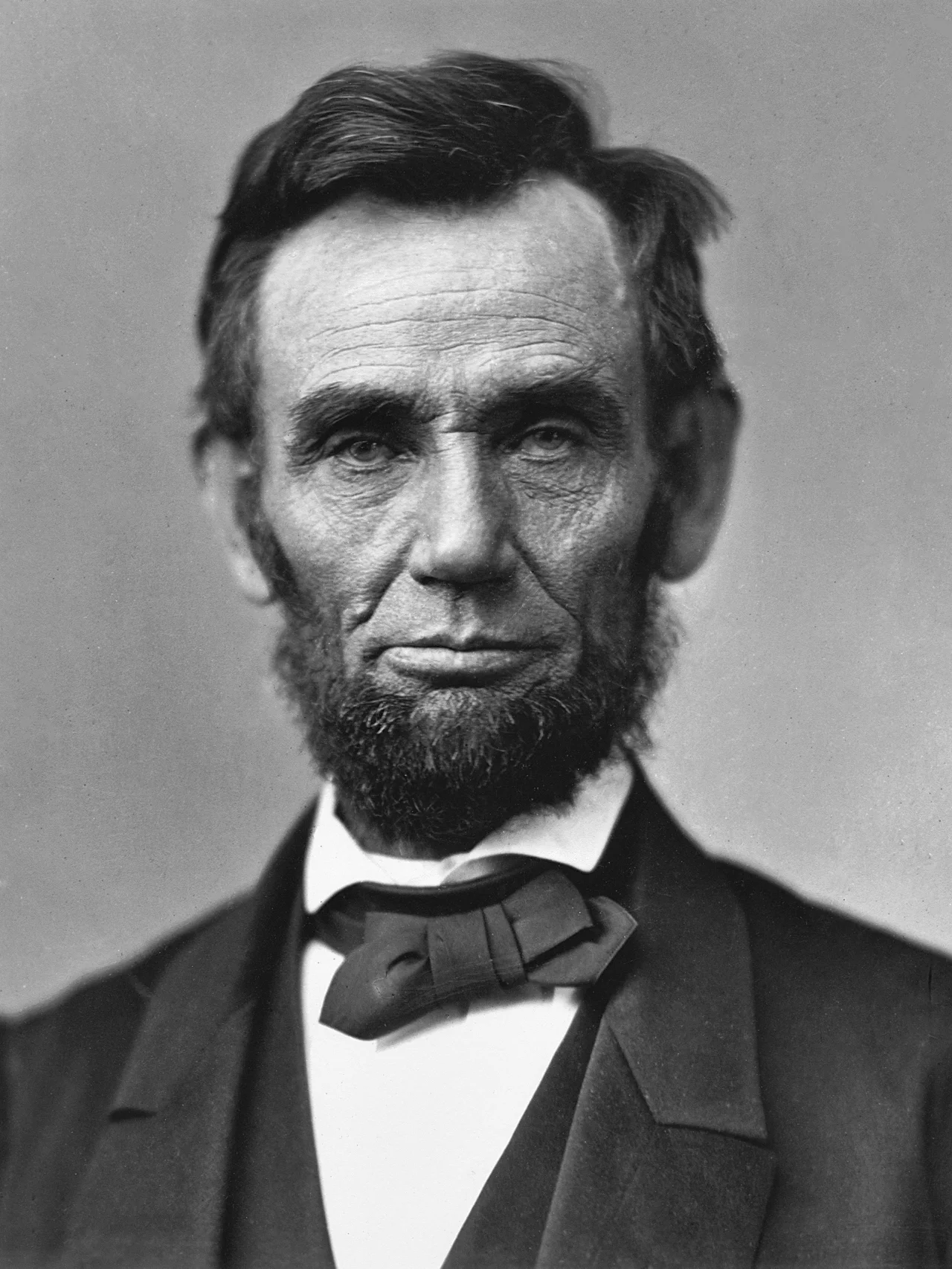
On one side — the Union (also called the Federals): 23 northern and western states that remained loyal to the federal government in Washington and to President Abraham Lincoln. This was industrial America: about 22 million people, 90% of all the country's factories, 70% of its railroads, almost all of its mining and its merchant marine. The North turned out rifles, cannon, locomotives, uniforms, rations — and could mobilise as many as 2.1 million soldiers. Its main army was the Army of the Potomac, which guarded Washington and for four full years fought to take the Confederate capital Richmond, in Virginia.
On the other side — the Confederate States of America (the Confederacy, or the Rebels): 11 southern states that seceded in 1860—1861 under Jefferson Davis. South Carolina went first, in December 1860, a month after Lincoln's election; after her — Mississippi, Florida, Alabama, Georgia, Louisiana, Texas, Virginia, Arkansas, Tennessee and North Carolina. 9 million people, of whom 4 million were slaves working the cotton plantations and possessing no rights at all. The South lived on cotton exports — in 1860, 75% of the world's cotton was grown by the hands of American slaves, and the textile mills of Britain and France depended on it. The Confederacy mobilised about 900,000 soldiers, had brilliant generals — above all Robert E. Lee, Stonewall Jackson and Nathan Bedford Forrest — but had almost no industry, no fleet, and few railroads. The South staked everything on a single hope: that Europe would recognise the Confederacy and pull it through diplomatically.
Phases of the American Civil War
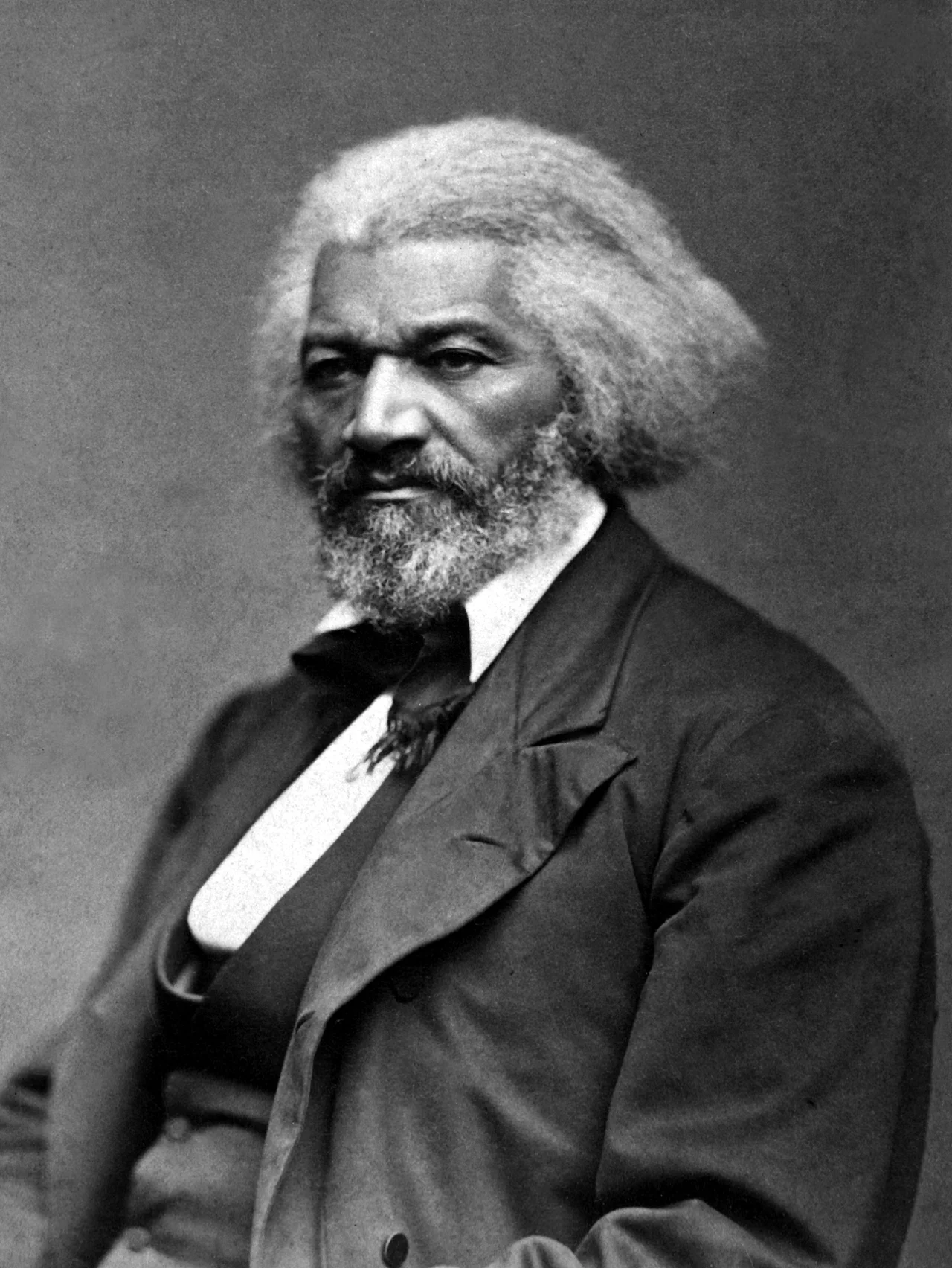
The story of the Civil War breaks naturally into five phases. Origins and secession (1854—1861): the Kansas-Nebraska Act, the Supreme Court's decision in Dred Scott, John Brown's raid on Harpers Ferry, Lincoln's election, the secession of the southern states and the bombardment of Fort Sumter on 12 April 1861. Shock of 1861—1862: the First Battle of Bull Run as a cold douche, McClellan's appointment to command the Army of the Potomac, the bloodiest day in American history at Antietam on 17 September 1862, the Emancipation Proclamation. Turning point of 1863: the raising of Black USCT regiments, the death of Stonewall Jackson at Chancellorsville, the three days of Gettysburg on 1—3 July, the fall of Vicksburg on 4 July — and Lincoln's Gettysburg Address. Total war 1864: Grant's appointment as general-in-chief, the Wilderness campaign, Sherman and his march across Georgia to the sea, Lincoln's re-election. End of the war 1865: Lee's surrender at Appomattox on 9 April, Lincoln's assassination on 14 April at Ford's Theatre, the passage of the 13th Amendment. The page closes with sections on Reconstruction and an epilogue on modern America.
Phase 1. Origins and secession (1854—1861)
The war of 1861 did not fall like a thunderbolt out of a clear sky — it had been ripening for decades. The increasingly industrial, small-farm and free North and the increasingly planter, slave and export-agricultural South were by then living, in effect, in two different countries. Every new act of Congress on a new state — free or slave — brought the explosion closer. In the 1850s the compromises broke down one after another, and by 1860 it was clear that there was no peaceful way out.
Slavery as a political front: Kansas-Nebraska and Dred Scott
In 1854 Senator Stephen Douglas pushed through Congress the Kansas-Nebraska Act: it repealed the Missouri Compromise of 1820 and allowed new states to decide by popular vote whether they would be slave or free. Supporters and opponents of slavery at once poured into Kansas to "out-vote" each other — and a little civil war began that the newspapers of the day called "Bleeding Kansas." In 1856, in the Senate itself, the southern congressman Preston Brooks walked up to Senator Charles Sumner and beat him almost to death with a cane — for an anti-slavery speech. In 1854 a new party appeared — the Republican Party, united by a single idea: no more slave states.
In 1857 the Supreme Court of the United States handed down its decision in Dred Scott v. Sandford. Dred Scott — a Black slave who had lived with his master for several years in the free state of Illinois — sued for his freedom. The court under Chief Justice Taney threw out his suit, ruling that Black people — even the free ones — were not citizens of the United States and had, on the whole, "no rights which the white man was bound to respect." Furthermore, the court said, Congress had no constitutional power to forbid slavery in any territory. The decision in effect made slavery legal across the whole country. The North was stunned; the South was elated. Any political compromise after Dred Scott became almost impossible.
John Brown — the man with a rifle
In October 1859 the fanatical abolitionist John Brown, at the head of a band of 21 men — among them several of his sons and five former slaves — seized the federal arsenal at the small town of Harpers Ferry in Virginia. Brown's plan was almost biblical in its maximalism: to arm rebelling slaves and set off a general anti-slavery insurrection across all the southern states at once. The plan failed in 36 hours: no slave in the region ever heard of any uprising, and federal troops under Colonel Robert E. Lee — yes, that Lee — surrounded the arsenal and stormed it. Ten of his men, two of his sons among them, were killed. Brown was hanged on 2 December 1859.
The South saw in Brown the living proof of what it had feared with all its might: a northerner arriving with a rifle and rallying the slaves. Southern newspapers assured their readers that the Republican Party and the entire North stood behind Brown. The North in turn, though officially condemning Brown, buried him as a martyr — in many churches the bells tolled on the day of his execution. The poet Ralph Waldo Emerson called Brown "a saint." A year remained until the presidential election of 1860 — and both halves of the country were now in effect preparing for war.
Lincoln's election, secession, and the bombardment of Sumter
In the presidential election of 6 November 1860 the winner was Abraham Lincoln — the candidate of the new Republican Party, a lawyer from Illinois who said openly: no more slave states. He received not a single vote in ten of the southern states — he simply was not on their ballots — but he won all 18 northern states and the West, which gave him 180 electoral votes against the 152 he needed. The South took this as a sentence. As early as 20 December 1860, South Carolina was the first to proclaim its secession from the Union. By February 1861 Mississippi, Florida, Alabama, Georgia, Louisiana and Texas had followed. In February the seven seceded states met at Montgomery, Alabama, proclaimed the Confederate States of America and elected as their president Jefferson Davis — a former United States senator and Secretary of War.
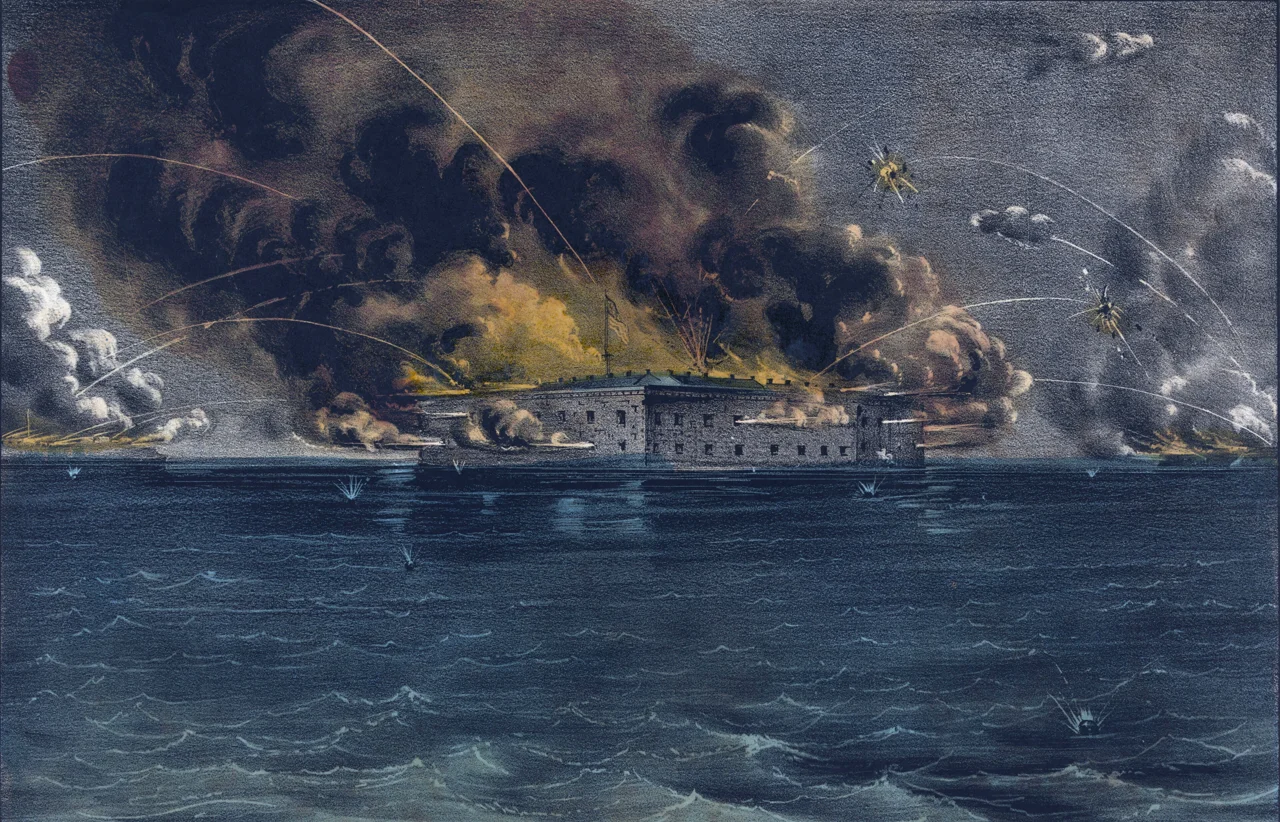
On 4 March 1861 Lincoln took the oath and in his inaugural address spoke to the South: "In your hands, my dissatisfied fellow countrymen, and not in mine, is the momentous issue of civil war." He insisted that secession was illegal, but did not threaten to start the war himself. The first shots were fired by the South. In the harbour of Charleston, South Carolina, stood a federal fort — Fort Sumter — held by a small garrison under Major Anderson. Lincoln refused to give it up and sent a ship to it with provisions. On 12 April 1861, at 4:30 in the morning, the Confederate batteries opened fire on the fort. After 34 hours of bombardment Anderson lowered the flag. The war had begun. In the following weeks four more states joined the Confederacy — Virginia, Arkansas, Tennessee and North Carolina.
Phase 2. The shock of 1861—1862
In the first months of the war both sides sincerely believed that it would all be settled in one big battle — and that the men would be home by Christmas. Instead they got a year and a half of dreadful discoveries: that the southern generals were the better men; that modern rifled weapons made old tactics suicidal; and that an army of 100,000 men without food, medicine and rail melts faster than summer snow. The shock of 1861—1862 is the moment when America realised that it had stumbled into a war for which it was not ready.
The First Battle of Bull Run — reality, untimely
On 21 July 1861, by the small river Bull Run near the village of Manassas in Virginia, only 40 kilometres south-west of Washington, the first great battle of the war was fought. The Union army under General Irvin McDowell — about 28,000 mostly poorly trained volunteers — marched on Richmond at Lincoln's order, who could no longer endure the press's mockery on the theme of "On to Richmond!" On the field stood a roughly equal Confederate army under Generals Beauregard and Johnston. In Washington nobody doubted the victory so completely that senators and ladies in carriages drove out after the army to watch the "battle of the century" — with picnic baskets.
The battle dragged on heavily and indecisively until on the federal left wing the brigade of the Virginia general Thomas Jackson came up. Another southern commander, seeing how Jackson held his line, shouted to his men: "Look! There stands Jackson like a stone wall!" — and the nickname "Stonewall" stuck to Jackson until his death. McDowell's army broke and ran; with it in panic ran the senators, the picnics, and the horses. They say afterwards that had the Confederates thrown themselves on Washington at that moment, the war would have ended in a single day. But they too were exhausted and did not advance. The government in Washington understood: this war could not be won like this. It would need a real army.
McClellan and the Army of the Potomac
Lincoln summoned to the head of the new army the 34-year-old General George B. McClellan — a West Point graduate and engineer, who had distinguished himself as an observer in the Crimean War. McClellan turned out to be a brilliant organiser: in six months he built out of nothing the Army of the Potomac, well clothed, well drilled, well fed, and of high morale. His soldiers worshipped him; to the press he was a hero; even Lincoln in his letters wrote that "I have only one general." But then the tragedy began: McClellan turned out to be pathologically cautious. He always believed the enemy to be twice as numerous as he really was. He did not want to fight.
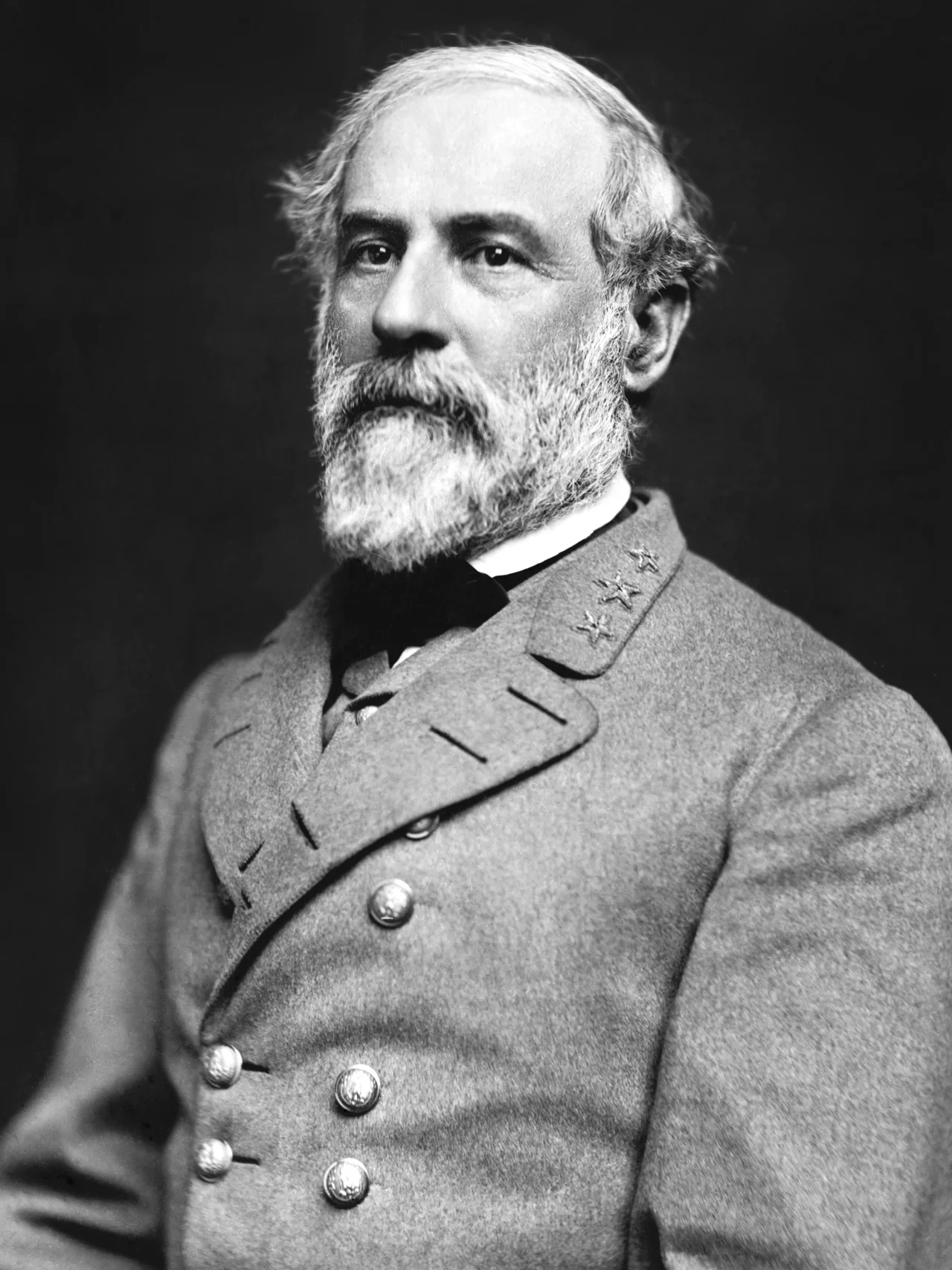
In the spring of 1862 McClellan opened the Peninsula Campaign: he landed an army of 121,000 men on the Virginia peninsula between the York and James rivers and crept on Richmond. In June—July came a series of battles known as the "Seven Days Battles": the new Confederate commander Robert E. Lee — Lincoln, by the way, at the start of the war had offered him command of the Union Army, but Lee had chosen his native Virginia — attacked McClellan again and again and forced him to retreat, although the federal army was at the time both more numerous and better equipped. Lee showed what would become his style: quick strokes, flanking marches, willingness to risk everything. In August 1862 at the Second Battle of Bull Run Lee again broke the federals — this time under General Pope. The army went back to Washington. Lee decided the moment had come to carry the war on to northern soil — and invaded Maryland.
Antietam — the bloodiest day, and the Emancipation Proclamation
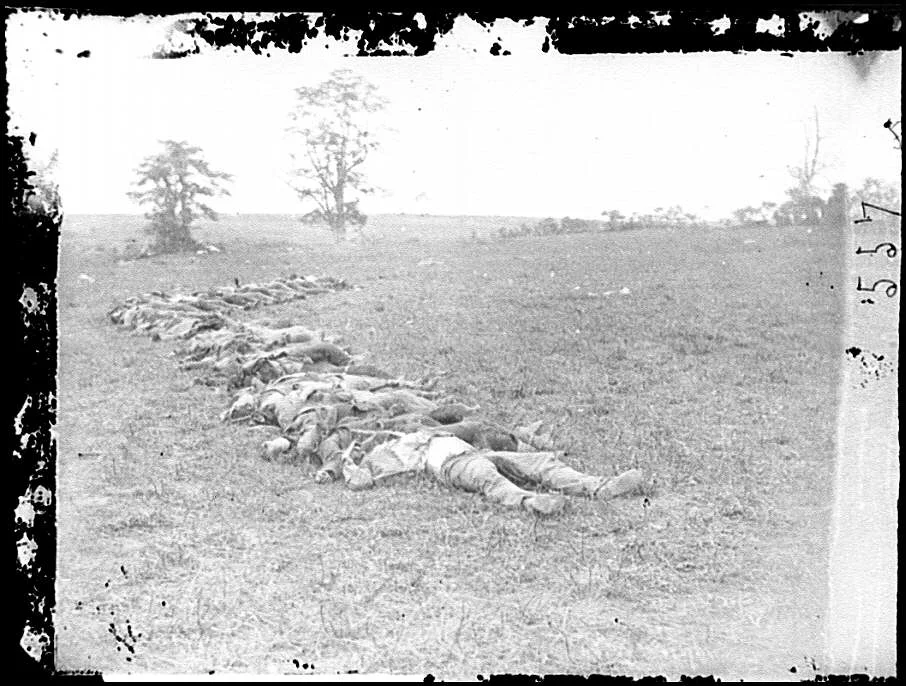
On 17 September 1862, near the small town of Sharpsburg in Maryland, on the banks of Antietam Creek, was fought a battle the like of which American soil had never seen. In a single day of fighting about 23,000 soldiers were killed, wounded or missing — more Americans than the United States had lost in the Wars of Independence, the Mexican War and the Spanish-American War combined. The field — corn fields and stone walls — lay dead. Lee, who had only 38,000 men, held against McClellan's 75,000 — McClellan knew Lee's plans, having by chance found a lost copy of his orders by the roadside, but even this did not move him to attack with vigour. Even so, in the night Lee was forced to fall back across the Potomac. Technically this was the first strategic Union victory.
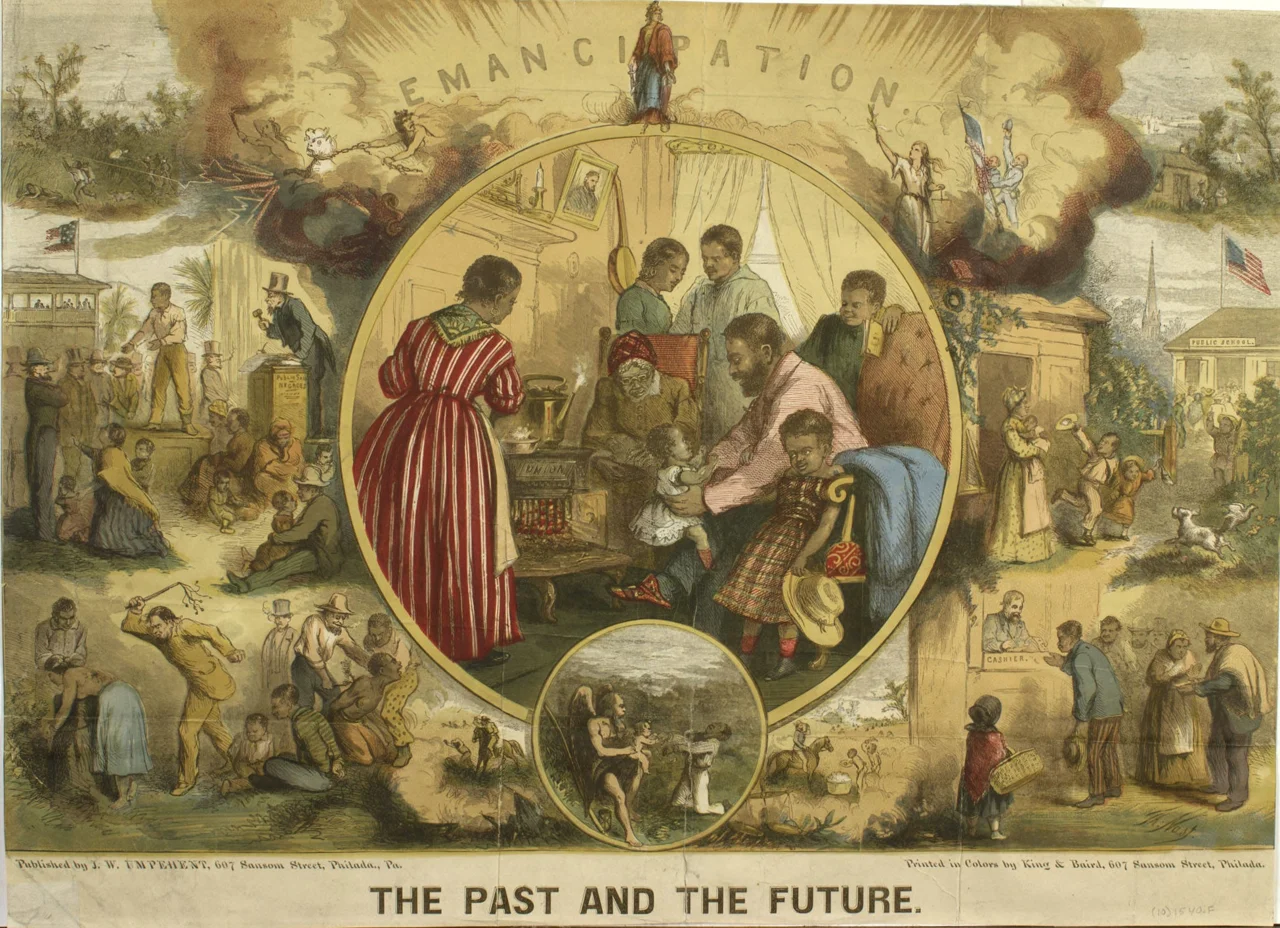
Lincoln had been waiting for just such a moment. Five days later — on 22 September 1862 — he issued the preliminary Emancipation Proclamation: as of 1 January 1863, all slaves in all states then in rebellion against the United States were declared "thenceforward, and forever free." The Proclamation did not free the slaves in those parts of the South already under federal control, nor in the loyal slave states (Maryland, Delaware, Kentucky, Missouri) — here a narrow legal workaround was required. But it changed the meaning of the war: it was now a war not merely for the preservation of the Union, but for the destruction of slavery. Britain and France, which had been seriously considering recognition of the Confederacy, could no longer enter the war on the side of slaveholders. The war had become moral.
Phase 3. The turning point of 1863
The year 1863 became in American history the very year of the turning point, after which a different outcome could no longer be imagined — though there were still two years of fighting left. It all came together: Black regiments that for the first time marched into battle under the federal flag; the death of the best southern general; three July days in Pennsylvania that put an end to Lee's hopes of carrying the war into the North; the fall of Vicksburg and the Union's complete control of the Mississippi River; and a short address by Lincoln at a new military cemetery — an address that Americans today learn by heart in school.
USCT — the Black regiments
From 1 January 1863, when the Emancipation Proclamation took effect, the Union Army began officially accepting Black soldiers. By the end of the war over 180,000 Black men served in the segregated coloured units — the U.S. Colored Troops (USCT): about 10% of the entire Union Army. Of these, roughly three quarters were former slaves who had escaped or been freed. They were at first paid less than white soldiers ($7 a month against $13), they got worse uniforms and worse weapons, and almost always white officers were placed over them — yet they went into battle knowing what they were going for.
The first great test for the USCT was the storming of Fort Wagner in South Carolina on 18 July 1863: the 54th Massachusetts, the first fully Black regiment raised in the North, under Colonel Robert Gould Shaw — a white abolitionist — attacked the fortified fort. About 270 of 600 were killed, the colonel himself among them. When the South learned of a dead white officer who had "led the negroes," it buried him in a common grave with his soldiers — as a mark of dishonour. Shaw should have been outraged. Instead his family wrote: "We can imagine no holier place for him to lie." The attack failed, but it proved one thing that to America in 1863 was not obvious: the Black soldier can and will die for a country that still did not regard him as a full citizen.
Chancellorsville and the death of Stonewall Jackson
In early May 1863, at Chancellorsville in Virginia, Lee won what military historians would later call "his perfect battle." With only 60,000 against the new Army of the Potomac commander — General Joseph Hooker — and his 130,000, Lee did what no textbook permits: he divided his smaller army into two parts. Stonewall Jackson with 28,000 made a 19-kilometre flanking march through the wooded part of the battlefield known as the Wilderness, and on the evening of 2 May fell on the right flank of Hooker, who was drinking coffee and had not even put out pickets. The Army of the Union broke. Hooker fell back across the Rappahannock.
It was a brilliant victory for Lee — and at the same time his most expensive. In the dusk of that same 2 May Stonewall Jackson with his aides was coming back from a reconnaissance. His own South Carolina sharpshooters took them for Union cavalry and gave them a volley. Jackson took three bullets — in the right hand and the left shoulder. The arm had to be amputated. Lee, on hearing the news, said in despair: "He has lost his left arm, but I have lost my right." A week later, on 10 May, Jackson died of pneumonia — he was 39 years old. Without Jackson, Lee would never fight quite the same way again. Two months later it would be the absence of Jackson that was one of the causes of the defeat at Gettysburg.
Gettysburg — three July days
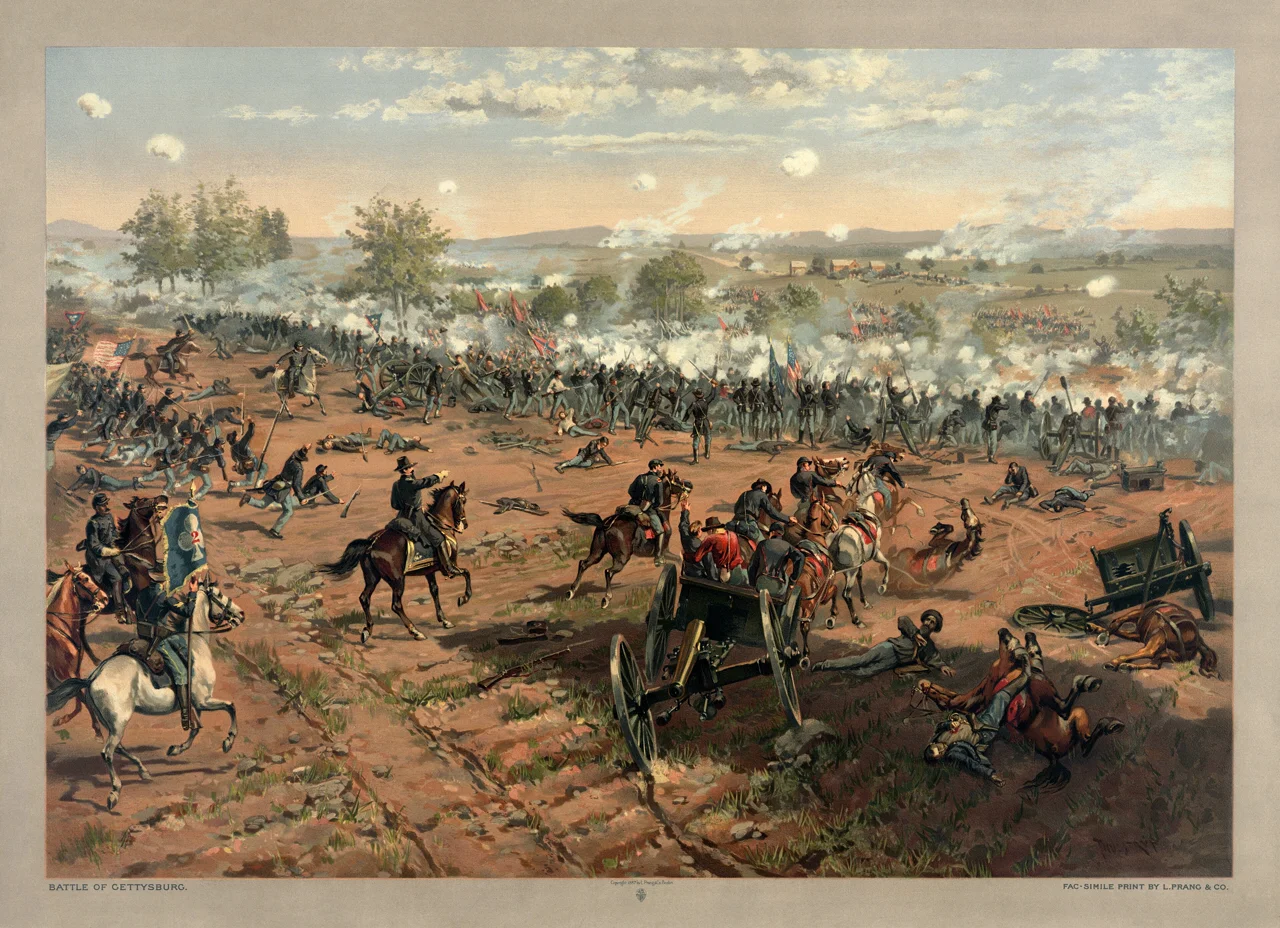
In June 1863 Lee invaded the northern states a second time — now Pennsylvania. He hoped to win a battle on Union ground, lay waste to the industrial North and at last force Lincoln to negotiate. On 1—3 July 1863, at the small town of Gettysburg, met Lee's Army of Northern Virginia (75,000) and the Army of the Potomac under its new commander General George Meade (94,000). The meeting was accidental — a Confederate detachment was looking for boots in the town. Over three days the engagement grew into the largest battle in the history of the Western Hemisphere.
On the first day the Confederates drove the federals back onto the ridges south of the town. On the second day there were terrible fights for Little Round Top, the Wheatfield and the Peach Orchard; Colonel Joshua Chamberlain with his 20th Maine on the extreme left flank of the Union held off the Alabamians and saved the entire position. On the third day, 3 July, Lee decided to put everything on the table: Pickett's Charge — 12,500 Confederates walked across an open field a kilometre wide under federal artillery and rifle fire on the heights of Cemetery Ridge. They say no more than a few hundred reached the position — and were killed. About half of the men in the charge lay dead or wounded. In the night Lee began the retreat. Total losses over the three days — about 51,000 on both sides. The Army of Northern Virginia lost a third of its strength and would never again be capable of a new offensive.
Vicksburg and the splitting of the Confederacy in two
While the blood was flowing at Gettysburg, on the other end of the continent, in the south, the Union general Ulysses S. Grant was finishing the siege of Vicksburg — the last great Confederate city on the Mississippi River. The city, set on a high bluff above the river, was the "Gibraltar of the Confederacy": as long as it held, the South could draw food and horses from Texas and Arkansas. Through the spring of 1863 Grant carried out one of the most cunning manoeuvres of the entire war — he ferried his army south of Vicksburg and took the city from the rear, cutting it off from supplies.
The siege went on for 47 days. The city with its garrison of 30,000 and several thousand civilians was starving — toward the end, they say, they were eating mules, cats and tree bark. The inhabitants dug caves in the clay slopes to hide from artillery. On 4 July 1863 — the day after the failure of Pickett's Charge at Gettysburg — the Vicksburg garrison surrendered. The United States now controlled the entire Mississippi River from its source to the Gulf of Mexico. The Confederacy was cut in two: Texas, Arkansas and most of Louisiana were severed from the rest of the South. Lincoln, in relief, said: "The Father of Waters again goes unvexed to the sea." Because of this 4 July — the birthday of the United States — Vicksburg would not celebrate Independence Day for another 81 years, until the Second World War.
The Gettysburg Address
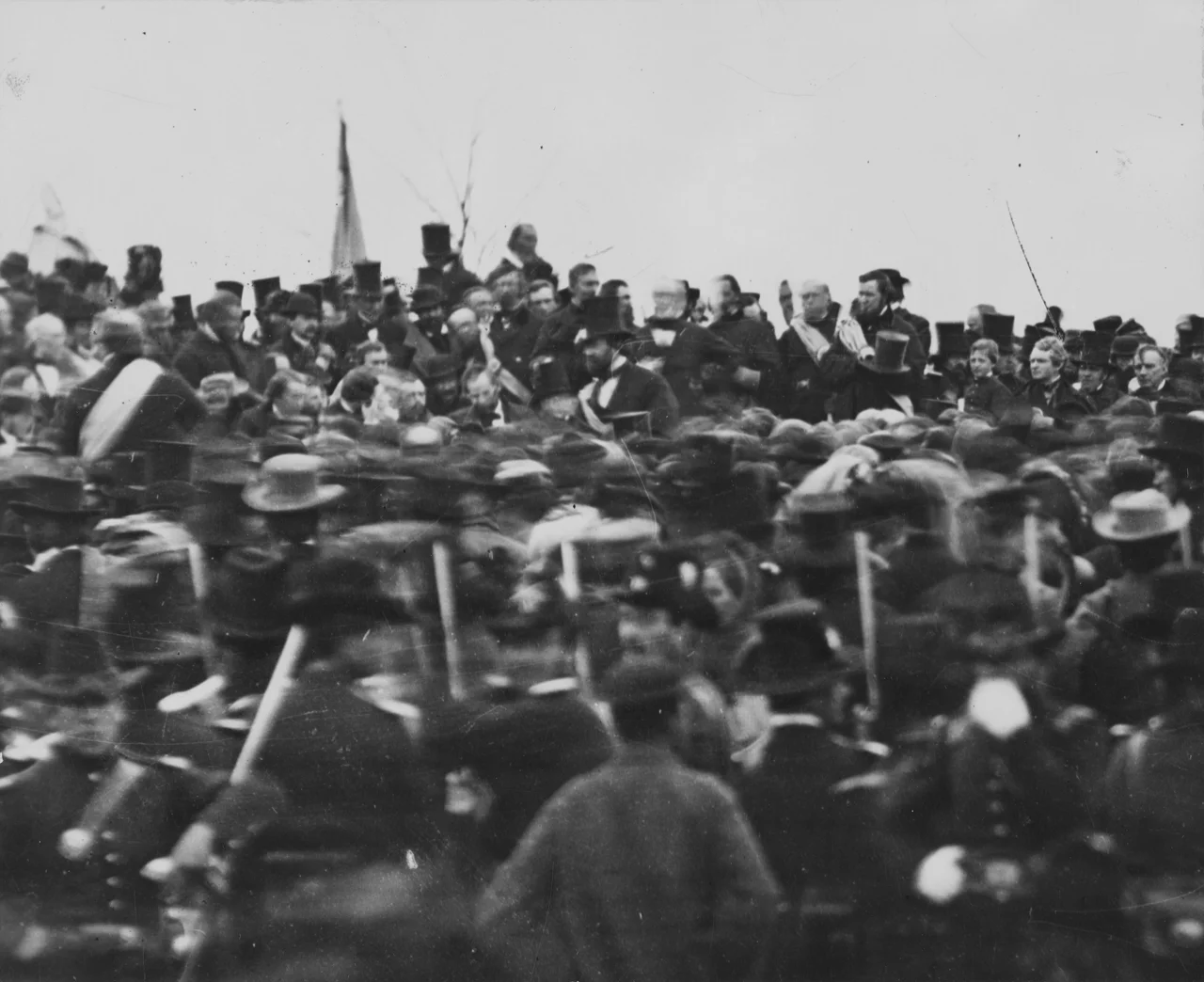
On 19 November 1863, at the new military cemetery at Gettysburg — where only four months earlier the bodies of Americans from both sides had lain in open trenches — was held the solemn ceremony of consecration. The main address was given by the great orator Edward Everett — and he spoke for two hours. After him President Abraham Lincoln spoke briefly. His address lasted less than three minutes. The text fits on a single page — only 272 words.
"Four score and seven years ago," began Lincoln (that is, 87 years, referring to 1776 — the Declaration of Independence), "our fathers brought forth on this continent a new nation, conceived in liberty, and dedicated to the proposition that all men are created equal." He did not praise the army, he named no names — he restated what the war was for: that "government of the people, by the people, for the people, shall not perish from the earth." At the time the speech seemed pale; Lincoln himself thought he had failed. The newspapers the next day either praised or mocked it. But time showed otherwise: these 272 words became the text by which America began to understand itself. Today they are learnt by schoolchildren and carved in the wall of the Lincoln Memorial in Washington.
Phase 4. Total war, 1864
In 1864 Lincoln at last found his general. Ulysses S. Grant, the victor of Vicksburg, was appointed general-in-chief of all the armies of the Union — and brought in a fundamentally new strategy: not manoeuvre, but pressure. Not to win a single battle and fall back — but to break the enemy continuously and everywhere, using the North's advantage in men and matériel. In the east Grant took Lee by the throat and would not let go; in the west Sherman went across Georgia to the sea, destroying everything that could feed a southern army. This was the first real modern war — a total war on the enemy's economy and his will.
Grant and the new strategy
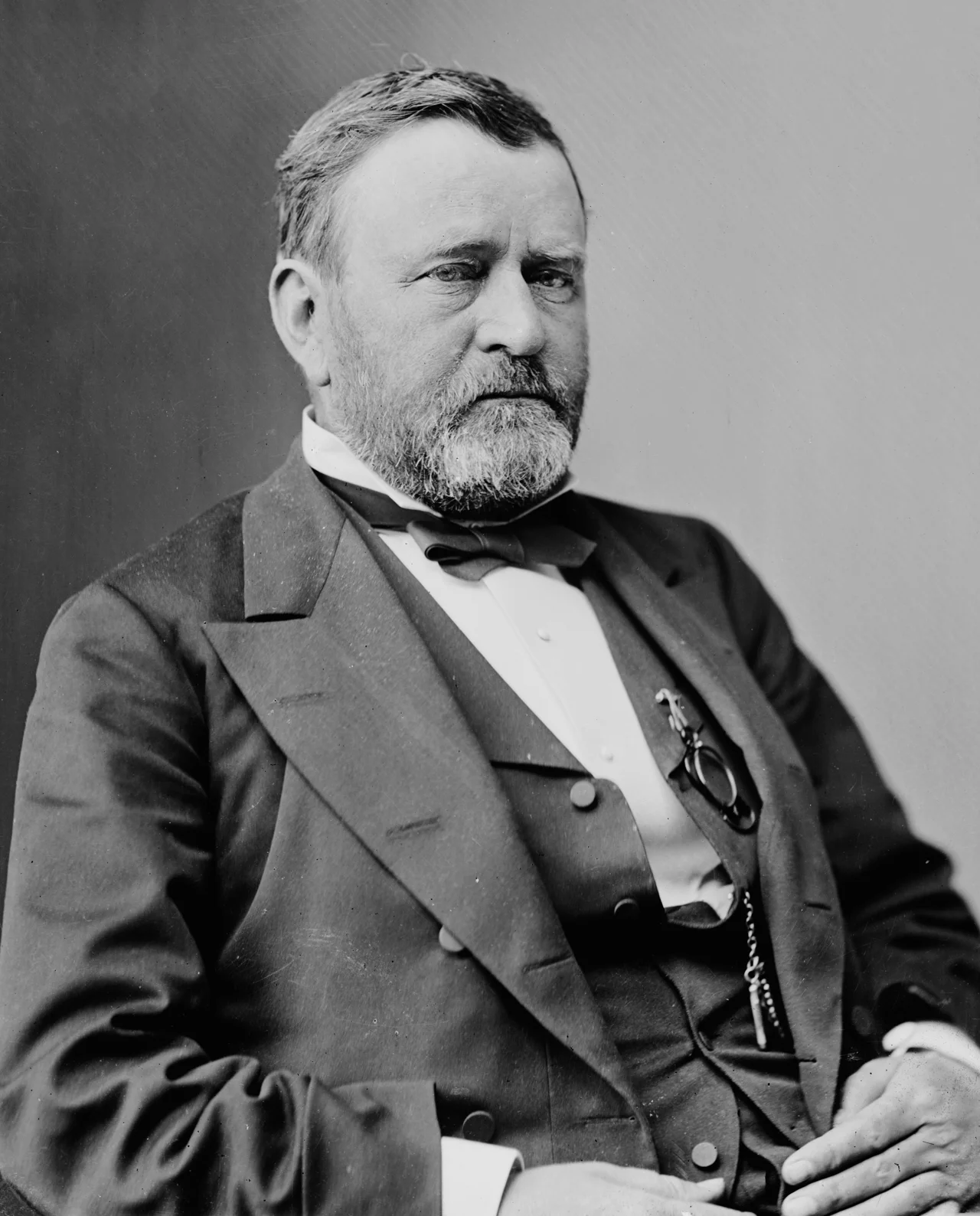
In March 1864 Lincoln appointed Ulysses S. Grant general-in-chief of all the armies of the United States and gave him the rank of lieutenant general — a rank not used since the days of George Washington. Grant was the very opposite of McClellan: short, silent, in a rumpled uniform, with a permanent cigar in his teeth, with not the slightest desire to mount parades. One contemporary said: "This man looks as though he had made up his mind to walk through a wall, and was not in doubt about getting through." Grant did not believe in one decisive battle — he believed in an offensive everywhere at once, with no breathing space for the enemy. Lee would have to fight continuously — and he had no one to replace his losses.
The strategy was simple: two main armies pressing the Confederacy at the same time. In the east Grant himself with the Army of the Potomac (110,000) would take Lee by the throat in Virginia and not let go until he had taken Richmond. In the west William Tecumseh Sherman with a 100,000-strong army would march from Chattanooga through Atlanta into the heart of Georgia and the Carolinas, smashing the South's economy. Smaller armies would simultaneously advance in the Shenandoah Valley and in Louisiana. This was a strategy of continuous bleeding-out. Grant wrote frankly: "I have no plan but to beat your army wherever I find it."
The Wilderness, Cold Harbor and the siege of Petersburg
In May—June 1864 the Overland Campaign opened — a series of the bloodiest battles of the war. 5—7 May — the battle in that same wooded Wilderness where a year earlier Stonewall Jackson had died; the forest caught fire, the wounded burned alive. 8—21 May — Spotsylvania, where in one episode on a stretch 200 metres wide a 22-hour hand-to-hand fight took place in the rain in the trenches, known as the "Bloody Angle." 3 June — Grant's assault at Cold Harbor: in 20 minutes the Union lost 7,000 killed and wounded. Grant later wrote that this was the one attack he had regretted his whole life.
In six weeks Grant had lost about 55,000 men — more than the whole Army of Lee had had at the start of the campaign. The press called Grant the "butcher." But — and this is the main thing — he did not retreat. He kept moving south, and Lee had to dig new trenches in front of him over and over. In mid-June Grant caught Lee unawares and rapidly invested Petersburg — the town south of Richmond through which all the railroads to the Confederate capital ran. Petersburg held out under siege for nine and a half months — the longest siege of the entire war. It was trenches, wire, mortar bombardments, hunger and cold — a direct foretaste of the First World War in Europe fifty years later. Lee was locked in.
Sherman and the March to the Sea; Lincoln's re-election
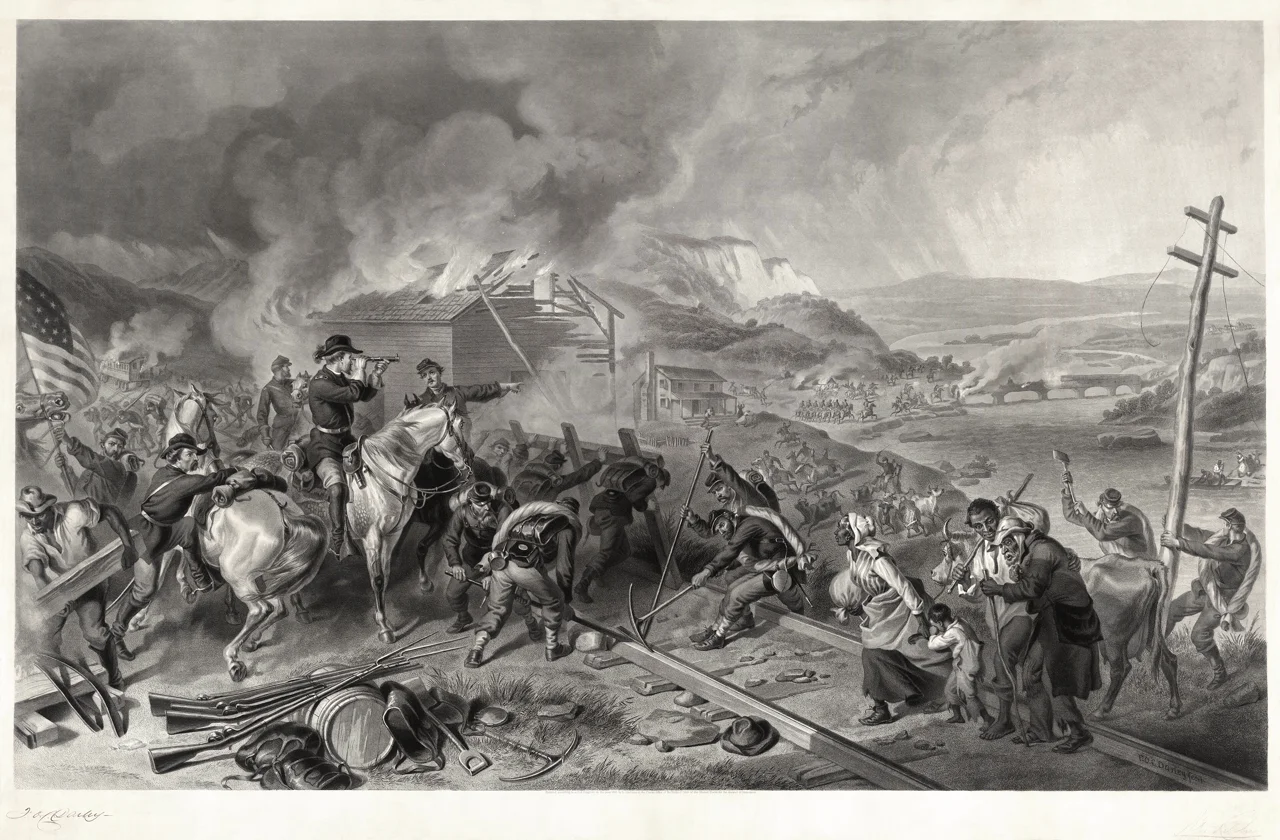
While Grant was squeezing Lee at Petersburg, in the west William Tecumseh Sherman from the spring of 1864 was slowly and stubbornly pushing from Chattanooga in southern Tennessee deep into Georgia — toward the industrial capital of the South, Atlanta. The defence of the city — under the new southern commander, General Hood — fell. On 2 September 1864 Sherman entered Atlanta and telegraphed Lincoln: "Atlanta is ours and fairly won." It was a colossal political victory. In the November election of 1864 Lincoln until that moment had every reason to expect defeat — the Democratic candidate McClellan (yes, the same one) was running on a platform of immediate peace negotiations with the Confederacy. The fall of Atlanta changed everything: in November Lincoln was re-elected with 55% of the vote and 212 electors out of 233. The war now had to go on to victory.
On 15 November Sherman left Atlanta — first burning everything that could be of use to the Confederacy — and with a 62,000-strong army without his own stores or lines of supply set out on the "March to the Sea": 460 kilometres through the heart of Georgia to the Atlantic port of Savannah. Everything in a strip 80 kilometres wide that the army marched through was destroyed: railroads were torn up and the rails twisted into "Sherman's neckties," depots and factories were burned, plantations were looted. On 21 December 1864 Sherman entered Savannah. In a telegram to Lincoln he wrote: "I beg to present you as a Christmas gift the city of Savannah." The South was morally broken — and that was exactly what Sherman wanted. He said: "War is cruelty, and you cannot refine it."
Phase 5. The end of the war, 1865
By the spring of 1865 everything was decided. Lee was holding Petersburg and Richmond with his last exhausted regiments — in the trenches over the winter thousands had died of hunger and dysentery. In despair the Confederate government began to debate — with Lee's silent leave — what had been previously unthinkable: to raise Black soldiers for the southern army in exchange for freedom. The law was passed in March 1865 — and it had no time to act. The war ended in a matter of weeks: 9 April — Lee's surrender, 14 April — Booth's bullet in Lincoln's head.
Appomattox
On 2 April 1865, after almost ten months of siege, Lee's front at Petersburg at last broke. Through the night the Confederate government in Richmond fled south; warehouses and arsenals were set on fire so they would not fall to the enemy — the fire spread and destroyed the centre of the Confederate capital. On 3 April Lincoln in person entered Richmond: he walked the streets through the ruins, holding by the hand his 12-year-old son Tad, with only a handful of sailors around him. Freed slaves in the city fell at his feet and wept. Lincoln quietly said to one: "Don't kneel to me — that is not right. You must kneel only to God, and thank him for your liberty."
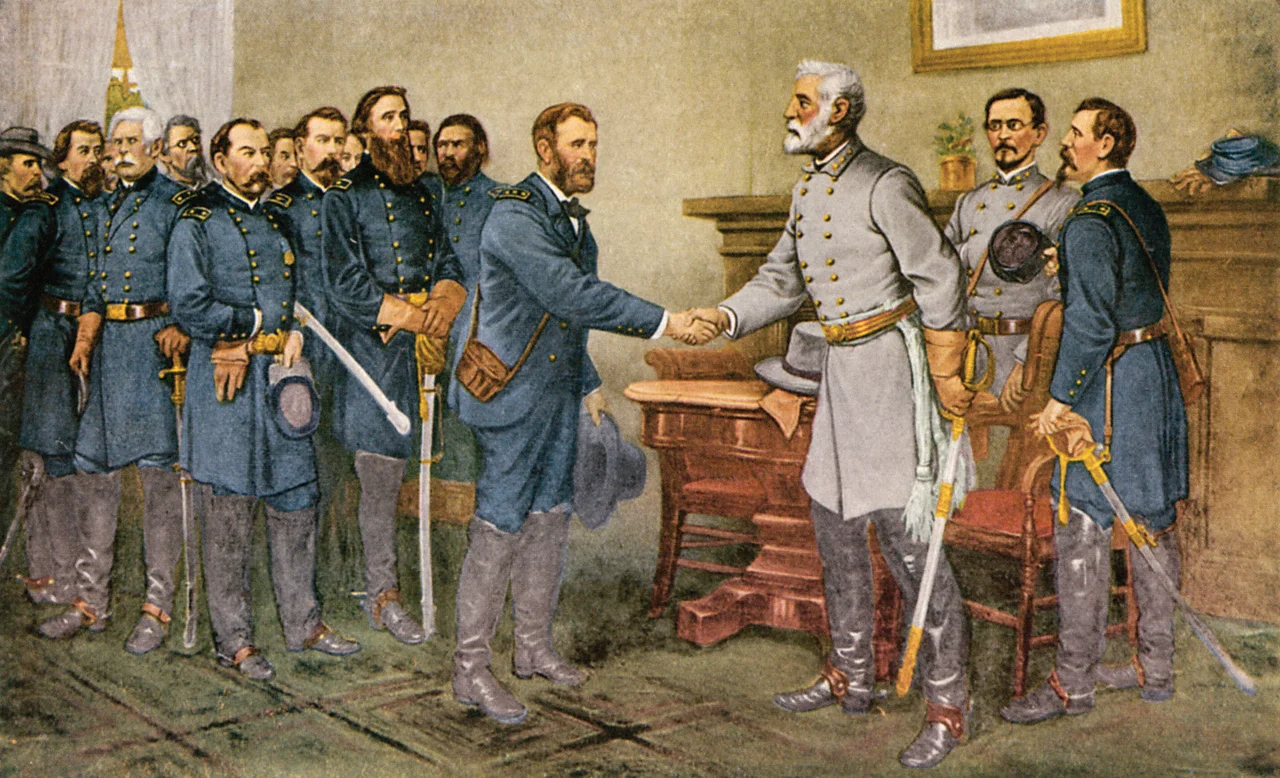
What was left of Lee's army — about 28,000 men, hungry and exhausted — tried to break through to the west to join Johnston's army in the Carolinas. Grant marched after him and step by step cut him off. On 9 April 1865, in the small Virginia village of Appomattox Court House, in the house of the merchant Wilmer McLean, General Robert E. Lee — in dress uniform, with sword — and General Ulysses S. Grant — in muddy field clothes like a common soldier — signed the terms of surrender of the Army of Northern Virginia. Grant was merciful: officers kept their swords, soldiers kept their horses ("they will need them for the spring ploughing"), and all were sent home on their word of honour not to fight again against the United States. No imprisonments, no executions. The war in the east was over. Johnston's army in the Carolinas would surrender on 26 April; the last Confederates in the West, in June.
The assassination of Lincoln at Ford's Theatre
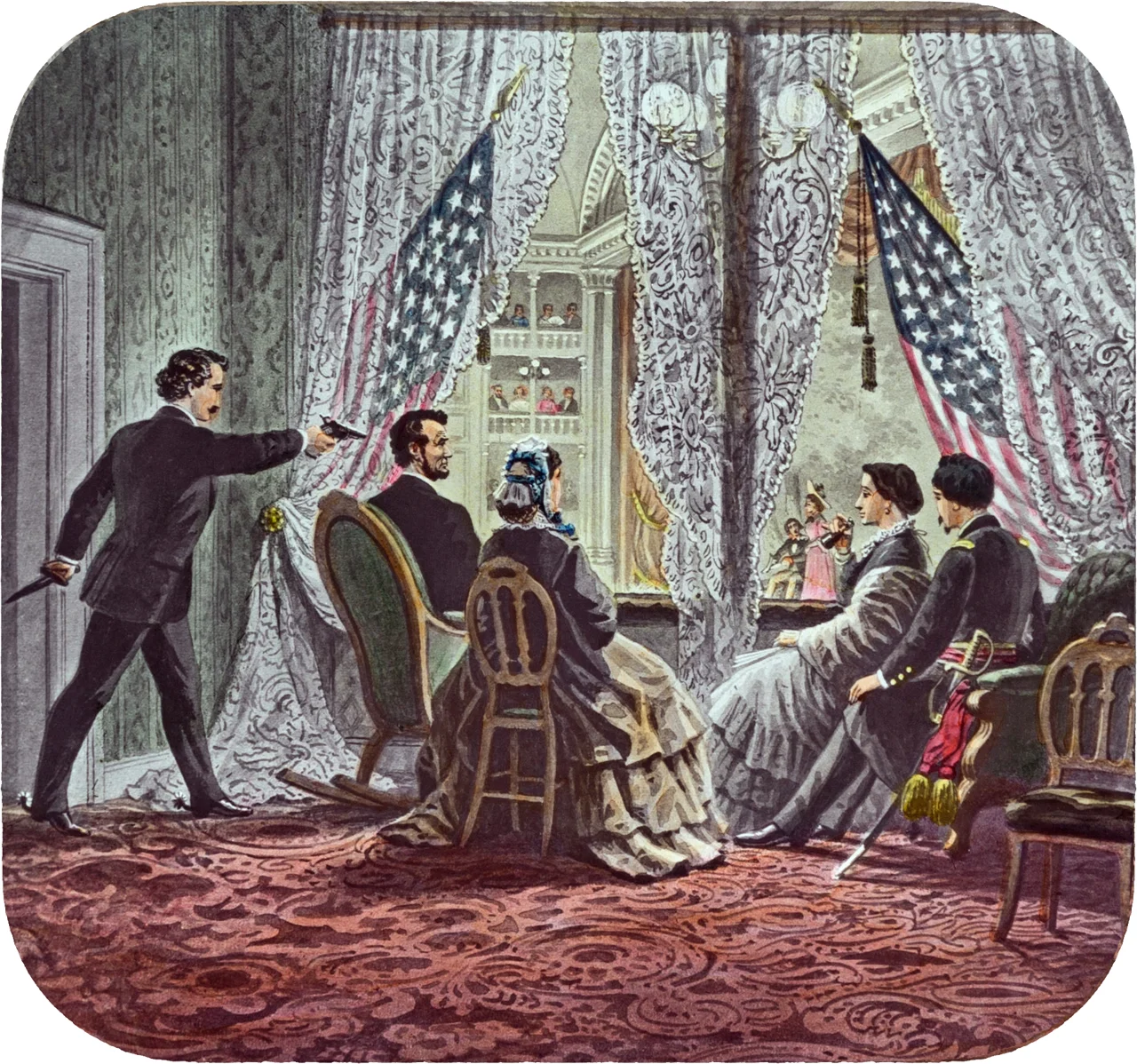
Five days after Appomattox — on Good Friday 14 April 1865 — Lincoln went with his wife Mary and a young couple of friends to Ford's Theatre in Washington, to a comedy called Our American Cousin. It was the first evening he had let himself relax in four years. About 22:15 into the presidential box — for whose guard, through dreadful irresponsibility, no one was responsible that night — walked the 26-year-old actor and Confederate sympathiser John Wilkes Booth. He came up behind Lincoln and shot him in the back of the head with a pocket "Derringer" pistol. The ball passed through the skull and lodged in the brain. Booth threw a knife at a major who tried to stop him, leapt over the railing of the box — caught his foot in the flag and broke an ankle — and ran out across the stage, shouting, they say, the Latin motto of the state of Virginia: "Sic semper tyrannis!" — "Thus always to tyrants."
Lincoln was carried into a house across the street from the theatre and laid on a bed too short for his long body — he lay diagonally. All night doctors and members of the cabinet waited. Lincoln never regained consciousness. On 15 April 1865 at 7:22 in the morning he died. Secretary of War Stanton — a hard man who did not often weep — said through his tears: "Now he belongs to the ages." Lincoln became the first president in American history to be murdered in office. Booth fled into Maryland, hid in a farmer's barn, and after 12 days was shot dead by federal soldiers. Four of his accomplices were hanged. All abolitionists and all Black America mourned Lincoln as never again for any politician. His body was carried by train through seven states to Illinois — millions of people came out onto the platforms to say goodbye.
The legacy: Reconstruction and the three Amendments
The war was over, but Reconstruction (1865—1877) was beginning — another 12 years in which the United States tried to answer the question: what was now to be done with the South and with 4 million newly freed slaves. As early as December 1865 the 13th Amendment to the Constitution was ratified: slavery and forced labour are forbidden on the territory of the United States for ever (except as punishment for a crime). In 1866 the Freedmen's Bureau was founded: a federal agency that opened schools, hospitals, gave out rations and helped find work for the former slaves. By 1870 the Bureau had opened over 4,000 schools in the South and taught about 250,000 Black children and adults to read.
In 1868 the 14th Amendment was ratified: all persons born or naturalised in the United States are citizens; no state may "deprive any person of life, liberty, or property, without due process of law." This was the direct answer to Dred Scott. In 1870 the 15th Amendment was ratified: the right to vote may not be limited on the basis of race, colour, or previous condition of servitude. For a short time Black men in the South became voters, were elected to Congress, became judges. But the southern white elites did not accept this: as early as 1865 the Ku Klux Klan had appeared in Tennessee — a secret terrorist organisation of former Confederates that murdered Black people, Republicans and abolitionist teachers. In 1877, when federal troops left the South, Reconstruction ended — and for the next 90 years the South lived under the system of "Jim Crow": racial segregation in schools, restaurants, trains, voting. Racial justice would be put off until the 1960s.
Epilogue: why it still matters
The Civil War is the moment at which the United States went from being a confederation of states to a single national state. Before 1861 Americans said "the United States are"; after 1865 — "the United States is." The grammar of English changed along with the fact. The federal government after the war was incomparably stronger than any single state, had a national currency (the greenback dollar), a federal income tax (temporary, but a precedent had been set), national railways and a national army. This is what we today call modern America.
But the main answer is still about people, not institutions. 4 million Black Americans became free in 1865. Their children in two generations learned to read, opened the first Black universities (Howard — 1867, Fisk — 1866), began to elect their own to Congress. In 1955 a granddaughter of slaves named Rosa Parks on a city bus in Alabama refused to give up her seat to a white man — and began the civil rights movement of the 1960s. In 1963 the grandson of a pastor from Atlanta named Martin Luther King stood before the Lincoln Memorial in Washington and said "I have a dream." In 2008 a senator from Illinois — Lincoln's state — named Barack Obama took the presidential oath on the very Bible on which Lincoln had taken his oath in 1861. All this began on 12 April 1861, when at 4:30 in the morning the Confederate guns in Charleston opened fire on the federal flag.