Study materials
Six years that consumed some 70–85 million lives and redrew the world. The war was fought on three continents and across every ocean, from Narvik in Norway to Leyte in the Philippines, from the Egyptian desert to the war factories of Siberia. It began with the German invasion of Poland on 1 September 1939 and ended with Japan's surrender aboard the battleship Missouri on 2 September 1945. Between those two dates came the Holocaust, nuclear weapons, the end of the European empires, and the rise of a bipolar world of the United States and the USSR that would endure for the next half-century.
Who fought whom
The Allies (the anti-Hitler coalition). Great Britain and its dominions (Canada, Australia, New Zealand, South Africa, India) fought from the first day. France held out until June 1940, and thereafter through the Resistance and the "Free France" of Charles de Gaulle. The USSR joined after the German attack in June 1941; the United States joined after Pearl Harbor in December 1941. Also Poland, Norway, Greece, Yugoslavia and China (at war with Japan since 1937), with Brazil and dozens of others joining later. The leaders of the "Big Three": Franklin Delano Roosevelt, Winston Churchill, Joseph Stalin.
The Axis. Nazi Germany under Adolf Hitler, Fascist Italy under Benito Mussolini, and Imperial Japan (formally under Emperor Hirohito, in practice under a military government). Its satellites and allies: Hungary, Romania, Bulgaria, Finland (which waged a separate "Continuation War" against the USSR), Slovakia, Croatia, the Vichy régime in France, and Thailand. The Axis was never a single bloc: its three main partners coordinated poorly and never fought as one army.
The phases of the Second World War
The Second World War was really several wars that grew together. We will divide it into 5 phases. Blitzkrieg (1939–1940): Germany crushes Poland, Scandinavia and France in a matter of weeks. Globalization (1941–1942): the attack on the USSR, Pearl Harbor and the Japanese breakout in the Pacific, and the war becomes worldwide. The turning point (1942–1943): Midway, El Alamein, Stalingrad and Kursk, as the strategic initiative passes to the Allies. The Allied offensive (1944): D-Day in Normandy, Operation Bagration in Belarus, the American return to the Philippines. The surrender of the Axis (1945): Berlin, Hiroshima, Nagasaki, the USS Missouri. After the chronology there will be a short epilogue on the consequences.
1 September 1939: the invasion of Poland
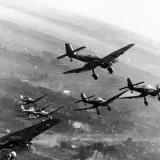
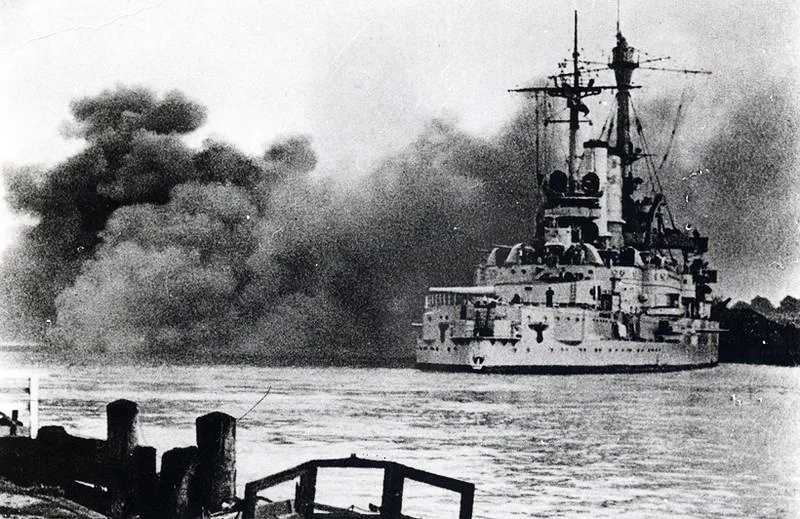
At 4:45 in the morning on 1 September 1939 the German battleship Schleswig-Holstein opened fire on the Polish garrison at Westerplatte in Gdańsk. At the same moment some 1.5 million German soldiers, 2,700 tanks and 2,000 aircraft crossed the border. This was the first demonstration of "Blitzkrieg": coordinated blows by armored wedges, aircraft and motorized infantry. The Polish army, largely infantry and cavalry, had no answer.
On 2 September Britain and France issued Germany an ultimatum, and on 3 September they declared war. On 17 September 1939 the Red Army entered Poland from the east: under the secret protocol of the Molotov–Ribbentrop Pact (23 August 1939) Hitler and Stalin had divided Eastern Europe. By early October Poland had fallen. Its government fled to London, where it led the resistance in exile. In the conquered lands the occupation began, with ghettos and mass shootings of the educated class (Operation Tannenberg, and Katyn in 1940).
Barbarossa: 22 June 1941
At 3:15 in the morning on 22 June 1941, more than 3 million German and allied soldiers, 3,600 tanks and 2,700 aircraft crossed the Soviet border. Operation Barbarossa was the largest invasion in history. Hitler planned to destroy the USSR in 8–10 weeks, before winter, on the Blitzkrieg principle. Stalin had been warned by both British intelligence and Soviet spies in Japan and Switzerland, but he ignored it.
The first month was a catastrophe for the Red Army: encirclements at Minsk, Białystok, Kyiv (in September some 600,000 people were taken prisoner here, the largest "cauldron" in history) and Vyazma. By November the Wehrmacht stood 30 kilometers from Moscow, the spires of the Kremlin visible through binoculars. In the occupied territories the Nazis imposed Generalplan Ost: the extermination of the Jews (mass shootings by the Einsatzgruppen, such as Babyn Yar in Kyiv on 29–30 September 1941, more than 33,000 killed in two days), the destruction of Soviet prisoners of war (about 3 million died of hunger and disease in German camps), and plans to settle the Slavic lands with German colonists.
Pearl Harbor: the United States enters the war
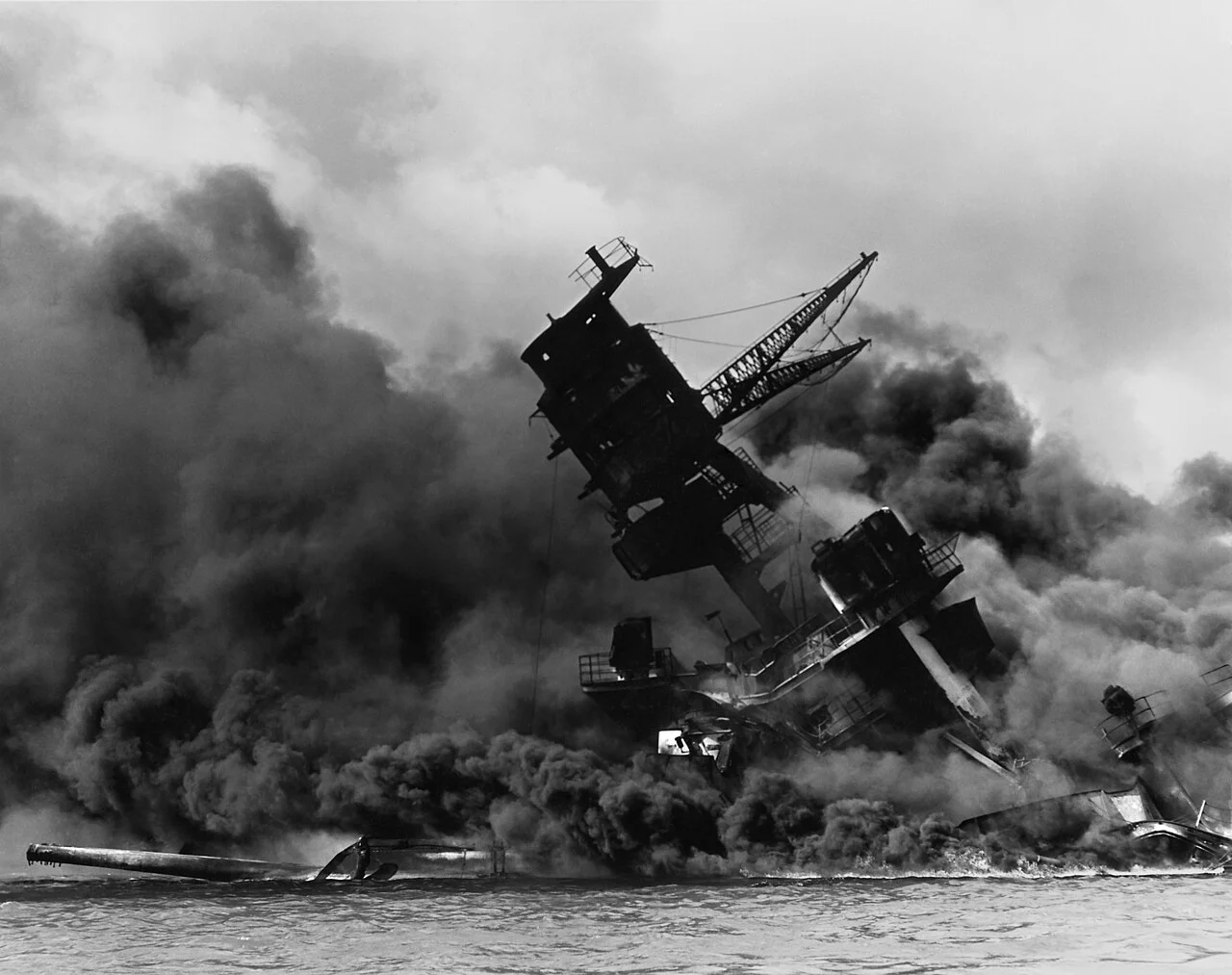
At 7:48 in the morning on 7 December 1941, 353 Japanese aircraft from six carriers attacked the American Pacific base of Pearl Harbor in Hawaii. Within three hours eight American battleships had been damaged or sunk, with more than 2,400 dead. Japan gambled on a swift victory: to knock out the American fleet in a single blow, seize the oil fields of the Dutch East Indies, and secure the resources for war.
The miscalculation was strategic. The next day President Franklin Delano Roosevelt told Congress that 7 December was "a date which will live in infamy". The United States declared war on Japan. On 11 December 1941 Hitler, honoring his obligations to his allies and out of overconfidence, declared war on the United States. It was the worst strategic decision of his career. The war ceased to be European. The industrial capacity of the United States, twice that of Germany and Japan combined, was now switched on against the Axis.
Stalingrad
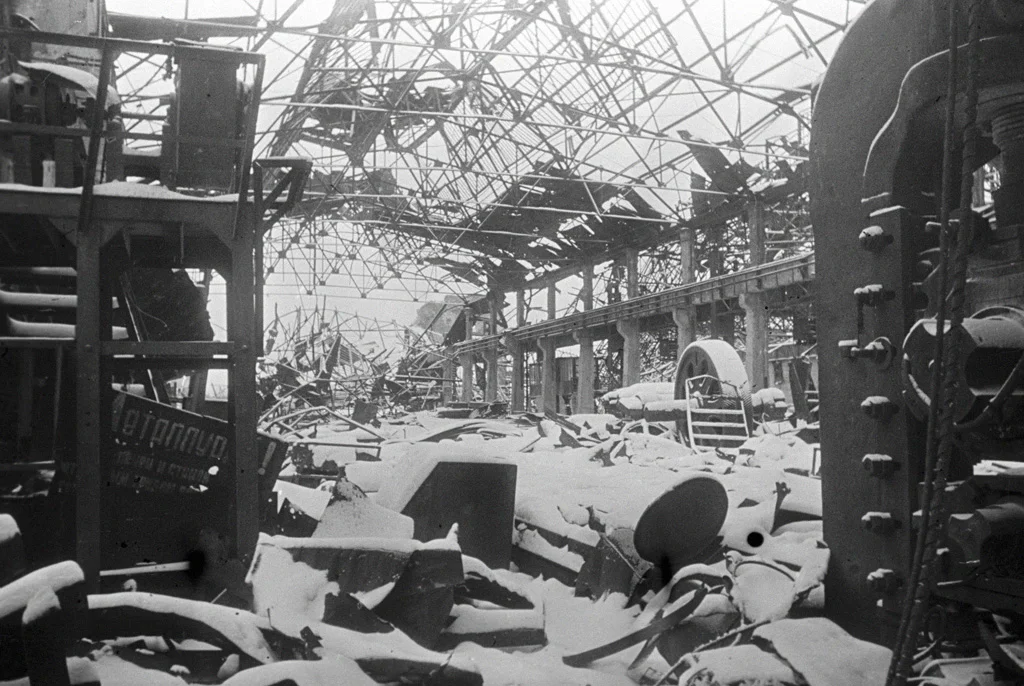
In the summer of 1942 Hitler struck south: toward the Caucasus for its oil and toward the Volga. The city of Stalingrad (now Volgograd) lay at the point of the thrust and took on symbolic significance. The Battle of Stalingrad lasted from 17 July 1942 to 2 February 1943. In August 1942 the 6th Army of General Friedrich Paulus entered the city. Six months of hell began: fighting for every building, every floor, in the ruins of the tractor factory and the grain elevator. Soviet snipers (Vasily Zaytsev), assault groups, night attacks.
On 19 November 1942 the Red Army launched Operation Uranus: two armored wedges encircled the 6th Army inside Stalingrad itself. Hitler forbade any retreat. General Manstein's relief attempt failed. On 2 February 1943 the remnants of the 6th Army, about 91,000 soldiers under Field Marshal Paulus, surrendered. (Hitler had just promoted him to field marshal, hinting at suicide, since field marshals do not surrender.) Total losses at Stalingrad exceeded a million on both sides. It was the strategic turning point on the Eastern Front: the Wehrmacht would never again advance along the entire length of the front.
D-Day: Normandy, 6 June 1944
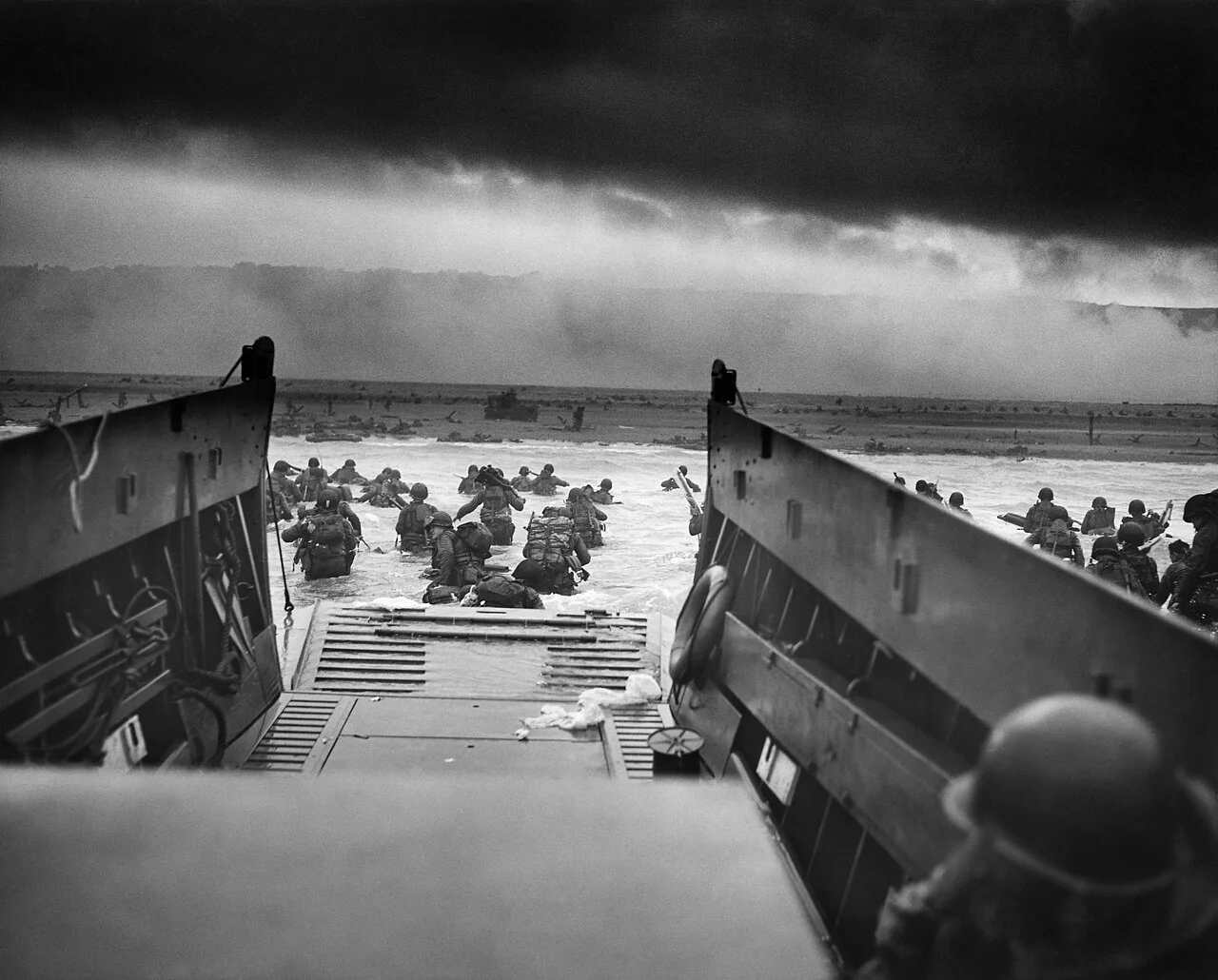
Under the overall command of the American general Dwight Eisenhower, the Allies prepared Operation Overlord for over a year: 156,000 soldiers in the first wave, 5,000 ships, 11,000 aircraft. The landing beaches were given code names: Utah, Omaha, Gold, Juno, Sword. The Germans were deceived: Operation Fortitude convinced Berlin that the main blow would fall at the Pas-de-Calais, not in Normandy.
At 6:30 in the morning on 6 June 1944 the largest amphibious operation in history began. The bloodiest proved to be Omaha beach, where the Americans lost about 2,000 soldiers in a single day under the fire of well-fortified German bunkers. But by evening the beachhead had been held. By August more than a million Allied soldiers had landed in Normandy. On 25 August 1944 the troops of General Leclerc entered Paris, and the city was liberated. De Gaulle walked down the Champs-Élysées. "Paris outraged! Paris broken! Paris martyred! But Paris liberated!"
The surrender of Germany
The Dönitz government sent envoys. On 7 May 1945, at Eisenhower's headquarters in Reims, General Jodl signed the act of unconditional surrender, to take effect at 23:01 Central European Time on 8 May. Stalin insisted on a repeat ceremony in Berlin, where the act was signed during the night by Field Marshal Keitel. By Moscow time it was already 9 May. Hence the different dates for "Victory Day" in the West (8 May, V-E Day) and in the post-Soviet countries (9 May).
The war in Europe had lasted 5 years, 8 months and 6 days. Allied troops liberated the death camps: Auschwitz (the Red Army, 27 January 1945), Bergen-Belsen (the British, April), Dachau (the Americans, April), Buchenwald. For the first time the world saw with its own eyes the scale of the Holocaust, the systematic extermination of European Jewry, in which about 6 million people perished. To them must be added the Roma, homosexuals, the disabled, and political opponents. The word "genocide", coined in 1944 by the jurist Raphael Lemkin, became a legal term at the Nuremberg trials.
Hiroshima and Nagasaki
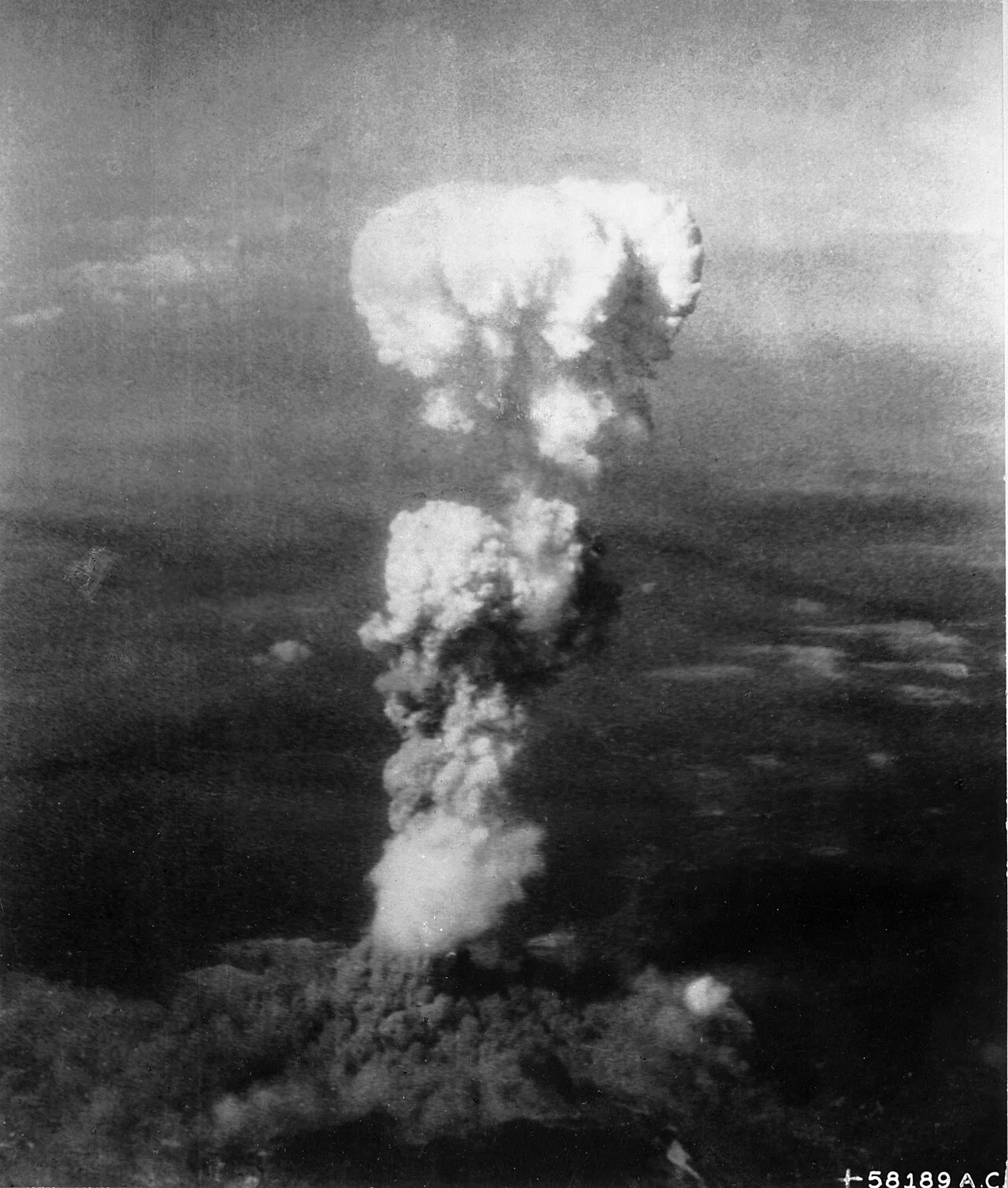
Japan fought on. Its government refused to accept the terms of unconditional surrender in the Potsdam Declaration (26 July 1945). President Harry Truman (Roosevelt had died on 12 April 1945) authorized the use of a new weapon created under the secret Manhattan Project. At 8:15 in the morning on 6 August 1945 the B-29 bomber Enola Gay dropped the uranium bomb "Little Boy" on Hiroshima. About 80,000 died instantly, and within a year around 140,000 had died from the after-effects.
On 9 August 1945 the plutonium bomb "Fat Man" was detonated over Nagasaki, taking about 70,000 lives. That same day the USSR, fulfilling its Yalta commitments, declared war on Japan and invaded Manchuria. On 15 August 1945 Emperor Hirohito addressed the Japanese people by radio for the first time in history: Japan accepts surrender. Whether the bombs were truly militarily necessary, historians still argue. About their psychological effect there is no dispute: they opened the nuclear age and became a permanent factor in international politics for the next 80 years.
What the war left behind
The human cost. Around 70–85 million dead, of whom roughly two-thirds were civilians. The USSR lost about 27 million, China between 15 and 20, Poland about 6 (including 3 million Polish Jews), Germany about 7, Japan about 3. The Holocaust: about 6 million European Jews systematically exterminated.
The geopolitical cost. Europe ceased to be the center of the world. Britain and France were exhausted: over the next 20 years their colonial empires in India, Southeast Asia and Africa would collapse. In place of the six great powers of the prewar world there remained two superpowers, the United States and the USSR, armed with nuclear weapons, locked in ideological confrontation, and ready to move straight into a new conflict. The Cold War would begin within two years. The Yalta–Potsdam order would last until 1991. The UN, the Bretton Woods institutions (the IMF and the World Bank), the Universal Declaration of Human Rights (1948) and the Geneva Conventions (1949) — this is the institutional legacy of the war, which still defines the rules of international coexistence. The Second World War turned geopolitics from a European affair into a matter for the whole world, and that global character has never gone away.