Study materials
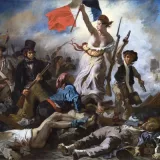
Ten years that destroyed a thousand-year-old monarchy, beheaded a king and a queen, invented the modern idea of the citizen, and produced Napoleon himself. It was the first revolution that openly proclaimed: power belongs to the nation, not to a man anointed by God. It all began on May 5, 1789, at Versailles, when Louis XVI summoned the Estates-General — and ended on November 9, 1799 (18 Brumaire) with the coup of a young Corsican general. In between came the storming of the Bastille, the Declaration of the Rights of Man and the Citizen, the guillotine on the Place de la Révolution, wars against half of Europe, and roughly 1.4 million dead.
What it was and why it began
By the late 18th century France was the richest country in Europe — and also bankrupt. King Louis XVI ruled alone, the treasury had been drained by wars and the luxury of the court, and society was split into three estates. The first two — the clergy and the nobility — paid almost no taxes, while the whole burden fell on the third estate: peasants, townspeople, the bourgeoisie. When things became truly desperate, the king summoned the Estates-General — an ancient assembly of all the estates that had not met for 175 years.
1789: the Estates-General, the Oath and the Bastille
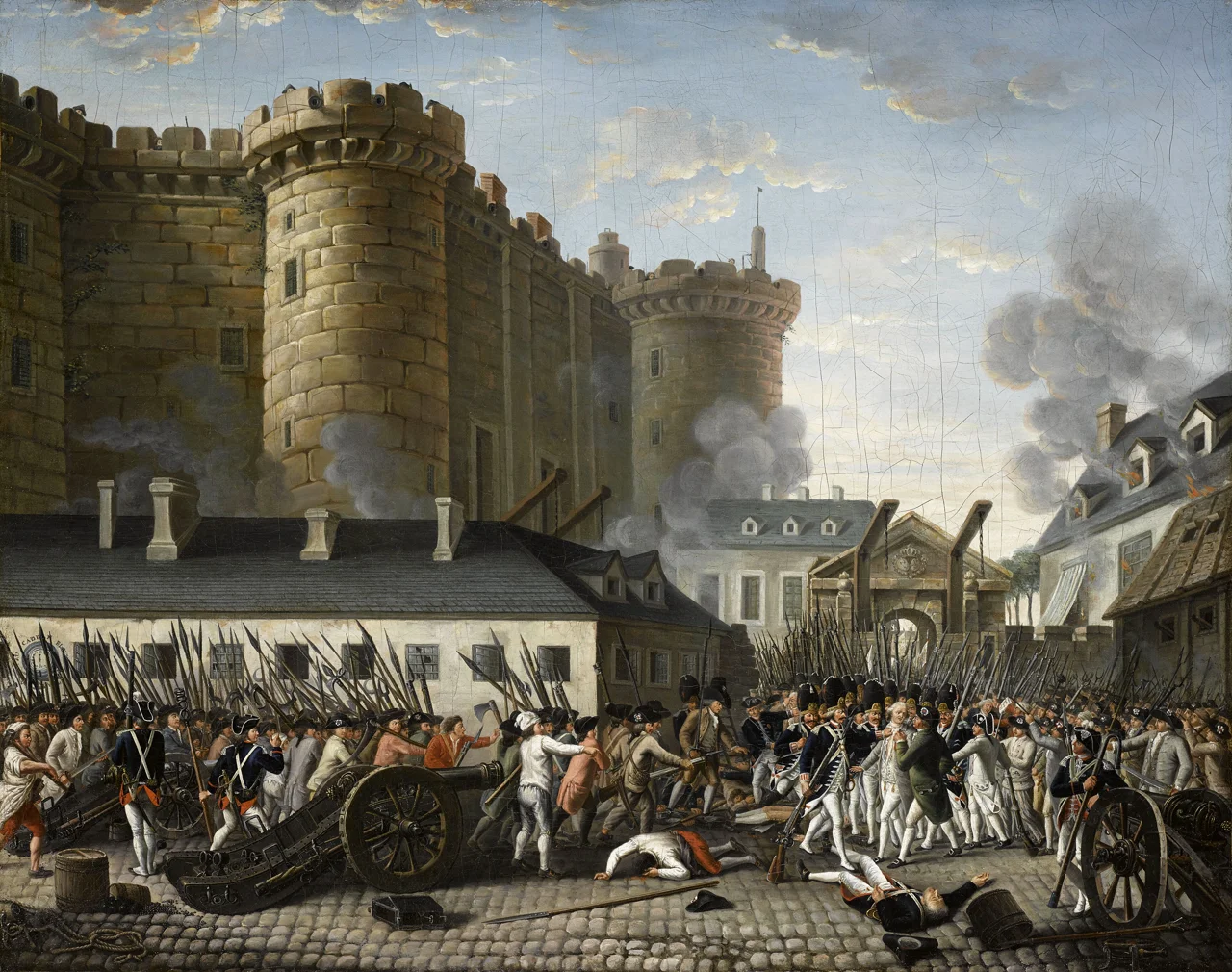
The third estate demanded voting by head rather than by estate, so that its voice would finally count. When it was ignored, the deputies declared themselves the National Assembly and swore not to disperse until they had given France a constitution (the famous "Tennis Court Oath" of June 20, 1789). The people of Paris backed them by force: on July 14, 1789, a crowd stormed the Bastille — an old fortress-prison and a symbol of royal tyranny. That day is still celebrated as France's national holiday.
The end of the old world: the Declaration of Rights and the women's march
Within weeks the revolution swept away a thousand-year-old order. On the night of August 4, 1789, the nobles themselves renounced their feudal privileges, and on August 26 the Assembly adopted the Declaration of the Rights of Man and of the Citizen: all people are born free and equal in rights. In October thousands of Parisian women, driven to despair by the price of bread, marched on foot to Versailles and forced the king to move to Paris — under the people's watch.
The king flees, a republic is born
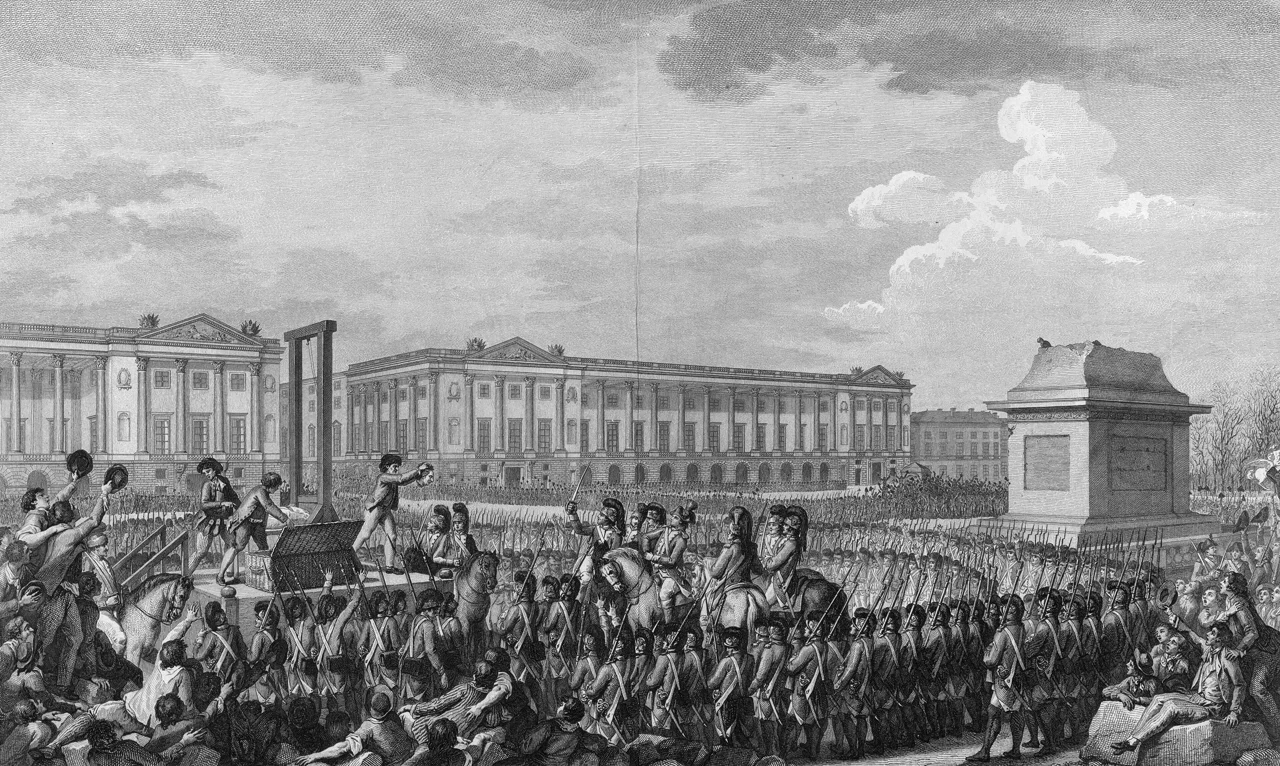
Louis XVI did not give in. In June 1791 he tried to flee the country in secret, but he was recognized and turned back at the town of Varennes. Trust in the king collapsed for good. In 1792 France found itself at war with Austria and Prussia, the monarchy was overthrown, and on September 22, 1792, the First Republic was proclaimed. The former king was tried as a traitor and executed by guillotine on January 21, 1793. A few months later the same fate befell Queen Marie Antoinette.
The Terror and Robespierre
The Republic was fighting half of Europe and sinking into internal revolts. To save the revolution, the Committee of Public Safety came to power, led by Maximilien Robespierre. The Terror began: anyone suspected of treason was sent to the guillotine — tens of thousands died. In the end the fear turned against Robespierre himself: in July 1794 (9 Thermidor) he was overthrown and executed the very next day.
The Directory and the rise of Napoleon
After the Terror, power passed to a moderate government of five directors — the Directory. It was weak, corrupt and disliked by everyone, but on the battlefield a young general named Napoleon Bonaparte rose to fame, crushing France's enemies in Italy and Egypt. On November 9, 1799 (18 Brumaire), Bonaparte used the army to disperse the Directory and seize power for himself. The revolution was over — the age of Napoleon had begun.
What the revolution left behind
The French Revolution lasted ten years and cost around 1.4 million lives — but it changed the world forever. It proclaimed that power belongs to the nation, not the king, and gave humanity the Declaration of the Rights of Man and the motto "Liberty, Equality, Fraternity." The modern ideas of citizenship, constitutions and human rights trace back to it. Even the metric system is partly a legacy of those years.