Study materials
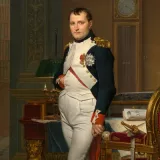
Sixteen years in which one man redrew the map of Europe from Lisbon to Moscow. Napoleon Bonaparte came to power on 9 November 1799 as a 30-year-old victorious general fresh from Italy; he fell on 18 June 1815 on the field of Waterloo. In between came the largest European empire since Charlemagne, the Civil Code still in force across half the world, an army of 600,000 bayonets that reached Moscow, and roughly 3.5—6 million dead.
Who Napoleon was and how he came to power
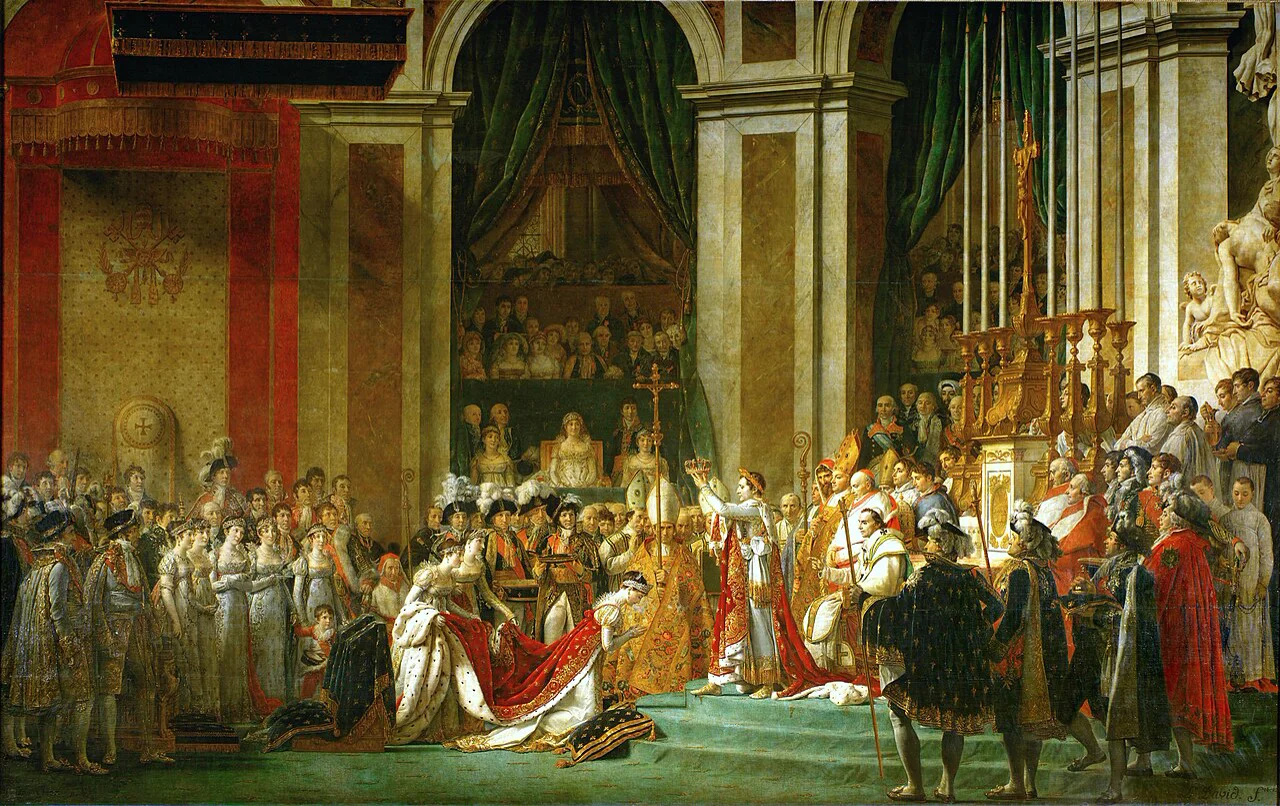
Napoleon Bonaparte was a poor officer from Corsica who rose rapidly thanks to his talent as a commander during the French Revolution. In 1799 he carried out a coup and seized power, and in 1804 he proclaimed himself Emperor of the French. Within a few years the former revolutionary general had become the most powerful ruler in Europe.
The Grande Armée and brilliant victories
Napoleon built a huge, well-trained "Grande Armée" and won battle after battle. The peak of his glory was the Battle of Austerlitz in 1805, where he crushed the combined armies of Austria and Russia. This victory is still considered his most brilliant.
Trafalgar: the Britain that could not be beaten
On land Napoleon was almost invincible, but at sea Britain ruled. In 1805 the British fleet of Admiral Nelson crushed the Franco-Spanish ships at Trafalgar. From then on any invasion of England had to be forgotten, and Napoleon tried to strangle it with a trade "Continental Blockade".
The empire at its height
At the height of his power Napoleon controlled, directly or indirectly, most of Europe. He placed relatives on thrones, redrew borders and spread his laws. His famous Civil Code enshrined equality before the law — and underlies many legal systems to this day.
The Spanish "ulcer"
In 1808 Napoleon tried to subdue Spain — and got bogged down. The Spanish raised a nationwide guerrilla war (the "guerrilla"), which drained the French for years. Napoleon himself called this protracted, hopeless campaign his "Spanish ulcer".
The fatal Russian campaign (1812)
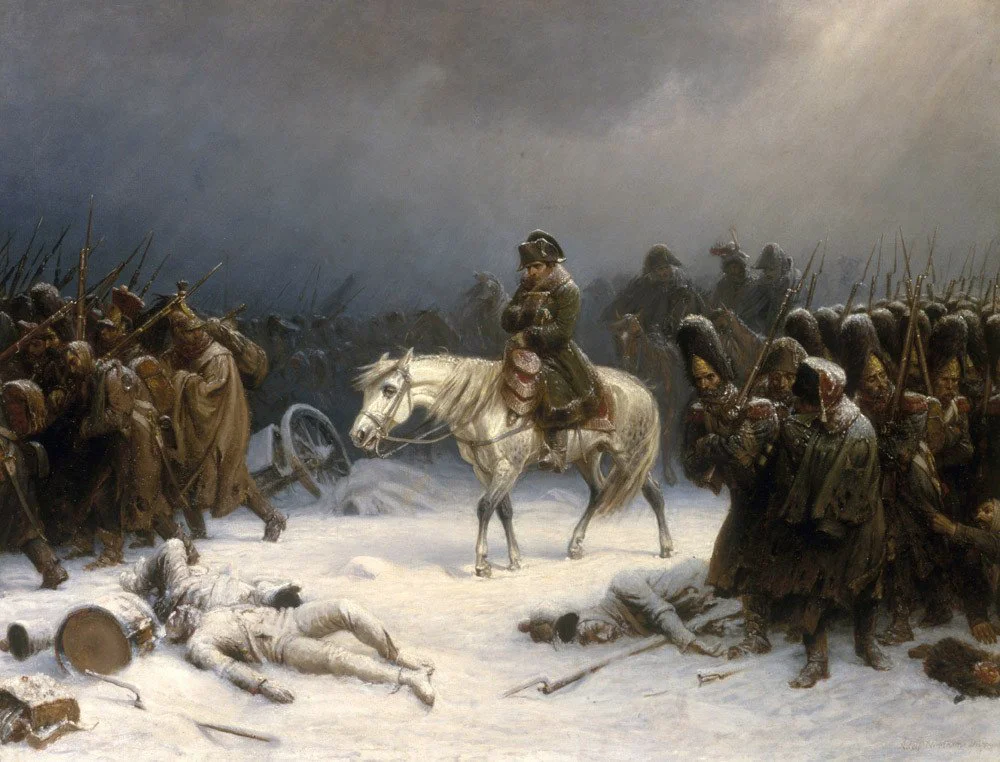
In 1812 Napoleon invaded Russia with a huge army. He reached Moscow, but the Russians burned the city and did not surrender. In winter the French had to retreat along a starving, freezing road — and the Grande Armée was almost entirely destroyed. This was the beginning of the end of the empire.
The fall and the "Hundred Days"
After the catastrophe in Russia, all of Europe rose against Napoleon. In 1813 he was defeated at Leipzig (the "Battle of the Nations"), and in 1814 he abdicated and ended up on the island of Elba. But a year later he escaped, regained power for the "Hundred Days" — and lost for good the decisive Battle of Waterloo in 1815.
St Helena and the legacy
After Waterloo Napoleon was exiled to the remote island of St Helena in the Atlantic, where he died in 1821. He lost the war but won the legacy: the Civil Code, equality before the law, the metric system and the very image of modern Europe. The Napoleonic Wars finally buried the old world of autocratic kings.