Study materials
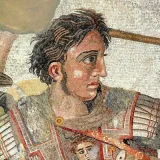
Thirteen years in which a 20-year-old king of small mountainous Macedon destroyed the largest empire of the age and marched with his army as far as the Indus. Alexander III ascended the throne in 336 BC after the assassination of his father Philip II, and died in 323 BC at Babylon, not yet 33. In between came roughly 22,000 km of marches, from the Balkans to the Punjab; four great battles against the Persians (Granicus, Issus, Gaugamela, Hydaspes), none of them lost; the death of Darius III, King of Kings; and more than twenty cities founded under the name of Alexandria. Alexander fused Greek culture with the East and opened the age of Hellenism, which would last until Cleopatra and the Roman conquest of Egypt in 30 BC.
Who was Alexander the Great
Alexander the Great is one of the greatest military commanders in human history. A young king of small, mountainous Macedon, in just thirteen years he conquered the vast Persian Empire and marched with his army as far as India. In his whole life he never lost a single battle — and he died at the height of his glory, before even turning 33.
King at twenty
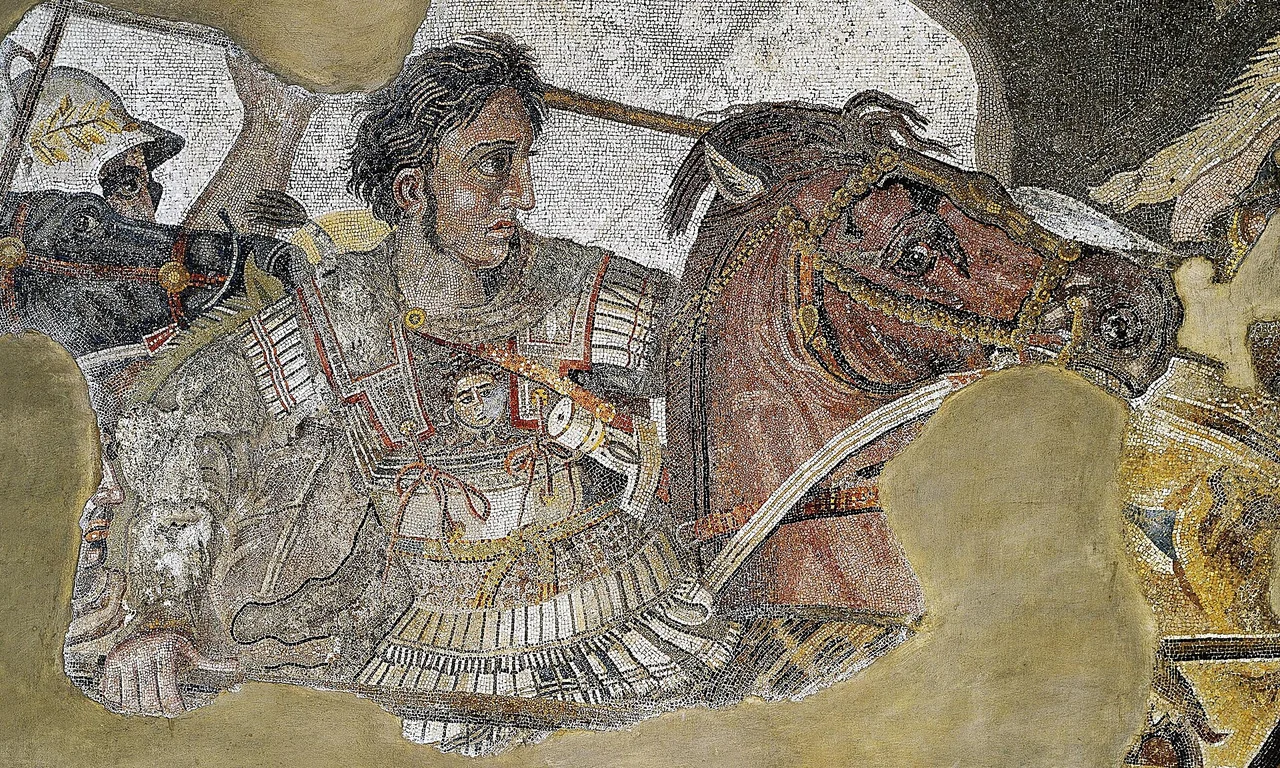
Alexander’s father, King Philip II, made Macedon the most powerful military state in Greece. But in 336 BC Philip was murdered, and the twenty-year-old Alexander came to the throne. He was lucky in his teacher too: in his youth he was taught by Aristotle himself — the greatest philosopher of the age.
The campaign against vast Persia
Alexander’s main enemy was the Persian Empire — the largest and richest state of the age, led by the "King of Kings" Darius III. With a relatively small but superbly trained army, Alexander crossed into Asia and began crushing the Persians in battle, even though they were often several times more numerous.
The Gordian Knot
By the most famous legend, in the city of Gordion stood a chariot tied with an impossibly tangled knot. It was said that whoever undid it would rule all of Asia. Alexander did not bother with it — he simply cut the knot with his sword. Hence the saying "to cut the Gordian knot" — to solve a difficult problem with a bold, decisive stroke.
The decisive victory at Gaugamela
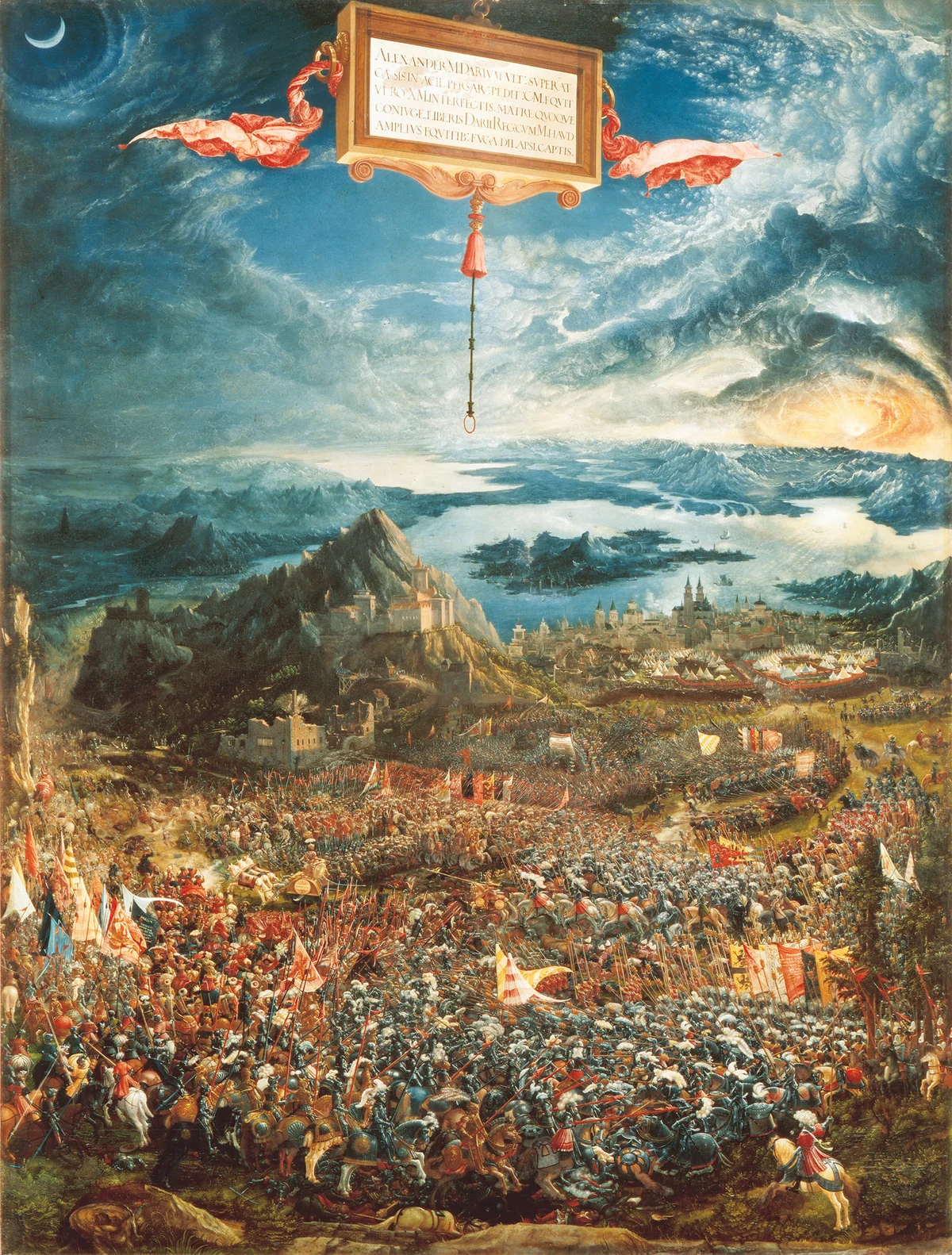
In 331 BC, at the Battle of Gaugamela, Alexander finally crushed Darius’s huge army, even though the Persians were far more numerous. After this he became master of the Persian Empire, occupied its capitals and burned the magnificent palace at Persepolis. Darius was soon killed by his own courtiers.
To the edge of the world — and back
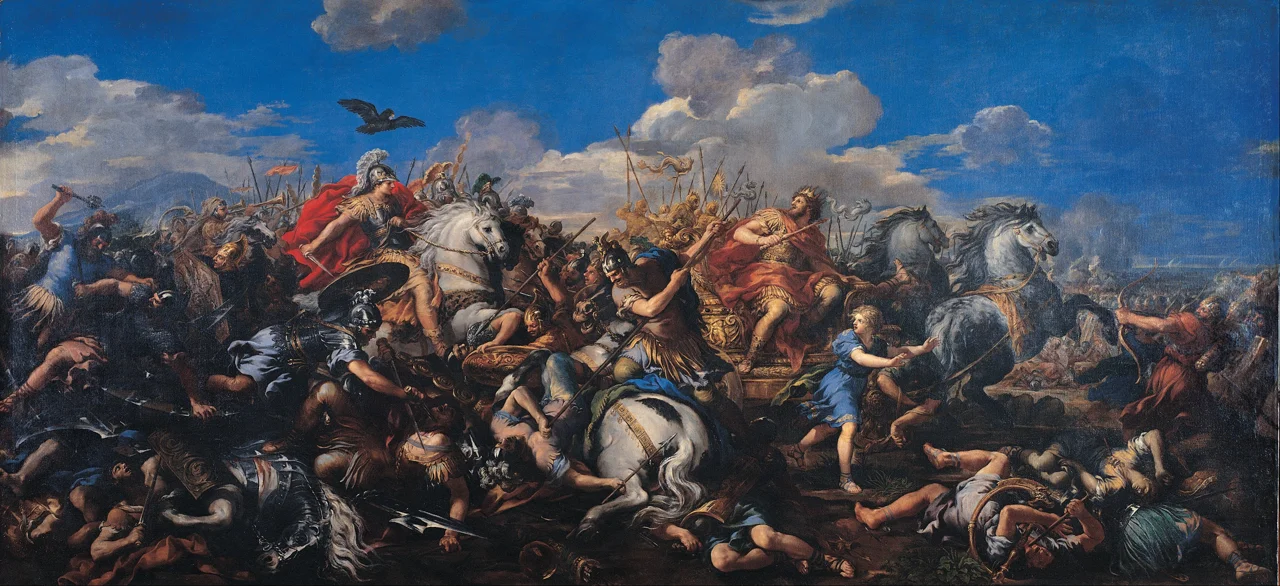
Alexander pushed ever further east, all the way to India, where he defeated King Porus and his war elephants. He dreamed of reaching the "edge of the earth", but his weary army refused to go on and forced the king to turn back. The return through the scorching desert cost thousands of lives.
An early death in Babylon
In 323 BC Alexander suddenly fell ill and died in Babylon — at just 32. He had no time either to enjoy his vast empire or to name an heir. After his death his generals tore the conquered state apart into separate kingdoms.
Why he is remembered
Alexander remained forever the model of the conquering commander: later both Julius Caesar and Napoleon measured themselves against him. He founded more than twenty cities named Alexandria and spread Greek culture across the East. Thus began the age of Hellenism — the fusion of the Greek and Eastern worlds.