Study materials
In just 120 years — between the first Portuguese expedition south along the African coast in 1419 and the fall of Vilcabamba, the last Inca capital, in 1543 — a small handful of Europeans in wooden ships literally stitched the planet into a single whole. Before 1419, Europe, Africa, Asia and the Americas lived apart: no inhabitant of Lisbon had ever in his life seen a potato, a tomato or a pineapple; no inhabitant of Tenochtitlan had ever seen a horse, a cow or a wheel. 120 years later, Spanish galleons were crossing the Pacific, Portuguese trading posts stood from Malacca to Nagasaki, potatoes grew in Ireland, maize in Italy, and every year tons of silver from Potosí arrived in the port of Seville. This is the age that gave birth to the first true global empires and the first transatlantic capitalism — and, at the same time, to the Atlantic slave trade and the demographic catastrophe of the native peoples of the Americas. If you want to understand why the world looks the way it does today, this page is about how it came to be that way.
Why did everyone suddenly set sail?
Europeans adored spices from the East — pepper, cloves, cinnamon. But they were carried by caravan across distant lands, and cost a fortune. And when the Ottoman Turks closed off the usual overland routes, Europeans began to wonder: what if you could reach the East by sea? Whoever found a sea route to India would become fabulously rich. It was this dream of spices and gold that pushed the first ships out into uncharted oceans.
The little ship that changed the world
It all began with the caravel — a small but very nimble ship. Its slanting triangular sails let it sail even against the wind — something the old vessels could not do. In ships like these, daring sailors finally ventured far from shore into the open ocean. Without the caravel there would have been no Columbus and no da Gama.
How to sail around Africa
The Portuguese were the first to dare. Year after year their ships crept farther south along Africa. Until at last, in 1488, captain Bartolomeu Dias rounded the southernmost tip of the continent — the Cape of Good Hope. Now it was clear: Africa could be sailed around, and so a sea route to India did exist!
Columbus sails the wrong way (1492)
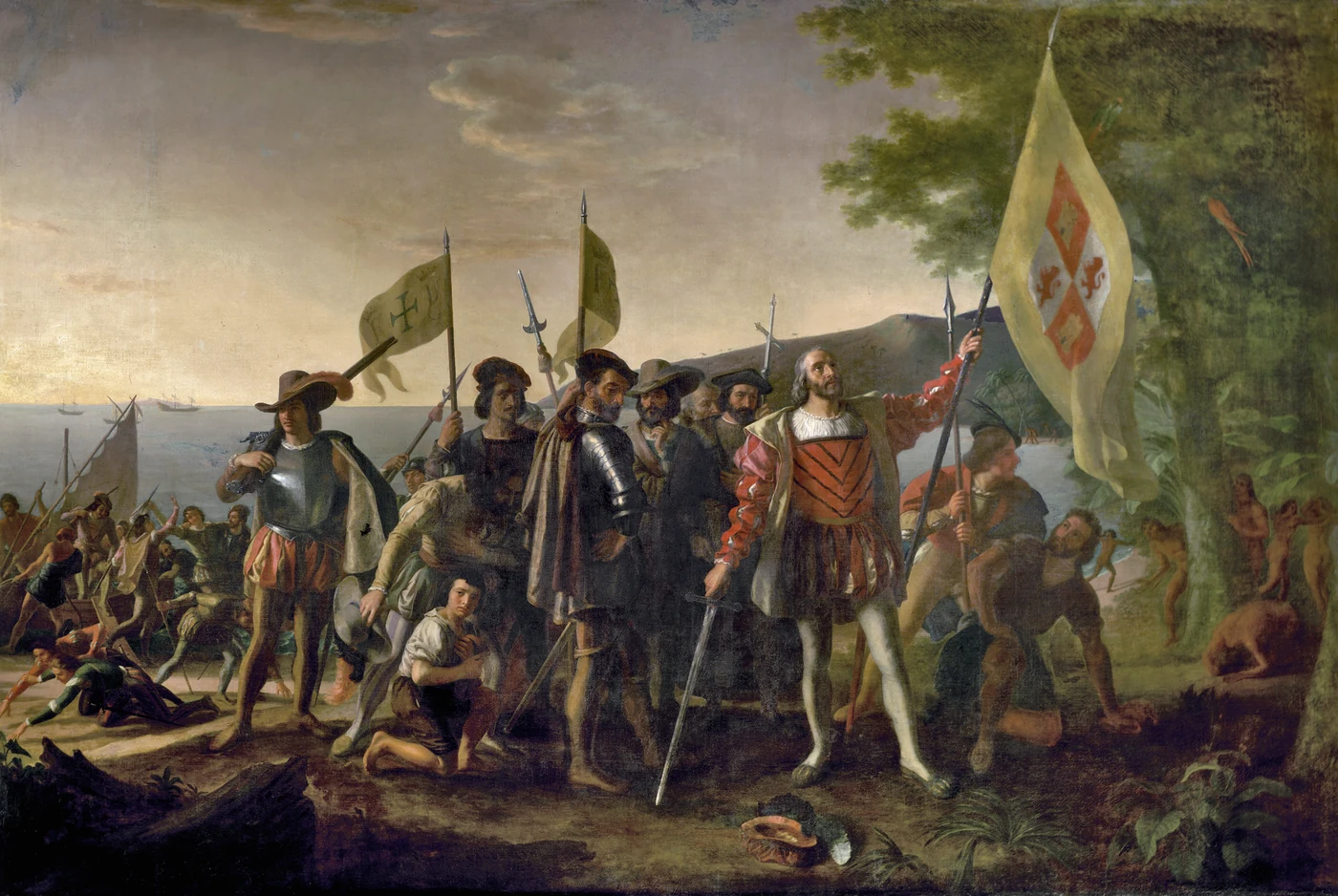
The Genoese Christopher Columbus decided to reach Asia the other way around — by sailing west. The Spanish king and queen gave him three ships. In October 1492 Columbus did indeed come upon land — but it was not Asia at all; it was a hitherto unknown New World, America. Columbus himself believed to the end of his life that he had reached India — and so he called the local people "Indians".
The world is split in two
Spain and Portugal grew so caught up in their discoveries that they nearly came to blows over the new lands. To avoid quarreling, in 1494 they simply divided the whole world in two with an imaginary line on the map: everything to the west went to Spain, everything to the east to Portugal. That is how Brazil fell to the Portuguese, and most of America to the Spanish.
India at last! (1498)
The Portuguese Vasco da Gama saw the task through to the end: in 1498 he rounded Africa and sailed all the way to India. He brought back holds full of spices — and sold them for dozens of times more than the whole voyage had cost. The sea route to the East was open at last, and Portugal grew rich overnight.
Around the world (1519–1522)
The most audacious voyage of all fell to the expedition of Ferdinand Magellan. Five ships set out to sail around the entire globe for the first time. Magellan himself died along the way, but one ship did make it home three years later. Now no one could doubt it any longer: the Earth is round, and all the oceans are connected.
What it gave us — and what it cost
The world was changed forever. New plants crossed the ocean: potatoes, maize, tomatoes and cacao ended up in Europe, while horses and wheat came to America. But this story has a dark side too: along with the ships, terrible diseases came to America and cut down millions of native inhabitants, and millions of slaves were carried across the ocean from Africa. This is how our modern, connected — but also unjust — world was born.