Sixteen years in which one man redrew the map of Europe from Lisbon to Moscow. Napoleon Bonaparte came to power on 9 November 1799 as a 30-year-old victorious general fresh from Italy; he fell on 18 June 1815 on the field of Waterloo. In between came the largest European empire since Charlemagne, the Civil Code that is still in force across half the world, an army of 600,000 bayonets that reached Moscow, and roughly 3.5—6 million dead. The Napoleonic Wars turned the professional armies of the old order into mass armies of citizens, and showed Europe once and for all that the French Revolution was not just a Parisian episode but a force that could march to the Kremlin.
Who was fighting whom
From 1804 France was the First Empire, led by Emperor Napoleon I. Its army — the Grande Armée — rested on the universal conscription introduced by the Revolution and on a cohort of self-made marshals: Ney, Davout, Murat, Lannes, Soult, Bernadotte. France's allies at various times included Spain, Holland, the Kingdom of Italy, the German Confederation of the Rhine, and even (after Tilsit) the Russian Empire.
Against Napoleon stood seven successive coalitions — each a new configuration of the same enemies: Great Britain (the one power that fought all sixteen years without a break, bankrolling the rest with its gold), the Austrian Empire, Prussia, Russia, Spain (from 1808, after Napoleon's own invasion), Sweden, Portugal, the Ottoman Empire. In open battle Napoleon scarcely knew defeat before 1812. What broke him was not the genius of his opponents but the space of Russia, the English fleet, and his own inability to stop.
Phases of the Napoleonic Wars
The Napoleonic era can be conveniently divided into five phases. The Consulate and the early victories (1799—1804): Bonaparte's rise to power, peace with Austria and Britain, the codification of law, his coronation as emperor. The Empire at its peak (1805—1807): the brilliant campaign against the Third Coalition — Ulm, Austerlitz, Jena, Tilsit. Napoleon dictates terms to the whole continent. Spain and Austria (1808—1809): the first great mistake — the invasion of Spain that turns into a draining guerrilla war, and a new war with Austria led by Wellington and Archduke Charles. The Russian campaign and the fall of the Empire (1810—1814): the catastrophe of 1812, defeat at Leipzig, the coalition invasion of France, the first abdication, and Elba. The Hundred Days (1815): the return from Elba, Waterloo, Saint Helena. The page closes with a section on Napoleon's legacy and a short epilogue on why it all still matters.
Phase 1. The Consulate and the early victories (1799—1804)
Five years in which a 30-year-old Corsican general turned an exhausted revolutionary France into the most efficiently organised state in Europe. Bonaparte made peace with all his enemies, made a deal with the Pope, drafted a civil code that is still in force, and built an administrative machine that would outlive every regime of the 19th and 20th centuries — and crowned himself emperor in Notre-Dame. By 1804 France was once again the leading power on the continent, and its new ruler the most influential man in Europe since Louis XIV.
The War of the Second Coalition and Bonaparte's return
While Bonaparte was fighting in Egypt in 1798—1799, Europe combined into the Second Coalition: Britain, Austria, Russia, the Ottoman Empire, Naples and Portugal. The Russian general Alexander Suvorov, in the Italian and Swiss campaigns, smashed the French armies and won back most of Bonaparte's earlier gains. By August 1799 the Directory was on the verge of collapse: Suvorov in the east, an Anglo-Russian landing in Holland in the west, the treasury empty.
On hearing this, Bonaparte abandoned his army in Egypt and slipped back to France on 9 October 1799. On 9 November 1799 (18 Brumaire of Year VIII), in alliance with Sieyès and Talleyrand, he carried out a coup. Grenadiers with fixed bayonets walked into the Council of Five Hundred at Saint-Cloud and drove the deputies out. By that evening the Constitution of the Consulate had been proclaimed: three Consuls, of whom only the First Consul had any real power. The First Consul had a name — Napoleon Bonaparte. He was 30.
Marengo and the Peace of Amiens
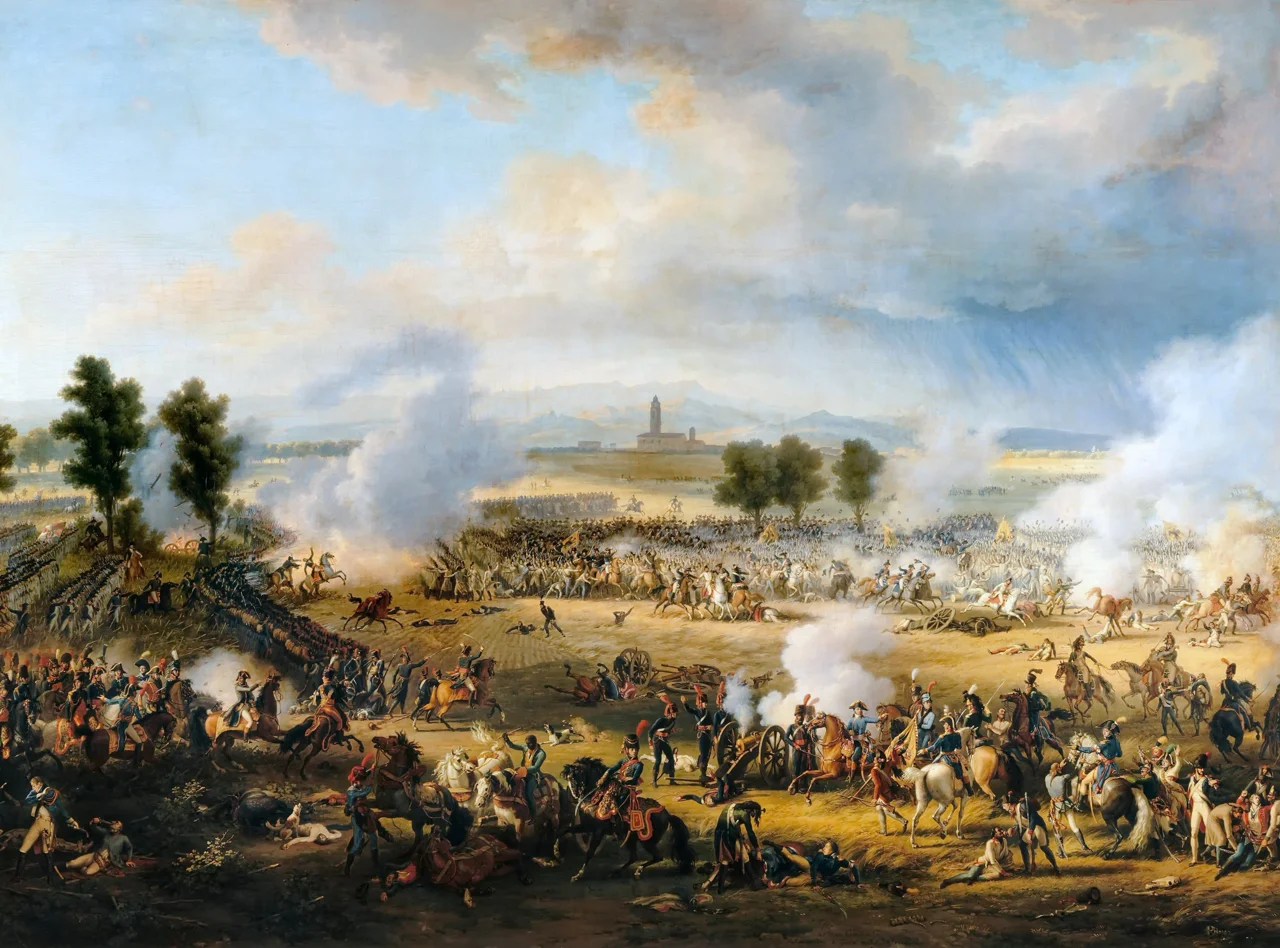
Once installed, Bonaparte set out to break the Second Coalition. In May 1800 he led a 40,000-strong army over the Great St Bernard Pass through the Alps — a route not used since Hannibal. On 14 June 1800 at Marengo in Piedmont the French nearly lost to the Austrians: by midday the battle was practically over, but the late-afternoon arrival of General Desaix's division turned the day around. Desaix was killed in the final charge, and Austria lost Italy in a single afternoon.
On 9 February 1801 Austria signed the Treaty of Lunéville: France took the whole left bank of the Rhine and effectively controlled half of Italy. Britain was left alone. On 27 March 1802 it signed the Peace of Amiens — the first time in 10 years that Europe was at peace. The peace lasted 14 months. In May 1803, alarmed by French expansion in Haiti and Louisiana, Britain declared war again. The true Napoleonic era was about to begin.
The Concordat and the Civil Code
While the armies fought, Bonaparte was rebuilding France from within. On 15 July 1801 he signed with Pope Pius VII the Concordat that ended a decade-long rupture between the Revolution and the Catholic Church. Catholicism was recognised as "the religion of the majority of Frenchmen" (not the state religion), bishops were appointed by the government and confirmed by the Pope, priests became state employees and swore an oath to the Republic. Peasants who for almost ten years had thought the Revolution was the Antichrist now had their masses back — and instantly became Bonaparte's loyal subjects.
On 21 March 1804 the Civil Code came into force — later known as the Code Napoléon. Bonaparte himself chaired 57 of the 102 sessions of its drafting commission. Its 2,281 articles enshrined a normative revolution: equality of all before the law, abolition of noble privilege, freedom of contract, the inviolability of private property, civil marriage, state registration of vital records. The Code today is the foundation of civil law in France, Belgium, Italy, Spain, parts of Latin America, Louisiana and even Japan and Turkey. On Saint Helena Napoleon would say: "My real glory is not the forty battles I won; Waterloo will erase the memory of them. What will never die is my Civil Code."
Emperor of the French
In March 1804 a royalist plot by the Duke of Enghien against the First Consul, followed by the discovery of a British plan to assassinate Napoleon, gave Bonaparte the ideological cover he needed: to keep the royalists from hoping for a Bourbon restoration, power must be made hereditary. On 18 May 1804 the Senate proclaimed him Emperor of the French under the name Napoleon I. In a plebiscite on the new constitution, 3.5 million Frenchmen voted "yes" and 2,500 "no."
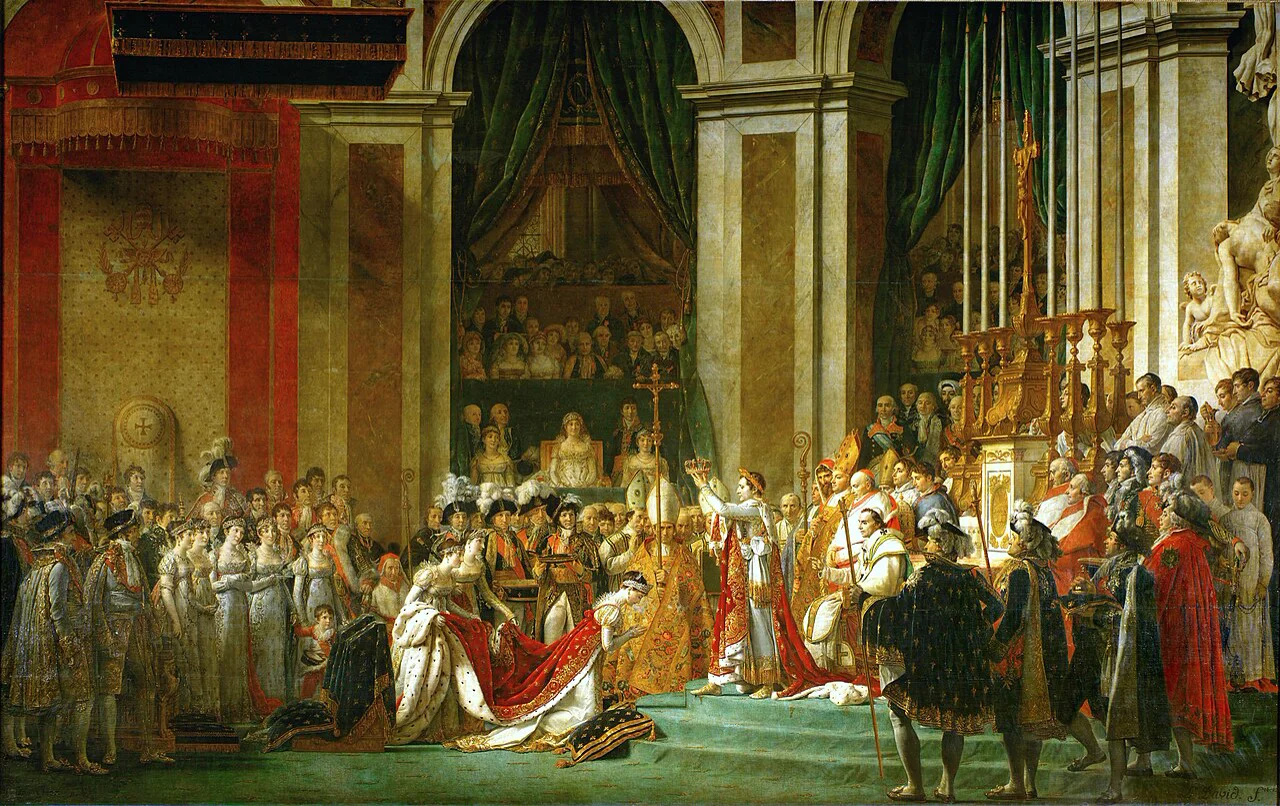
On 2 December 1804 the coronation took place at Notre-Dame de Paris. Pope Pius VII travelled from Rome especially — and lost half his authority across Europe in the process. Napoleon, however, crowned himself: at the decisive moment he took the crown from the altar and placed it on his own head, then crowned Josephine. Jacques-Louis David captured the scene in a huge canvas, Sacre de Napoléon, now in the Louvre. The painting actually shows the crowning of Josephine — Napoleon, after a brief argument with his artist, decided that the moment of self-coronation would look "immodest." A revolution that had begun in 1789 under the slogan of "liberty from tyranny," fifteen years later, crowned an emperor.
Phase 2. The Empire at its peak (1805—1807)
Three years of triumph unequalled by any modern commander. Napoleon broke the Third and Fourth Coalitions in 14 months. Austria capitulated in December 1805, Prussia in November 1806, Russia in June 1807. Britain was left alone on its islands — but had wrested the initiative at sea away from Napoleon for good at Trafalgar. By 1807 Napoleon controlled all of continental Europe from Spain to Poland and chose to strangle Britain financially, proclaiming the Continental Blockade. That decision would, in the end, bring down his empire.
The Third Coalition, Ulm and Austerlitz
In the summer of 1805 Britain, Austria, Russia, Sweden and Naples formed the Third Coalition. Napoleon, who had been preparing to invade England with a 200,000-strong army at Boulogne, instantly wheeled the Grande Armée eastwards. In 35 days it marched from the Channel to the Danube and on 20 October 1805 at Ulm encircled General Mack's 23,000-strong Austrian army. Mack capitulated without a fight — an unheard-of humiliation for the Austrian uniform.
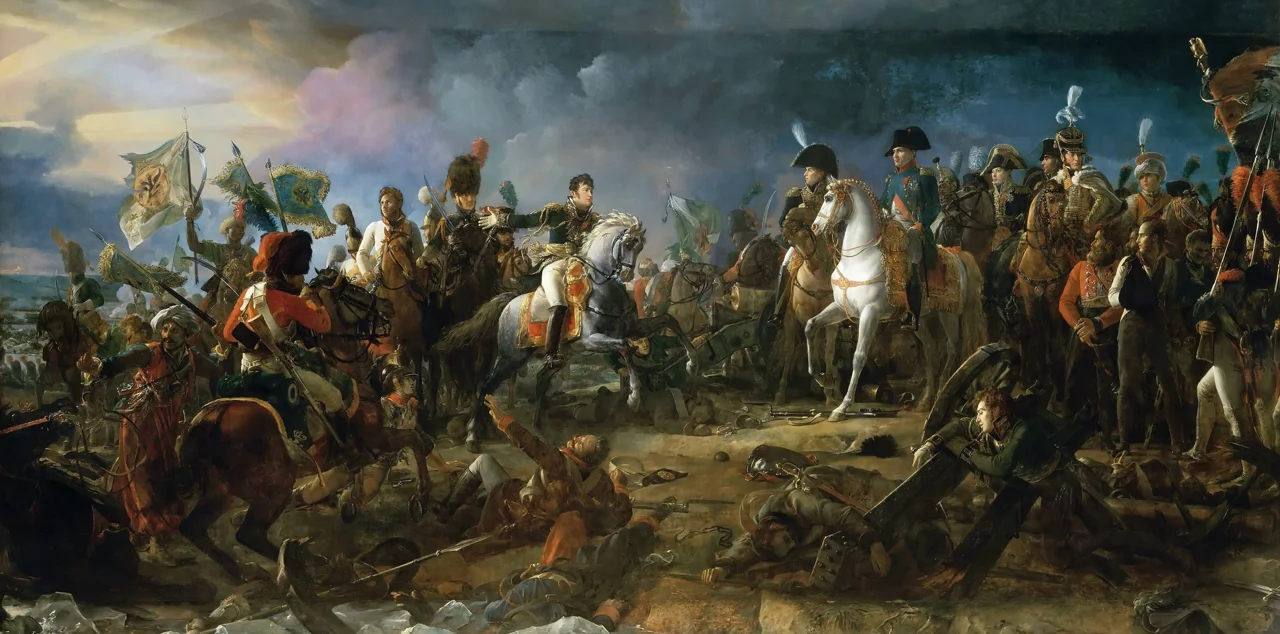
On 2 December 1805 at Austerlitz in Moravia (today's Czech Republic), the anniversary of his coronation, Napoleon met a combined Russo-Austrian army under the personal command of both Emperors — Alexander I and Francis II. The Battle of the Three Emperors became a tactical masterpiece: 73,000 Frenchmen against 85,000 allies. Napoleon deliberately weakened his right flank, drew the allies into an attack on it, and then split their army with a powerful thrust in the centre. By evening the Russo-Austrians had lost 27,000 in killed, wounded and prisoners; the French about 9,000. On 26 December 1805 Austria signed the Treaty of Pressburg, losing Venice, Tyrol and roughly a sixth of all its subjects. The Holy Roman Empire of the German Nation, which had existed since 962, was dissolved on 6 August 1806. A thousand-year-old structure vanished with a single signature.
Trafalgar and the end of the invasion dream
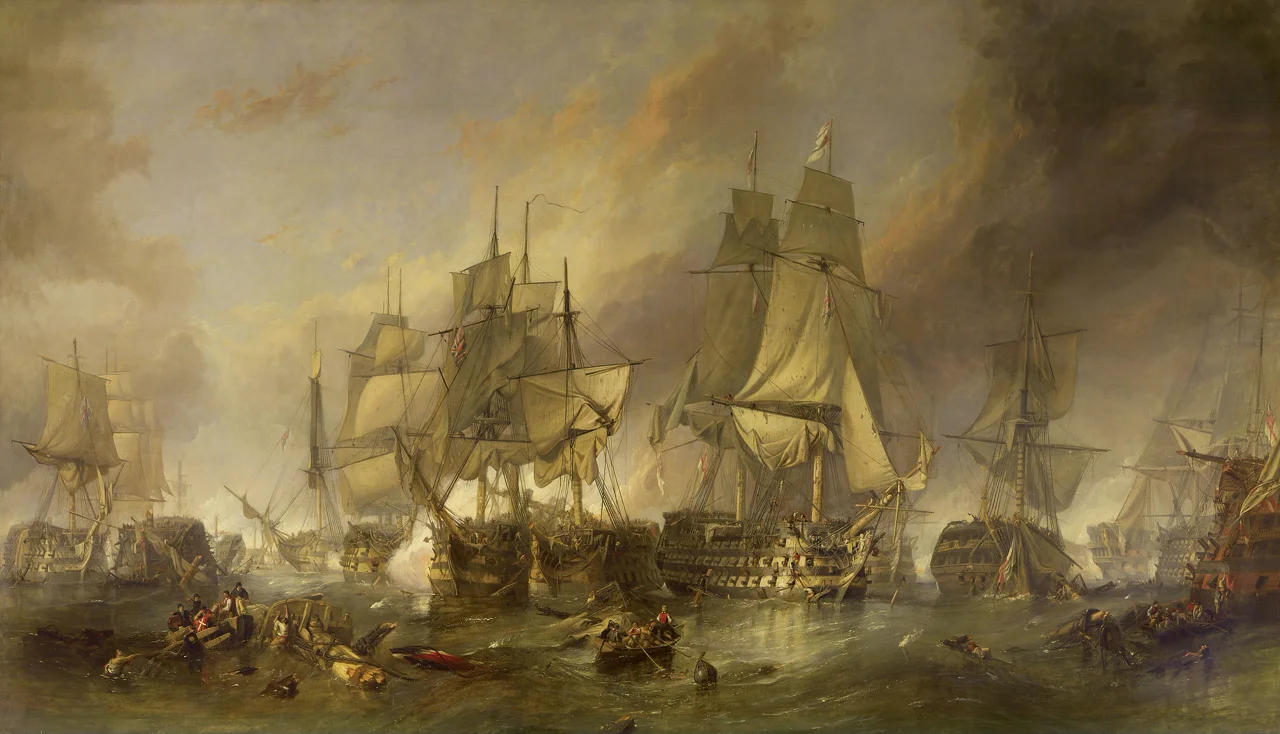
Six weeks before Austerlitz, on 21 October 1805 off Cape Trafalgar in southwestern Spain, came the decisive naval battle of the age. The British admiral Horatio Nelson with 27 ships of the line crushed Admiral Villeneuve's combined Franco-Spanish fleet of 33. Nelson used an unorthodox tactic: he sliced the enemy line in two perpendicular columns, turning a line battle into close-range artillery chaos. The French and Spanish lost 22 ships and about 6,000 men killed, wounded or captured; the British lost no ships. Nelson himself was killed by a French sharpshooter on the deck of his flagship Victory.
Trafalgar buried for good Napoleon's plans for a landing in the British Isles. For 110 years, until the First World War, Britain would remain the unchallenged ruler of the seas. Napoleon could never threaten Britain directly again — and that fact alone would force him into indirect paths: the Continental Blockade, the Russian campaign, the war in Spain.
Jena-Auerstedt and Tilsit
Frightened by the fall of Austria, Prussia declared war on France in September 1806 and issued an ultimatum — a hundred years after Frederick the Great had won the Seven Years' War, the Prussian uniform still had the reputation of being the most formidable in Europe. On 14 October 1806 in two simultaneous battles at Jena and Auerstedt in Thuringia, Napoleon and Marshal Davout destroyed two Prussian armies in a single day. Berlin fell two weeks later; Napoleon rode into the Prussian capital on horseback, without a shot fired. Friedrich Wilhelm III fled to Königsberg. Prussian fortresses surrendered one after another without resistance — the whole reputation of Frederick's army crumbled in weeks.
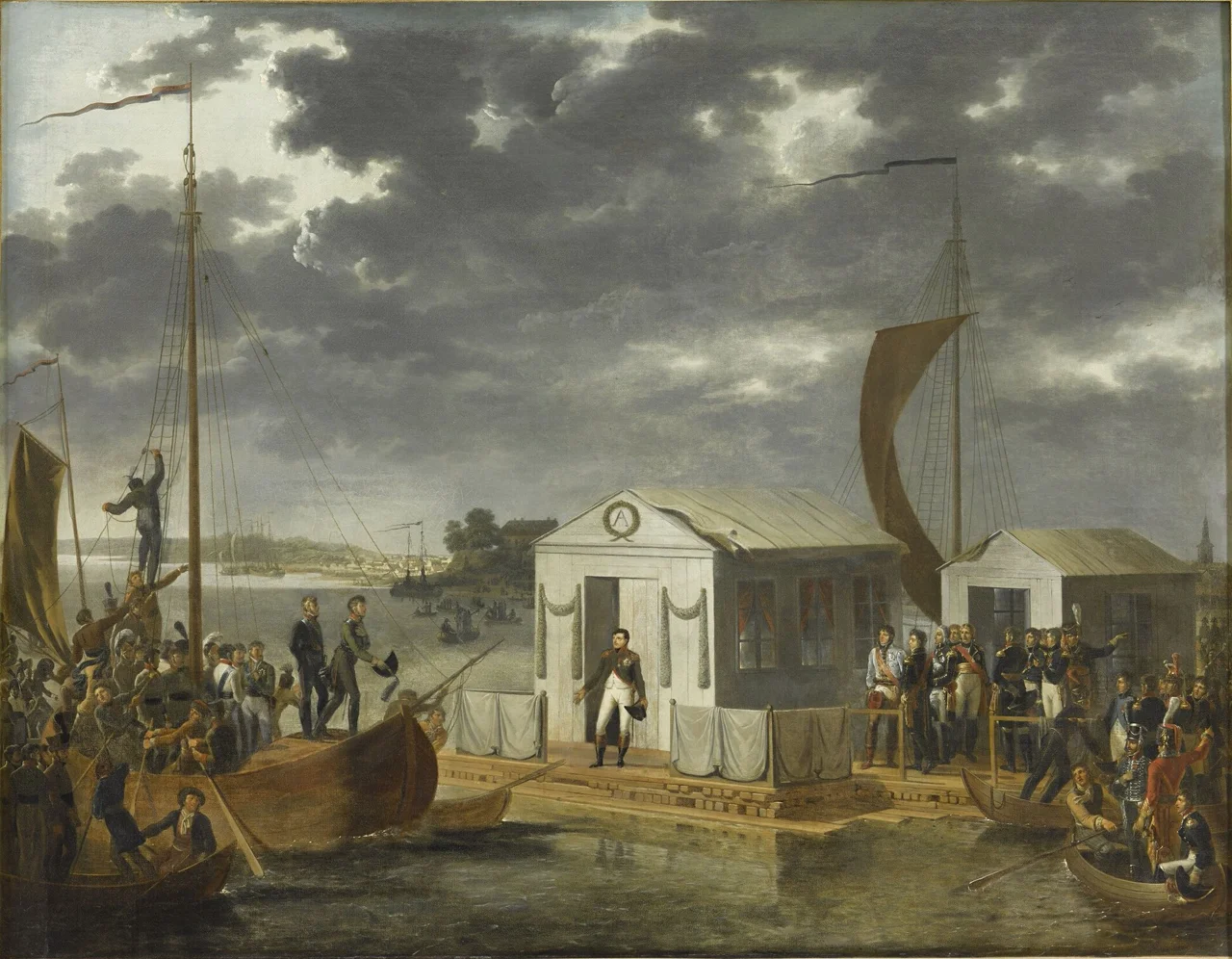
Napoleon pressed on east against Alexander I's Russian army. The winter of 1806—1807 was bloody and inconclusive: the battle of Eylau on 8 February 1807 in East Prussia was the cruellest slaughter of the entire Napoleonic period — 25,000 killed and wounded in a single day in icy snow, with no winner. Only on 14 June 1807 at Friedland did Napoleon finally crush the Russians. On 7 July 1807, on a raft in the middle of the Niemen River at Tilsit (today Sovetsk), Napoleon and Alexander I personally signed the Treaty of Tilsit. Russia joined the Continental Blockade of Britain; from the lands taken from Prussia, the Grand Duchy of Warsaw was created. Prussia lost half its territory and 5 million subjects. At dinners in Tilsit, Napoleon and Alexander reportedly sat side by side and held each other's hands.
The Continental Blockade
Since he could not beat Britain at sea, Napoleon decided to strangle it economically. On 21 November 1806 in Berlin, after his victory at Jena, Napoleon issued the Berlin Decree proclaiming the Continental Blockade: no ship carrying British cargo could enter any port controlled by France or her allies. British goods — textiles, sugar, coffee, spices — were to be seized and burnt. All of continental Europe was to become a single market closed to the island power.
The blockade hit Britain hard — in 1810—1811 its exports fell by 30%, and there were riots in the industrial cities. But it hit Europe itself even harder: the price of coffee multiplied tenfold, sugar quadrupled, the Russian nobility were left without English cloth and drank brews of nettles instead of tea. Smuggling flourished on a gigantic scale. By 1810 Alexander I had stopped enforcing the blockade — and this would become the direct cause of the Russian campaign of 1812.
Phase 3. Spain and Austria (1808—1809)
The first crack in the imperial machine. Trying to close the Mediterranean ports definitively to British trade, Napoleon decided to remove the Bourbons from the Spanish throne and put his brother Joseph on it. Instead of an obedient ally he got a nationwide uprising of the Spanish people and five years of grinding war on the Peninsula, which would devour 300,000 soldiers of the Grande Armée. While French regiments were stuck in the guerrilla mountains of Spain, Austria saw its chance to strike back — the War of the Fifth Coalition broke out in 1809, producing the bloodiest battle of the Napoleonic period to date: Wagram.
Dos de Mayo and the Peninsular War
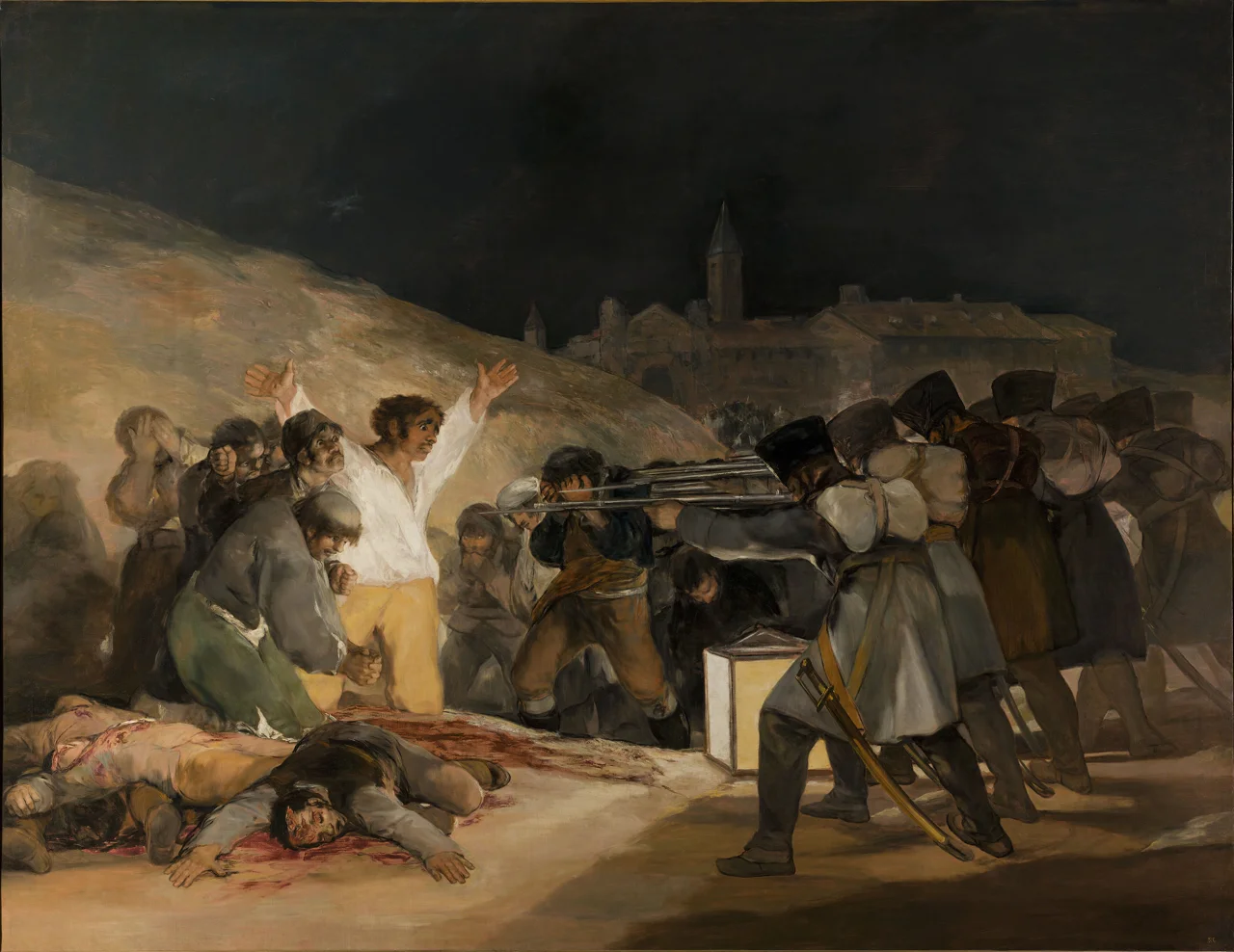
In May 1808, having lured the Spanish royal family to Bayonne, Napoleon forced Charles IV and his son Ferdinand VII to abdicate and put his elder brother Joseph Bonaparte on the Spanish throne. The reaction was not what he expected. On 2 May 1808 (Dos de Mayo) the people of Madrid, on learning that the last member of the royal family, Infante Francisco, was being taken out of the capital, rose against the French garrison. Marshal Murat crushed the uprising savagely — about 400 madrileños were executed the following day (The Third of May 1808). That night of executions would later be immortalised by Goya in one of the most famous paintings of the 19th century. The event was a signal: revolts broke out in Zaragoza, Valencia, Seville, Asturias — within weeks the whole of Spain was on fire.
The Spanish regular army was small, but the guerrilleros (the source of the word "guerrilla") — peasants, artisans, retired soldiers — began a kind of war Europe had never seen. The roads over the Pyrenees became death traps: no courier rode without an escort, no convoy got through without losses. In July 1808 at Bailén, General Dupont's 24,000-strong French army surrendered en masse for the first time in the Napoleonic era — a savage blow to the legend of invincibility. Britain immediately landed an expeditionary corps in Portugal under General Arthur Wellesley — the future Duke of Wellington. The French would hang on in Spain for another five years, losing about 300,000 men there — more than they would lose in Russia in 1812.
Wagram and the Peace of Schönbrunn
Seeing the French army stuck in Spain, Austria declared war on France in April 1809 and formed the Fifth Coalition with Britain. Napoleon again raced across Europe and took Vienna in five weeks. On 5—6 July 1809 on the island of Lobau on the Danube near Wagram, 188,000 Frenchmen met Archduke Charles's 145,000 Austrians. It was the biggest battle of the Napoleonic period to date: in two days about 72,000 men from both sides were killed or wounded. Archduke Charles retreated in relative order, but Austria had used up its last reserves.
On 14 October 1809 at Schönbrunn (Vienna) Austria signed the Treaty: it lost Illyria, part of Poland and its access to the Adriatic; its army was limited to 150,000. In April 1810 Napoleon, to secure his dynasty, divorced the childless Josephine and married the 18-year-old Archduchess Marie-Louise — daughter of Emperor Francis, that is, niece of Marie-Antoinette. Corsica thus married into the Habsburgs. In March 1811 a son was born — Napoleon II, King of Rome. The Bonaparte empire seemed secured for a century. The Russian campaign was a year away.
Phase 4. The Russian campaign and the fall of the Empire (1810—1814)
Four years of slow, then rapid, then catastrophic collapse. The largest army in European history crosses the Niemen in June 1812 — and five months later, about 90% of its men are dead, wounded, captured or have deserted. Six months later Europe unites into the Sixth Coalition. A year after that the coalition armies enter Paris and Napoleon abdicates. Between 1810 and 1814 an empire that had taken fourteen years to build collapses in twenty-one months.
Why Russia was breaking the blockade
By 1810 the Treaty of Tilsit with Alexander I had become a fiction. The Russian nobility, whose income came from exporting flax, grain and timber to England, was being ruined by the blockade; the value of the Russian rouble had halved. On 31 December 1810 Alexander I issued a ukase allowing neutral ships (in practice, British ships under false flags) to enter Russian ports, and at the same time imposed high tariffs on French imports. This was an open break with the Tilsit system.
Napoleon spent the whole spring of 1812 assembling an army of unprecedented size — about 600,000 men from 20 nationalities: Frenchmen, Poles, Italians, Bavarians, Saxons, Austrians, Prussians, even Portuguese regiments. It was not merely an army — it was the "Grande Armée of Twenty Nations," the largest military force in European history before the First World War. Its baggage train was pulled by 250,000 horses; its artillery numbered 1,372 guns. On 24 June 1812 the Grande Armée crossed the Niemen — at the very spot where five years earlier Napoleon and Alexander had embraced on a raft at Tilsit. To Marshal Berthier's cautious remark about how far away Moscow was, Napoleon is said to have replied: "In three weeks we shall be in Moscow."
Borodino
The Russian army under Barclay de Tolly and then Mikhail Kutuzov avoided pitched battle, withdrawing deeper into the country and burning behind it everything that could feed the enemy. This was the strategy of "scorched earth" — a strategy Napoleon did not know how to fight: he was used to swift general battles that decided wars. Without a battle, the Grande Armée was melting away from heat, exhaustion, dysentery and Cossack raids — by August fewer than 250,000 of the original 600,000 were still in the ranks.
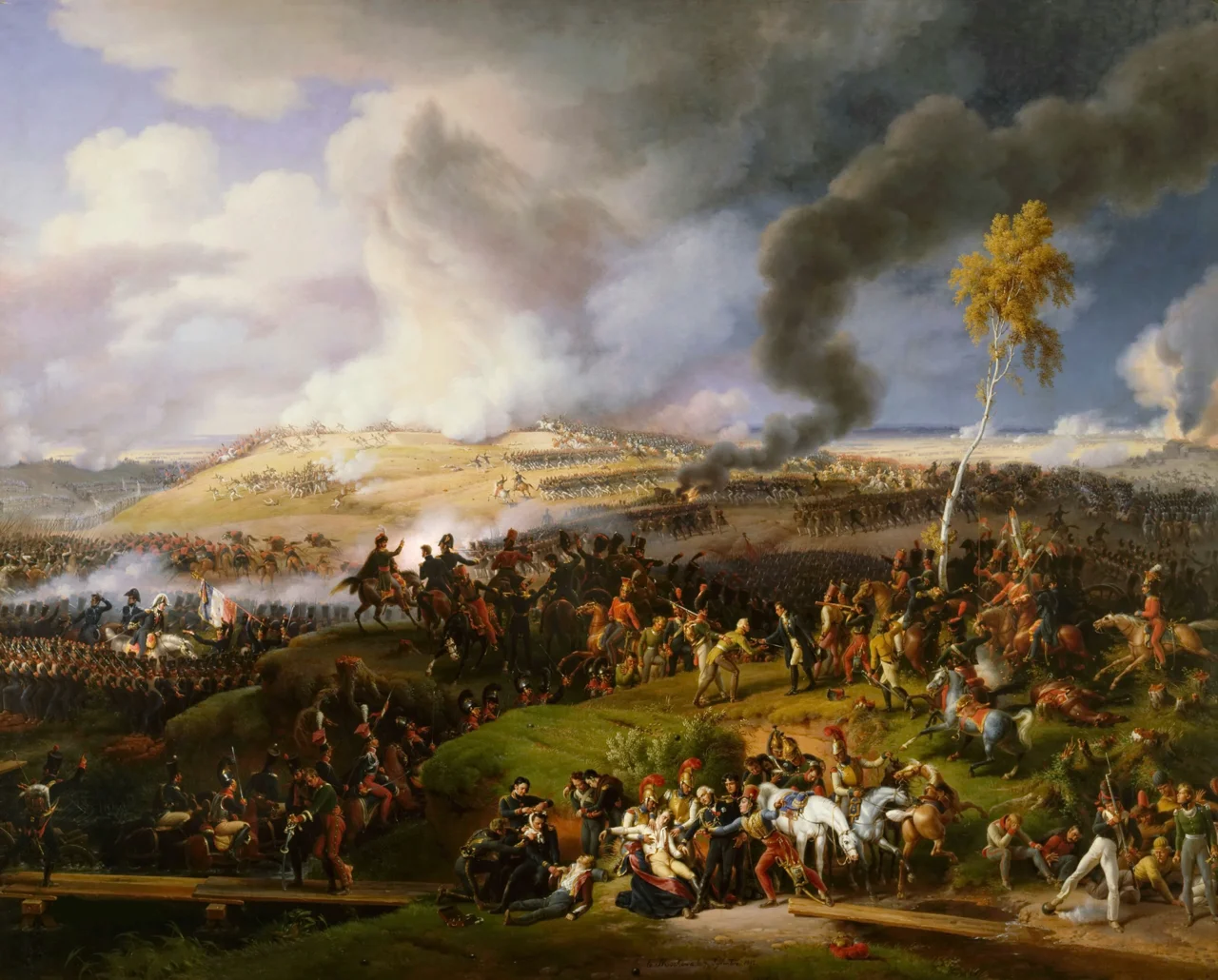
On 7 September 1812 near the village of Borodino, 125 km west of Moscow, Kutuzov finally accepted battle — the bloodiest single day of the whole Napoleonic period. 130,000 Frenchmen against 120,000 Russians. In one day — about 70,000 killed and wounded; one in six men on the field was a casualty. The French took the Russian redoubts, Kutuzov retreated in good order. Tactically a draw, strategically a defeat for Napoleon: he had not destroyed the Russian army, but had lost 30,000 of his veteran soldiers whom he had no way to replace. Napoleon would say of Borodino in cold tones: "Of all my battles, this was the most terrible. The French showed themselves worthy of victory, and the Russians worthy of being invincible."
The burning of Moscow and the retreat across the Berezina
On 14 September 1812 Napoleon entered Moscow — and found the city almost empty. Of its 250,000 inhabitants, nearly all had left before the French arrived. That same night, on the orders of the city's governor, Count Rostopchin, fires began. By 18 September about three-quarters of the old wooden Moscow had burnt — some 6,500 buildings. The French, who had expected to find supplies for the winter, found themselves among ashes. Napoleon waited 35 days for Alexander I to sue for peace — Alexander refused even to receive his envoy.
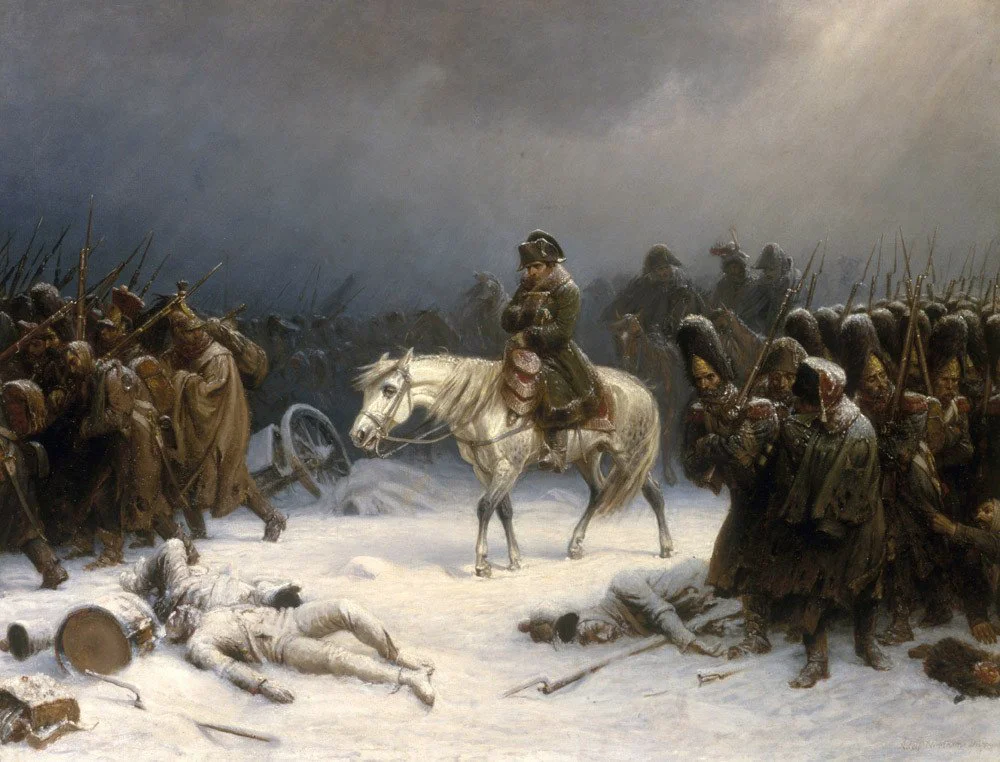
On 19 October 1812 the Grande Armée began its retreat westwards. Winter that year came early and hard: by November the temperature was dropping to −30°C. Without winter clothing, without forage for the horses, harassed by Cossacks and Kutuzov's regulars, the French were disintegrating as a body. On 26—29 November on the Berezina River near Borisov, at the cost of 25—40,000 men killed or drowned, Napoleon still managed to bring the remnants of his army across the last water barrier — Russian sappers had captured the bridges, so new ones were thrown up in icy water by General Éblé's two pontoon battalions. Almost all the pontoneers themselves died. By the time the army reached the Niemen in December 1812 only 20—40,000 fit men remained out of the original 600,000. The word "Berezina" in French to this day means a disaster.
Leipzig — the Battle of the Nations
The catastrophe in Russia freed Europe's hands. In January—March 1813 Prussia, Sweden and Britain joined Russia in the Sixth Coalition. In August Austria joined them too — Napoleon's mother-in-law's empire stopped saving its son-in-law. Napoleon, with a hastily raised army of conscripts, still managed to win several battles in Saxony (Lützen, Bautzen, Dresden), but time was no longer on his side: his enemies had now learned his tactics and outnumbered him three to one.
On 16—19 October 1813 at Leipzig in Saxony the largest battle of the European 19th century before the First World War unfolded — the Battle of the Nations. 195,000 Frenchmen against 365,000 allied — Russian, Prussian, Austrian, Swedish — troops. Over four days, around 120,000 men were killed or wounded. On the third day Saxon regiments switched to the coalition in the middle of the battle. Napoleon, surrounded on three sides, ordered a retreat — but the bridge across the Elster River was blown up prematurely, and about 20,000 Frenchmen were trapped on the right bank and taken prisoner. Napoleon lost the whole of Germany in four days. About 70,000 men out of 195,000 reached the Rhine — and the German front was closed forever.
Invasion of France and the first abdication
On 1 January 1814 coalition forces — about 300,000 men under the Austrian Field Marshal Schwarzenberg, the Prussian Blücher and the Russian Guard — crossed the Rhine and entered France. For the first time in 20 years a foreign army was on French soil. Napoleon, with 70,000 men, carried out what historians call the "Six-Weeks Campaign" — a brilliant series of defensive battles in Champagne: Brienne, La Rothière, Champaubert, Montmirail, Château-Thierry, Vauchamps. In a single week in February he won four battles against different coalition columns. It was perhaps the most brilliant stretch of his career as a commander. But men, guns and horses he could no longer replace.
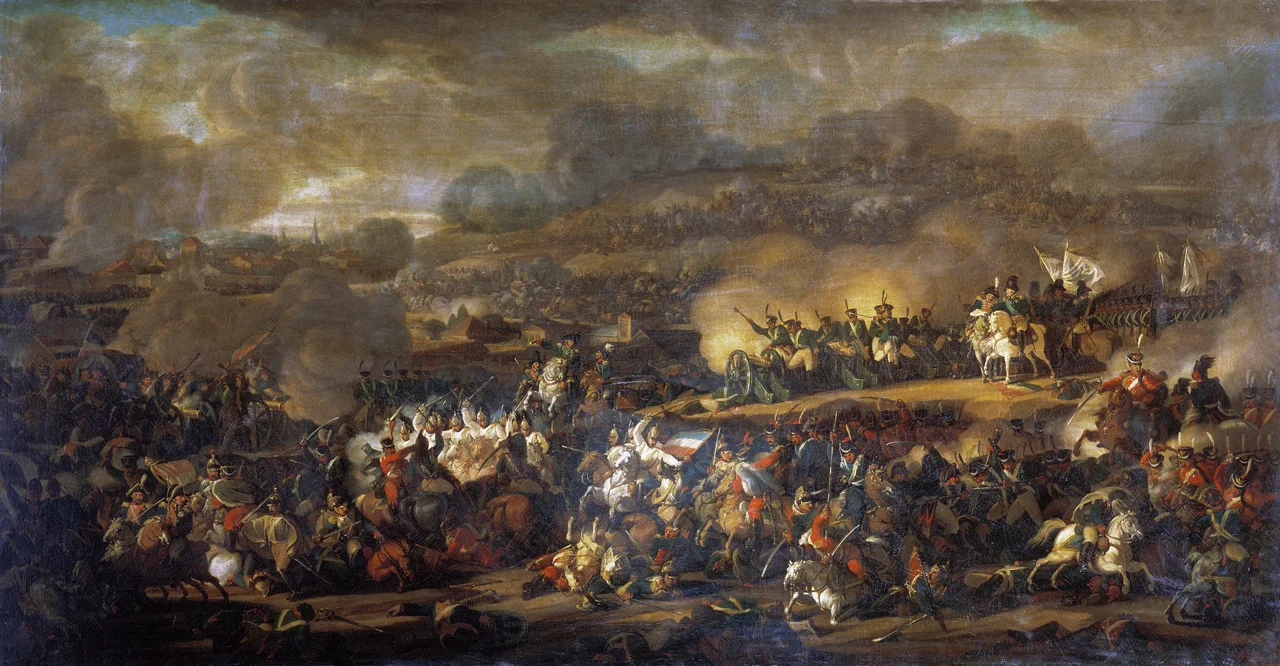
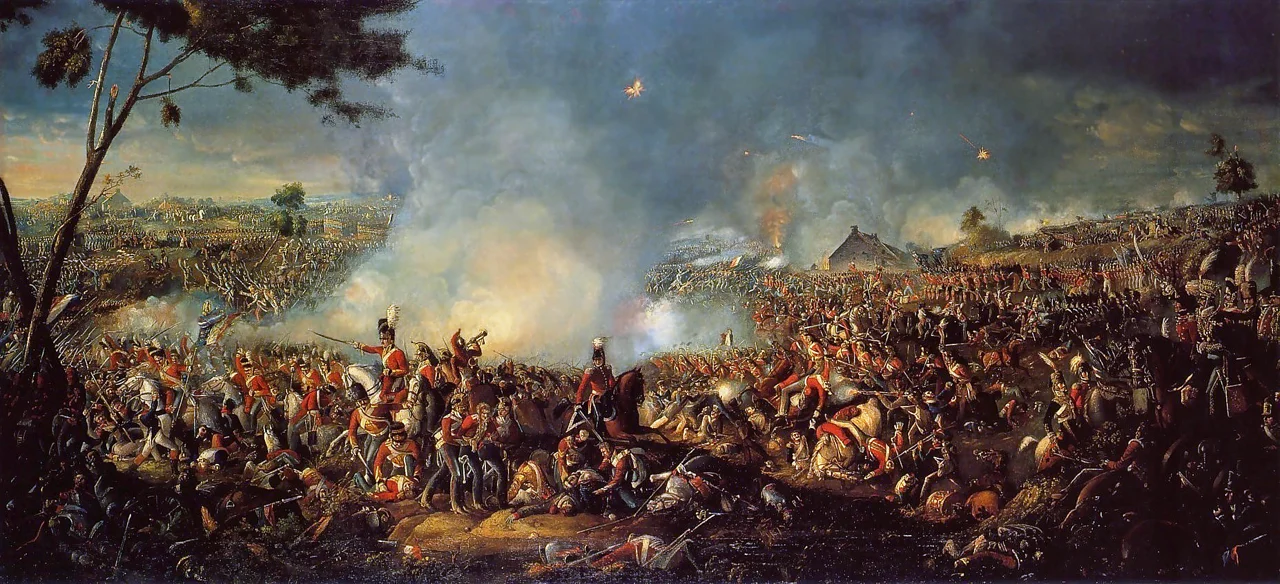
On 30 March 1814 coalition forces surrounded Paris. Marshals Marmont and Mortier capitulated. On 31 March Alexander I rode into Paris at the head of the Russian Guard. The Senate, hastily convened by Talleyrand (the same Talleyrand who had helped Napoleon in 1799), declared the emperor deposed. On 4 April 1814 at Fontainebleau the marshals refused to march on Paris with Napoleon. On 6 April he signed his first abdication. Under the Treaty of Fontainebleau he kept the title of "emperor," a pension of 2 million francs, and — as a kind of taunt — the small island of Elba in the Tyrrhenian Sea off the Italian coast. Louis XVIII — brother of the Louis XVI executed 21 years before — returned to France. The Bourbons, as Talleyrand put it, "had learned nothing and forgotten nothing."
Phase 5. The Hundred Days (1815)
The most extraordinary episode in Napoleon's life — and one of the most famous gambles in history. In February 1815 the 45-year-old former emperor escapes from the island of Elba with 600 veterans and lands at Cannes. In three weeks, without a single shot fired, he crosses half of France, his old regiments come over to him in mass, and on 20 March he is back in the Tuileries — on the very throne he had left 11 months before. Europe rallies into the Seventh Coalition. On 18 June 1815 at Waterloo in Belgium everything is decided in a single day. Six weeks later Napoleon is on a British ship bound for the island of Saint Helena.
The return from Elba
On Elba Napoleon spent ten months. He had 600 soldiers of the Old Guard who had come voluntarily with him, a microscopic fleet of a few vessels, and real power over a population of 12,000. He set things in order there as always: built roads, opened a hospital, reformed taxes. But the news from France was bad: the Bourbons were giving the noble estates back, abolishing the tricolour flag, insulting the veterans of the Empire. In Vienna the Congress of Vienna was redrawing Europe to suit the monarchical reaction. On top of this, the British were dragging their feet on paying the pension Napoleon had been promised, and rumours were going around that he was about to be moved to the Azores — or simply poisoned.
On 26 February 1815 Napoleon, with 1,100 men, six guns and two hundred horses, sailed from Portoferraio. On 1 March he landed at the Golfe-Juan near Cannes. At Grenoble, where the 5th line regiment of the royal army met him, Napoleon walked out alone in front of the ranks, opened his coat and said: "Soldiers! If any one of you wishes to kill his Emperor, here I am." The regiment came over to him on the spot. The same at Lyons, then in Paris. Marshal Ney, who had promised Louis XVIII to "bring Napoleon back in an iron cage," was embracing his emperor on 14 March. On 20 March 1815 Napoleon walked into the Tuileries. Louis XVIII had fled to Belgium the day before. In three weeks, without a single shot, without a single battle, Napoleon was again ruling France. Europe was in shock.
Waterloo
At the Congress of Vienna Napoleon was declared "the enemy of mankind." The Seventh Coalition — Britain, Prussia, Austria, Russia — was assembling some 700,000 soldiers. Napoleon managed to gather 280,000. He decided to strike first, before the allies could concentrate. On 16 June 1815 in Belgium his army defeated Blücher's Prussians at Ligny and held off Wellington's Anglo-Dutch at Quatre Bras. Marshal Grouchy with 33,000 men was dispatched to pursue Blücher and prevent him from joining Wellington.
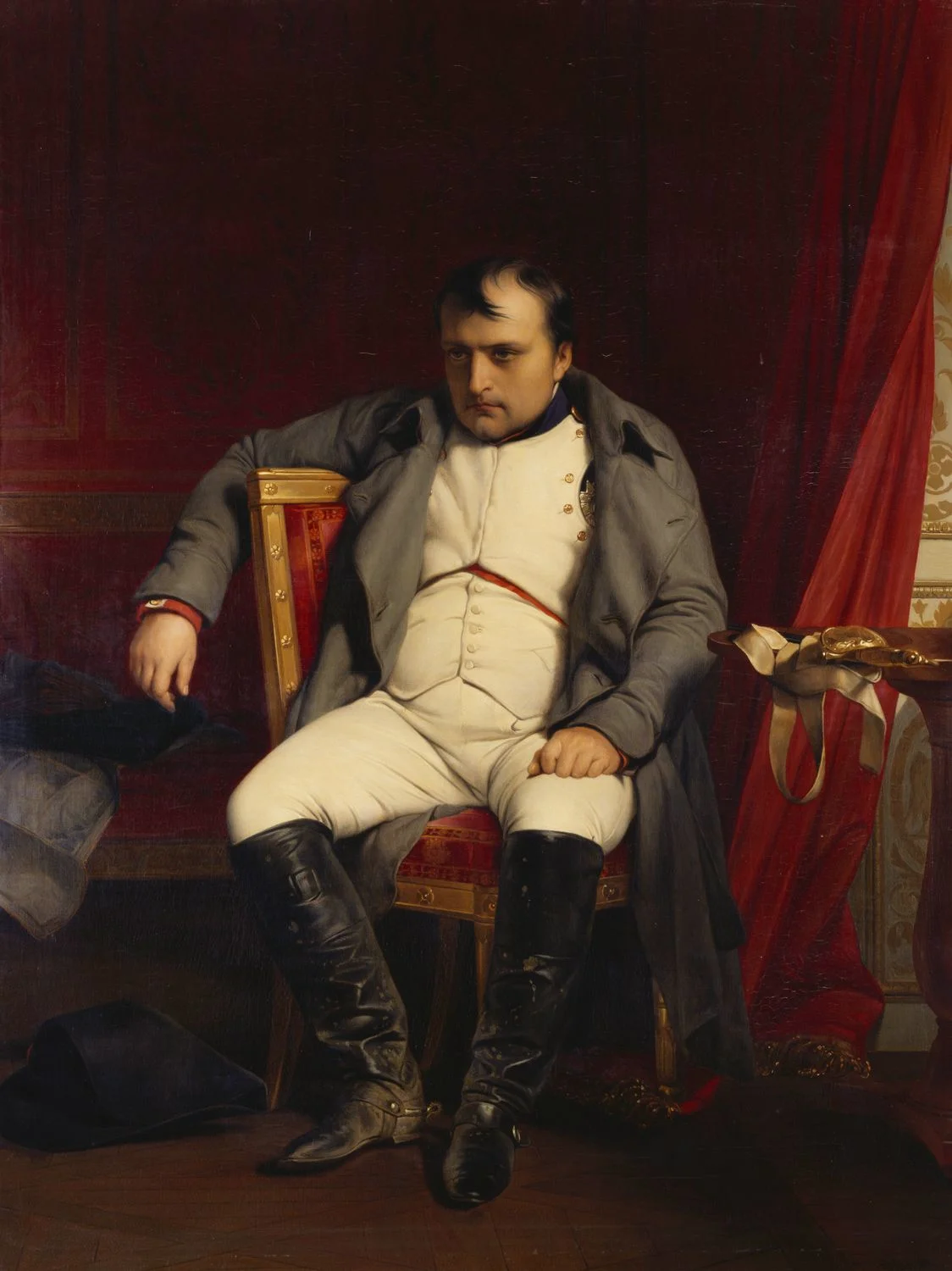
On 18 June 1815 at Waterloo, 15 km south of Brussels, 72,000 Frenchmen met 68,000 Anglo-Dutch-Germans under Wellington. All day Napoleon threw Ney's corps in frontal attacks on the British squares on the ridge of Mont-Saint-Jean — and could not break through. Heavy rain had turned the field into a swamp, slowing the artillery. Around 19:00 on the French right flank, instead of Grouchy's expected troops, Blücher's Prussians appeared, having slipped past Grouchy and marched cross-country to the battlefield. The Old Guard, thrown into a final attack to the cry "The Old Guard dies, it does not surrender" (a phrase Cambronne almost certainly never actually uttered), was cut down. By nightfall Napoleon's army had ceased to exist. In all, in one day — about 50,000 killed and wounded. On 22 June 1815 Napoleon signed his second and final abdication. The Hundred Days were over.
Saint Helena and the death of the legend
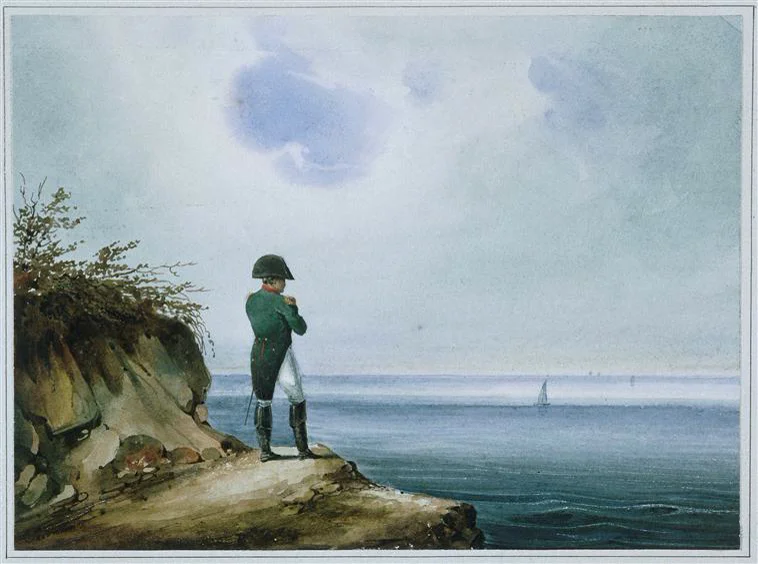
Trying to escape to the United States, Napoleon surrendered on 15 July 1815 to the captain of the British ship Bellerophon off Rochefort. The British made a decision that now seems both cruel and ingenious: to exile him not to nearby Elba but to the tiny island of Saint Helena in the southern Atlantic Ocean — 1,900 km from the nearest African coast and 7,000 km from Europe. Escape was not envisaged.
Napoleon arrived on Saint Helena on 17 October 1815 and spent five years and seven months there, until his death on 5 May 1821 at the age of 51. The official diagnosis was stomach cancer (as in his father's case). The arsenic-poisoning theory, which long circulated, has not been confirmed by modern hair analysis. In his last years he dictated his memoirs to General Las Cases and Captain Gourgaud — the Memorial of Saint Helena, published in 1823, was the bestseller of the 19th century and effectively created the Napoleonic myth: the picture of the great commander who had fought for the liberty and unity of Europe against reactionary monarchs. It was the first example, in the new age, of a defeated man winning the posthumous ideological war. In 1840, by order of Louis-Philippe, Napoleon's remains were brought back to Paris and buried in the Dôme des Invalides — where he still lies today.
Napoleon's legacy
Napoleon lost the war but won the inheritance. The Civil Code of 1804 is still in force in France, Belgium, Italy, parts of Latin America, Louisiana, Japan, Turkey — about a billion people live under its rules. The administrative structure of France — prefects, departments, state schools (the lycées), the Bank of France, the Legion of Honour, the central tax service — all of this was put in place by Napoleon between 1800 and 1810. Not one of the hundred reforms over the next two hundred years has been able to undo it. The metric system, introduced by the Revolution and spread by Napoleon, is now mandatory in 95% of the world's countries.
Geopolitically, the Congress of Vienna of 1815, which was supposed to "erase" Napoleon, in fact became a system designed not to repeat him — the Concert of Europe: regular meetings of the great powers to prevent war. It held for almost a century, until 1914. Napoleon's marshals left their mark on history: Bernadotte, elected hereditary prince by the Swedish parliament in 1810, became King Karl XIV in 1818 — and his direct descendants are still on the Swedish throne. King Carl XVI Gustaf of Sweden is the descendant of a French revolutionary marshal. The Bonaparte dynasty itself came back to power once more: Napoleon's nephew Louis-Napoleon became Emperor Napoleon III in 1851 and ruled France for 18 years, until the catastrophe at Sedan in 1870. The cult of Napoleon — in painting, literature, opera, film — is still alive: by 2024 about 80 feature films have been made about him.
Why it still matters
The Napoleonic Wars are the moment when modern Europe finally stepped out of the shell of the Old Regime. All the great stories of the next two hundred years run out from here. Latin American decolonisation: when Napoleon overthrew the Spanish Bourbons in 1808, the colonies from Mexico to Argentina were left without a legitimate king — and within 15 years they had all become independent. Bolívar, San Martín, Hidalgo, O'Higgins — each of them launched his revolution in the Napoleonic vacuum. Modern nationalism was born precisely in the resistance to Napoleon: German nationalism in the war of liberation of 1813, Spanish nationalism in the guerrilla Pyrenees, Russian nationalism at Borodino and Moscow. Every national anthem of the 19th century, from "Was ist des Deutschen Vaterland?" to the Polish "Jeszcze Polska nie zginęła," was written with the memory of the Grande Armée's march in mind.
Inside Europe itself, the Restoration of 1815 did not save the old world but only put it on ice. The revolutions of 1830 and 1848 in Paris, Berlin, Vienna, Budapest, Palermo, Milan would repeat — in milder or harsher forms — what Napoleon had carried on bayonets: equality before the law, the codification of civil law, freedom of religion, the abolition of feudal dues. By 1870 most of the agenda of 1789—1815 had become daily life across Western Europe. Napoleon himself ended up the last figure in an extraordinary chain: a Roman emperor who spoke French; a dictator who wrote laws on human rights; a conqueror who spread liberty by bayonet; an emperor who died in exile thousands of kilometres away. Europe has been living under his shadow for two hundred years — partly fighting him, partly continuing him.