To receive notifications, please sign up
just now
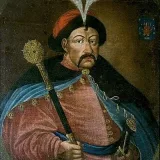
The Cossack Revolution of 1648–1657, led by Hetman Bohdan Khmelnytsky
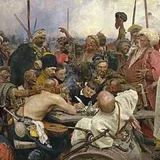
1552—1775: Vyshnevetsky's Khortytsia Sich, the Cossack uprisings, Sahaidachny at Khotyn, Sirko, Mazepa and Poltava, Kalnyshevsky and the Sich's destruction by Catherine II.
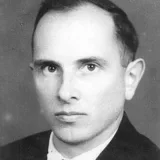
1929—1956: the OUN and Bandera, the Act of 30 June 1941, the formation of the UPA, Volhynia, Shukhevych, Hurby, Operation Vistula, Shukhevych's death in 1950, Kuk's arrest in 1954.
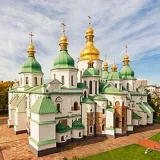
862—1240: from Askold's raid on Constantinople to the fall of Kyiv to Batu Khan; Oleh, Olha, Volodymyr the Great, Yaroslav the Wise, the Tale of Igor's Campaign, the Mongol invasion.
1199—1349: the direct successor of Kyivan Rus' in Ukrainian lands; Roman the Great, King Danylo, Lviv, Yuri I "King of Rus'", the fall in 1349.
1340—1569: Ukrainian lands under Lithuania; Liubartas, the Battle of Blue Waters, Grunwald, the Olelkovych princes, Konstanty Ostrogski, the Union of Lublin.
USA vs USSR: 44 years of ideology, espionage and the nuclear arms race (1947–1991).
A global conflict of 1914–1918 that destroyed four empires and reshaped the world order.
The global conflict of 1939—1945: six years, ~70 million dead, the dawn of the nuclear age, the end of European colonial empires.
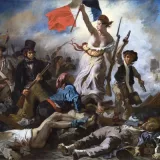
The event that destroyed the old regime in Europe: 1789—1799 — the Bastille, the Declaration of the Rights of Man, the king's execution, the guillotine, and the rise of Napoleon.
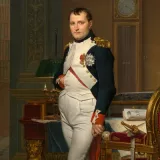
The fifteen years that redrew Europe: 1799—1815 — Marengo, Austerlitz, the Civil Code, Borodino, Leipzig, Waterloo, Saint Helena.
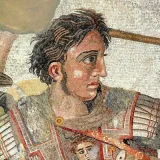
Thirteen years that changed the world: 336—323 BC — the Granicus, Issus, Gaugamela, Tyre, Alexandria, the Hydaspes, death at Babylon at age 32.
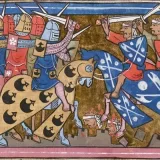
Two hundred years of religious war between West and East: 1095—1291 — Clermont, Antioch, Jerusalem, Hattin, Saladin and Richard, the sack of Constantinople, the fall of Acre.
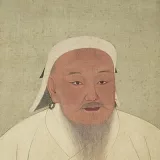
The largest contiguous empire in history: 1206—1260 — from Temüjin's unification of the steppe to the Kalka, Kyiv, Baghdad and Ain Jalut.
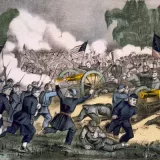
The war that ended slavery: 1861—1865 — Sumter, Antietam, the Emancipation Proclamation, Gettysburg, Appomattox, Lincoln's assassination.
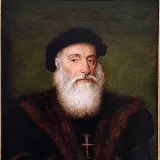
The era that made the world global: 1419—1543 — Sagres, the Cape of Good Hope, Columbus, Vasco da Gama, Magellan, the conquest of the Aztecs and Incas.
1917—1922: the February and October revolutions, Brest-Litovsk, the Red Terror, the Ukrainian People's Republic and Makhno, Kronstadt, the founding of the USSR.
1346—1353: the Black Death from the Mongol steppes through Caffa to Europe; 30—50% of the population dead, the end of serfdom, Tyler's revolt, the first quarantines.
Words 1 to 100. The absolute essentials: pronouns, basic verbs, numbers, and the glue words that hold every sentence together.
Words 101 to 200. Everyday actions and descriptions: "want," "think," "old," "new," "again": the words that bring sentences to life.
Words 201 to 300. The world around you: "house," "water," "city," "money": naming the things that matter in daily life.
Words 301 to 400. Connecting ideas: "because," "however," "during": plus more verbs for daily routines.
Words 401 to 500. Social vocabulary: feelings, relationships, and the words you need to talk about people and experiences.
Words 501 to 600. The wider world: nature, weather, health, and basic professional vocabulary.
Words 601 to 700. Abstract concepts: "idea," "reason," "situation": thinking and expressing opinions in English.
Words 701 to 782. The final stretch: less common but essential words that complete your A1 foundation.
Words 1 to 100. Stepping up: phrasal verbs, opinions, and everyday interactions beyond the basics.
Words 101 to 200. Travel, shopping, and making plans: vocabulary for an independent life in English.
Words 201 to 300. Describing experiences: past events, future plans, and how things make you feel.
Words 301 to 400. Work, education, and daily routines: the vocabulary of a structured life.
Words 401 to 500. Health, food, and lifestyle: taking care of yourself in English.
Words 501 to 600. Comparing, explaining, and persuading: building more sophisticated sentences.
Words 601 to 700. Culture, media, and technology: engaging with the modern world of English.
Words 701 to 803. The final A2 push: nuanced vocabulary that prepares you for the B1 leap.
Words 1 to 100. The intermediate leap begins: abstract thinking, opinions, and professional vocabulary.
Words 101 to 200. Debate and discussion: agreeing, disagreeing, and expressing complex opinions.
Words 201 to 300. Academic and formal English: reports, presentations, and structured arguments.
Words 301 to 400. Idioms, collocations, and the vocabulary that makes your English sound natural.
Words 401 to 500. Society, politics, and global issues: engaging with the world in English.
Words 501 to 600. Science, technology, and specialized vocabulary for the modern world.
Words 601 to 690. The final B1 words: completing your intermediate foundation with precision vocabulary.
Words 1 to 100. Advanced intermediate begins: sophisticated vocabulary for complex ideas and formal contexts.
Words 101 to 200. Academic English: critical thinking, analysis, and the language of research.
Words 201 to 300. Business and professional English: negotiations, strategy, and corporate communication.
Words 301 to 400. Literature, arts, and cultural commentary: English for the intellectually curious.
Words 401 to 500. Law, politics, and social systems: understanding how societies where English is spoken work.
Words 501 to 600. Science, medicine, and environment: the vocabulary of discussion grounded in evidence.
Words 601 to 700. Emotions, psychology, and human behavior: describing the inner world with precision.
Words 701 to 800. Advanced collocations and idiomatic expressions that native speakers use daily.
Words 801 to 900. Philosophy, ethics, and abstract reasoning: thinking deeply in English.
Words 901 to 1000. Media, journalism, and persuasion: understanding and creating compelling arguments.
Words 1001 to 1100. History, geography, and global awareness: the vocabulary of an educated worldview.
Words 1101 to 1200. Technology, innovation, and the digital world: staying current in English.
Words 1201 to 1298. The final B2 stretch: rare but powerful words that complete your advanced intermediate mastery.
Words 1 to 100. Society, law, and academic language for precise arguments.
Words 101 to 200. Systems, economics, technology, and modern human behaviour.
Words 201 to 300. Arguments, rules, compromise, and logical relationships.
Words 301 to 400. Crises, decisions, consequences, and critical analysis.
Words 401 to 500. Processes, power, efficiency, and the scale of change.
Words 501 to 600. Human experience, conflict, heritage, and humanitarian issues.
Words 601 to 700. Law, institutions, interaction, and social justice.
Words 701 to 800. Governance, methodology, culture, and systemic change.
Words 801 to 900. Public life, ideas, precedent, prejudice, and privilege.
Words 901 to 1000. Politics, economics, reform, and persuasive rhetoric.
Words 1001 to 1100. Evaluation, simulation, stability, and strategic decisions.
Words 1101 to 1200. Academic conclusions, complex processes, and transparency.
Words 1201 to 1277. Hidden causes, feasibility, and confident conclusions.
Words 1 to 100. The pinnacle begins: literary, academic, and rare words that define true mastery.
Words 101 to 200. Rare precision: words that express exactly the shade of meaning you need.
Words 201 to 300. Literary and archaic vocabulary: understanding English across centuries of writing.
Words 301 to 400. Academic and scientific terminology: the language of experts and researchers.
Words 401 to 500. Legal, diplomatic, and bureaucratic English: power expressed through vocabulary.
Words 501 to 600. Rhetoric, philosophy, and the art of persuasion at the highest level.
Words 601 to 700. Cultural literacy: allusions, references, and words every educated speaker knows.
Words 701 to 800. Synonyms of common words that add elegance and variety to your expression.
Words 801 to 900. Technical and specialized vocabulary for many fields across multiple fields.
Words 901 to 1000. Emotional and psychological vocabulary: the full spectrum of human experience.
Words 1001 to 1100. Rare but beautiful: words that exist because sometimes ordinary words are not enough.
Words 1101 to 1169. The final 69 words: your C2 crown. Completing this means true English mastery.
Learn the order of months, their names and fun facts about each month of the year.
Capitals of all 50 US states — test how many you know.
Ukrainian alphabet: 33 letters, their order and unique features.
195 countries across 6 continents — every capital from Europe to Oceania.
~3,400 short questions about curious facts from science, history, geography, art, sports, and culture.
Підбірка найвживаніших фразових дієслів англійської мови з українським перекладом. Зручна для повторення на рівнях B1–B2 — більшість таких дієслів неможливо зрозуміти буквально, тому їх варто запам'ятовувати як цілісні вирази.
Виписав найвідоміші когнітивні упередження. Половину знав з подкастів про психологію, інші довелось довго розбирати в книжках. Корисно мати під рукою, бо в моменті це все важко помітити в собі.
Зібрав фразеологізми, які чую від батьків чи бачу в книжках, але часом не до кінця розумію. Тут їх трохи більше пів сотні, з короткими поясненнями. Думаю, корисно, бо мова без них якась плоска.
This site uses cookies for personalization and ensuring the proper functioning of the site. By continuing to use this site, you confirm your agreement to use cookie files. If necessary, familiarize yourself with the terms of their processing.