UX/UI Designer Dictionary306 questionsProfessional English for interface design and user-experience research.
Programmer Dictionary192 questionsProfessional English for daily development, teamwork, and architecture.
Project Manager Dictionary192 questionsProfessional English for planning, coordination, risk management, and stakeholder communication.
Software Tester Dictionary192 questionsProfessional English for manual testing, automation, quality, performance, and security.
At the Hotel87 questionsEnglish for booking, check-in, hotel services, room problems, and reviewing the bill.
Car Rental88 questionsEnglish for booking, collecting, inspecting, insuring, and returning a rental car.
Public Transport64 questionsEnglish for routes, tickets, transfers, disruptions, and accessible journeys.
At the Pharmacy80 questionsEnglish for symptoms, prescriptions, dosage, and the safe use of medicines.
At University80 questionsEnglish for campus life, course structure, student services, and university procedures.
Job Interview80 questionsEnglish for presenting experience, answering questions, and discussing an offer.
Remote Work80 questionsEnglish for video meetings, asynchronous collaboration, time zones, and security.
Negotiations80 questionsEnglish for proposals, concessions, mutual benefit, and documenting agreements.
At the Gym84 questionsEnglish for equipment, exercises, trainer conversations, technique, and etiquette.
At the Doctor80 questionsEnglish for booking a visit, describing symptoms, examinations, tests, and treatment.
Small Talk80 questionsEnglish for introductions, safe topics, keeping a light conversation going, and ending it politely.
Phone Calls80 questionsEnglish for everyday and work calls, connection problems, and safe communication by phone.
Messaging Apps80 questionsEnglish for messages, group chats, privacy settings, and safely sharing files.
Conflicts and Misunderstandings80 questionsEnglish for clarifying intentions, respectful disagreement, setting boundaries, and constructive conflict resolution.
A1 Frequency Dictionary. Part 1100 questionsWords 1 to 100. The absolute essentials: pronouns, basic verbs, numbers, and the glue words that hold every sentence together.
A1 Frequency Dictionary. Part 2100 questionsWords 101 to 200. Everyday actions and descriptions: "want," "think," "old," "new," "again": the words that bring sentences to life.
A1 Frequency Dictionary. Part 3100 questionsWords 201 to 300. The world around you: "house," "water," "city," "money": naming the things that matter in daily life.
A1 Frequency Dictionary. Part 4100 questionsWords 301 to 400. Connecting ideas: "because," "however," "during": plus more verbs for daily routines.
A1 Frequency Dictionary. Part 5100 questionsWords 401 to 500. Social vocabulary: feelings, relationships, and the words you need to talk about people and experiences.
A1 Frequency Dictionary. Part 6100 questionsWords 501 to 600. The wider world: nature, weather, health, and basic professional vocabulary.
A1 Frequency Dictionary. Part 7100 questionsWords 601 to 700. Abstract concepts: "idea," "reason," "situation": thinking and expressing opinions in English.
A1 Frequency Dictionary. Part 882 questionsWords 701 to 782. The final stretch: less common but essential words that complete your A1 foundation.
Basic English Sentence Structure44 questionsIn English the word order is the grammar: move the words and the meaning moves too.
Verb Be: Am, Is, Are41 questionsUkrainian says "She a doctor" with no verb at all. English cannot manage without one.
Subject and Object Pronouns40 questionsThe form of a pronoun depends not on the person but on its place in the sentence.
Possessive Adjectives, Pronouns, and ’s42 questionsUkrainian has one word for "mine". English has two, and the choice depends on what follows.
Singular and Plural Nouns40 questionsThere is one rule: add an s. All the difficulty sits in a dozen words you use every day.
Articles a, an and the40 questionsAn article is what English says instead of "some" and "that same one".
Demonstratives this, that, these and those40 questionsFour words that point: what is near, what is far, one thing or several.
There is and there are41 questionsThe way to say something exists when the listener does not know it yet. There here does not mean "over there".
Present Simple42 questionsA tense that is not about "now": it is about habits, timetables and what is true in general.
Present Continuous41 questionsAn action you can see right now, and a temporary situation around this week.
Questions and Word Order42 questionsIn an English question something always moves to the front. The whole trick is knowing what.
Countable and Uncountable Nouns42 questionsUkrainian counts advice happily. English does not count it at all.
Some, Any, Much and Many41 questionsSome or any is decided by the sentence; much or many is decided by the noun.
Basic Comparisons43 questionsTo compare, a tail is added to the adjective. Two steps: more than one, and more than all.
A2 Frequency Dictionary. Part 1100 questionsWords 1 to 100. Stepping up: phrasal verbs, opinions, and everyday interactions beyond the basics.
A2 Frequency Dictionary. Part 2100 questionsWords 101 to 200. Travel, shopping, and making plans: vocabulary for an independent life in English.
A2 Frequency Dictionary. Part 3100 questionsWords 201 to 300. Describing experiences: past events, future plans, and how things make you feel.
A2 Frequency Dictionary. Part 4100 questionsWords 301 to 400. Work, education, and daily routines: the vocabulary of a structured life.
A2 Frequency Dictionary. Part 5100 questionsWords 401 to 500. Health, food, and lifestyle: taking care of yourself in English.
A2 Frequency Dictionary. Part 6100 questionsWords 501 to 600. Comparing, explaining, and persuading: building more sophisticated sentences.
A2 Frequency Dictionary. Part 7100 questionsWords 601 to 700. Culture, media, and technology: engaging with the modern world of English.
A2 Frequency Dictionary. Part 8103 questionsWords 701 to 803. The final A2 push: nuanced vocabulary that prepares you for the B1 leap.
Present Simple and Present Continuous35 questionsThe difference between what you do in general and what you are doing right now.
Past Simple: the Verb Be35 questionsThe shortest way to say where you were and how it went: was, were, and why did stays out.
Past Simple: Regular Verbs48 questionsThe tense you tell your stories in: the ed ending, its three sounds, and did in questions.
Irregular Verbs144 questionsThree forms of the most common verbs, and a simple rule for which one you need.
Past Continuous30 questionsThe tense that says not what happened, but what was already going on at that moment.
When and While in Past Events34 questionsTwo words that are one word in Ukrainian, but pull different tenses in English.
Future with Be Going To34 questionsThe future you can already see in the present: either you have decided, or the signs are there.
Future with Will31 questionsA decision made this second, a promise, an offer, and a prediction you think rather than see.
Present Continuous for Arrangements39 questionsA present tense about tomorrow: the event is already in the calendar, with a time and people.
Few, Little, a Few, and a Little30 questionsA single letter a turns "we still have time" into "we are out of time".
Too and Enough30 questionsToo goes before the word, enough goes after it, and that is where half the sentences break.
Comparatives and As ... As32 questionsThree ways to compare two things: more, less, and exactly the same.
Present Perfect38 questionsA past action with a present result: not about when it happened, but about what you have now.
Present Perfect and Past Simple36 questionsThe Perfect opens the subject, the Past Simple tells the details. The border runs along the word "when".
Must, Have To, and Should30 questionsIn the positive, must and have to are near twins; in the negative they mean opposite things.
Permission and Possibility: May, Might, Could30 questionsThree words for a guess and for a request: "it may rain" and "may I use your phone".
Infinitive and the -ing Form29 questionsYou do not choose the form of the second verb: the word in front of it does.
Zero and First Conditionals36 questionsThere is no future after if: will lives only in the second half of the sentence.
Defining Clauses with Who, Which, and That33 questionsThree words that turn "some man" into "the one who fixed our roof".
B1 Frequency Dictionary. Part 1100 questionsWords 1 to 100. The intermediate leap begins: abstract thinking, opinions, and professional vocabulary.
B1 Frequency Dictionary. Part 2100 questionsWords 101 to 200. Debate and discussion: agreeing, disagreeing, and expressing complex opinions.
B1 Frequency Dictionary. Part 3100 questionsWords 201 to 300. Academic and formal English: reports, presentations, and structured arguments.
B1 Frequency Dictionary. Part 4100 questionsWords 301 to 400. Idioms, collocations, and the vocabulary that makes your English sound natural.
B1 Frequency Dictionary. Part 5100 questionsWords 401 to 500. Society, politics, and global issues: engaging with the world in English.
B1 Frequency Dictionary. Part 6100 questionsWords 501 to 600. Science, technology, and specialized vocabulary for the modern world.
B1 Frequency Dictionary. Part 790 questionsWords 601 to 690. The final B1 words: completing your intermediate foundation with precision vocabulary.
Choosing Tenses in Connected Text48 questionsIn connected text the tense is chosen for the event, not for the sentence.
Narrative Tenses144 questionsA story rests on three tenses: one paints the scene, one moves it, one explains the cause.
Present Perfect Continuous48 questionsA form that talks not about the result but about how long it took.
Used to and Would for Past Habits48 questionsTwo structures for past habits. One handles states, the other does not.
Be Used to and Get Used to48 questionsOne little to, and here it is a preposition. That is why an ing follows, not a base verb.
Ways of Expressing the Future48 questionsEnglish has no future tense. It has four forms, and each says something different about you.
Modals of Deduction48 questionsThe same words as for permission, but here they measure how sure you are.
Passive Voice in Common Tenses144 questionsA way to put what happened first, when the doer is unknown or beside the point.
Reported Speech: Statements48 questionsWhen you report somebody's words, the tense inside them takes a step back.
Reported Speech: Questions and Requests48 questionsA reported question stops being a question: do disappears and the word order goes back to normal.
Non-defining Relative Clauses48 questionsTwo commas change not the intonation but the meaning: they decide how many brothers you have.
Gerunds and Infinitives after Verbs144 questionsThe first verb dictates the form of the second. And in a few cases that form changes the whole meaning.
Indirect Questions48 questionsPoliteness costs one move here: inside the question the word order becomes that of a statement.
Question Tags48 questionsA little tail at the end of a sentence that turns a statement into a request for agreement.
Articles and Determiners144 questionsAn article answers one question: does the listener know which one you mean.
Conjunctions and Logical Links48 questionsBecause and therefore mean the same, yet they live in different places and want different punctuation.
B2 Frequency Dictionary. Part 1100 questionsWords 1 to 100. Advanced intermediate begins: sophisticated vocabulary for complex ideas and formal contexts.
B2 Frequency Dictionary. Part 2100 questionsWords 101 to 200. Academic English: critical thinking, analysis, and the language of research.
B2 Frequency Dictionary. Part 3100 questionsWords 201 to 300. Business and professional English: negotiations, strategy, and corporate communication.
B2 Frequency Dictionary. Part 4100 questionsWords 301 to 400. Literature, arts, and cultural commentary: English for the intellectually curious.
B2 Frequency Dictionary. Part 5100 questionsWords 401 to 500. Law, politics, and social systems: understanding how societies where English is spoken work.
B2 Frequency Dictionary. Part 6100 questionsWords 501 to 600. Science, medicine, and environment: the vocabulary of discussion grounded in evidence.
B2 Frequency Dictionary. Part 7100 questionsWords 601 to 700. Emotions, psychology, and human behavior: describing the inner world with precision.
B2 Frequency Dictionary. Part 8100 questionsWords 701 to 800. Advanced collocations and idiomatic expressions that native speakers use daily.
B2 Frequency Dictionary. Part 9100 questionsWords 801 to 900. Philosophy, ethics, and abstract reasoning: thinking deeply in English.
B2 Frequency Dictionary. Part 10100 questionsWords 901 to 1000. Media, journalism, and persuasion: understanding and creating compelling arguments.
B2 Frequency Dictionary. Part 11100 questionsWords 1001 to 1100. History, geography, and global awareness: the vocabulary of an educated worldview.
B2 Frequency Dictionary. Part 12100 questionsWords 1101 to 1200. Technology, innovation, and the digital world: staying current in English.
B2 Frequency Dictionary. Part 1398 questionsWords 1201 to 1298. The final B2 stretch: rare but powerful words that complete your advanced intermediate mastery.
The Perfect Tense System144 questionsThe perfect is not a tense but a backward look. Only the point you look from changes.
Future Continuous and Future Perfect48 questionsTwo forms that look at the future from inside it: one through the window of a process, one from past the finish.
Third Conditional48 questionsThe structure people use for regret, relief and going over what went wrong.
Mixed Conditionals144 questionsA condition from one time, a consequence from another. That is how people actually talk about life.
Wish, If Only, and Unreal Past144 questionsAfter wish a past form marks not past time but dissatisfaction with how things are.
Modal Verbs about the Past144 questionsA modal plus have plus the third form. One structure for judging everything in the past.
Extended Uses of the Passive Voice144 questionsThe passive can do everything the active can. It all comes down to the chain of be before the third form.
Have and Get Something Done48 questionsA way to say the work was not done by you. And the same form says something was done to you.
Reporting Verbs and Their Patterns144 questionsOne precise verb reports both the words and the intention. But each of them demands a frame of its own.
Passive Reporting Structures48 questionsThe structure of news and academic writing: to say that people think so, and name nobody.
Complex Relative Clauses144 questionsTwo commas, one preposition and the word whose. That is what precision in a complex sentence is built from.
Reduced Relative Constructions144 questionsDrop the who and the form of be, and the sentence loses two words and nothing else.
Participle Clauses144 questionsAn opening phrase always belongs to the subject of the main clause. Forget that and nonsense follows.
Gerunds and Infinitives with Meaning Changes144 questionsThe to form looks forward, the ing form looks back. Every meaning pair grows from that.
Noun Clauses48 questionsA whole clause can be slotted inside another sentence and handled exactly like a noun.
Advanced Embedded Questions48 questionsDo you know takes a yes or a no. Do you think no longer allows either.
Inversion after Negative Adverbials144 questionsFront a negative and the sentence starts behaving like a question while staying a statement.
Emphasis Constructions48 questionsThe fact stays the same and the emphasis moves. To do that, English cuts the sentence in two.
Ellipsis and Substitution144 questionsEnglish hates repetition. Instead of the second verb, only the auxiliary remains.
C1 Frequency Dictionary. Part 1100 questionsWords 1 to 100. Society, law, and academic language for precise arguments.
C1 Frequency Dictionary. Part 2100 questionsWords 101 to 200. Systems, economics, technology, and modern human behaviour.
C1 Frequency Dictionary. Part 3100 questionsWords 201 to 300. Arguments, rules, compromise, and logical relationships.
C1 Frequency Dictionary. Part 4100 questionsWords 301 to 400. Crises, decisions, consequences, and critical analysis.
C1 Frequency Dictionary. Part 5100 questionsWords 401 to 500. Processes, power, efficiency, and the scale of change.
C1 Frequency Dictionary. Part 6100 questionsWords 501 to 600. Human experience, conflict, heritage, and humanitarian issues.
C1 Frequency Dictionary. Part 7100 questionsWords 601 to 700. Law, institutions, interaction, and social justice.
C1 Frequency Dictionary. Part 8100 questionsWords 701 to 800. Governance, methodology, culture, and systemic change.
C1 Frequency Dictionary. Part 9100 questionsWords 801 to 900. Public life, ideas, precedent, prejudice, and privilege.
C1 Frequency Dictionary. Part 10100 questionsWords 901 to 1000. Politics, economics, reform, and persuasive rhetoric.
C1 Frequency Dictionary. Part 11100 questionsWords 1001 to 1100. Evaluation, simulation, stability, and strategic decisions.
C1 Frequency Dictionary. Part 12100 questionsWords 1101 to 1200. Academic conclusions, complex processes, and transparency.
C1 Frequency Dictionary. Part 1377 questionsWords 1201 to 1277. Hidden causes, feasibility, and confident conclusions.
Nuances of Tense and Aspect144 questionsAt this level a tense is chosen not by a rule but by where you are looking at the event from.
Complex Modality and Degrees of Certainty144 questionsModality is not a list of words but a scale. And on it, where your certainty came from matters.
Alternative Conditional Constructions144 questionsA condition can be expressed without if, and then it starts meaning something slightly different.
Inversion and Fronting144 questionsEnglish word order carries not grammar but attention: what is known comes first, what matters comes last.
Cleft and Pseudo-cleft Sentences144 questionsA sentence is cut in two so that one half becomes given and the other lands under the spotlight.
Reduced and Verbless Subordinate Constructions144 questionsYou can compress a clause as long as the reader can restore who is doing what.
Nominalisation144 questionsAn action can be turned into a thing. The text grows denser, and the doer disappears.
Complex Noun Phrases144 questionsA long phrase hangs on its head noun. Find it, and everything else falls into place.
Agreement in Complex Constructions144 questionsThe verb agrees with the head of the subject, not with whatever stands closest to it.
Pronoun Reference and Textual Linking144 questionsA pronoun costs one word; an ambiguous pronoun costs the reader a whole paragraph.
Hedging and Distancing144 questionsHedging is not timidity but precision: you claim exactly as much as you can support.
Grammar of Formal and Academic Style144 questionsFormality is not a stock of long words but precise links and complete structures.
Grammar of Textual Cohesion144 questionsA text holds together not through connectors but because each sentence ends where the next begins.
C2 Frequency Dictionary. Part 1100 questionsWords 1 to 100. The pinnacle begins: literary, academic, and rare words that define true mastery.
C2 Frequency Dictionary. Part 2100 questionsWords 101 to 200. Rare precision: words that express exactly the shade of meaning you need.
C2 Frequency Dictionary. Part 3100 questionsWords 201 to 300. Literary and archaic vocabulary: understanding English across centuries of writing.
C2 Frequency Dictionary. Part 4100 questionsWords 301 to 400. Academic and scientific terminology: the language of experts and researchers.
C2 Frequency Dictionary. Part 5100 questionsWords 401 to 500. Legal, diplomatic, and bureaucratic English: power expressed through vocabulary.
C2 Frequency Dictionary. Part 6100 questionsWords 501 to 600. Rhetoric, philosophy, and the art of persuasion at the highest level.
C2 Frequency Dictionary. Part 7100 questionsWords 601 to 700. Cultural literacy: allusions, references, and words every educated speaker knows.
C2 Frequency Dictionary. Part 8100 questionsWords 701 to 800. Synonyms of common words that add elegance and variety to your expression.
C2 Frequency Dictionary. Part 9100 questionsWords 801 to 900. Technical and specialized vocabulary for many fields across multiple fields.
C2 Frequency Dictionary. Part 10100 questionsWords 901 to 1000. Emotional and psychological vocabulary: the full spectrum of human experience.
C2 Frequency Dictionary. Part 11100 questionsWords 1001 to 1100. Rare but beautiful: words that exist because sometimes ordinary words are not enough.
C2 Frequency Dictionary. Part 1269 questionsWords 1101 to 1169. The final 69 words: your C2 crown. Completing this means true English mastery.
Fine Distinctions in Tense and Aspect144 questionsAspect here is no longer about time. It is about how you present an event and what you want from the reader.
Modality, Evidentiality, and Authorial Stance144 questionsEvery claim carries three things: how sure you are, how you know, and who is answerable for it.
Marked Word Order and Information Focus144 questionsWord order answers a question the reader never asked aloud. Change the order and you change the question.
Natural Ellipsis and Substitution144 questionsAn omission is justified exactly as long as what is missing restores in one way only.
Grammatical Ambiguity144 questionsAn ambiguous sentence breaks no rule at all. That is exactly why its author never notices it.
Editing Complex Sentences144 questionsEditing a complex sentence means clarifying its structure without inventing relations it never had.
Transforming Formal Text into Conversation144 questionsA conversational version does not simplify the content. It moves it into grammar built for a listener.
Transforming Conversation into Academic Prose144 questionsAn academic version does not add weight. It adds precision where speech relied on context.
Concision, Precision, and Naturalness144 questionsThe shortest version is rarely the best. The best is the one that costs the reader least effort.
Months of the Year33 questionsLearn the order of months, their names and fun facts about each month of the year.
World Country Capitals194 questions195 countries across 6 continents — every capital from Europe to Oceania.
Flags of the World194 questions194 countries across 6 continents. Recognise each flag and learn what it means.
Trivia2328 questions~3,400 short questions about curious facts from science, history, geography, art, sports, and culture.
The National Liberation War of Bohdan Khmelnytsky272 questionsThe Cossack Revolution of 1648–1657, led by Hetman Bohdan Khmelnytsky
The Zaporozhian Sich272 questions1552—1775: Vyshnevetsky's Khortytsia Sich, the Cossack uprisings, Sahaidachny at Khotyn, Sirko, Mazepa and Poltava, Kalnyshevsky and the Sich's destruction by Catherine II.
The UPA and the Second World War272 questions1929—1956: the OUN and Bandera, the Act of 30 June 1941, the formation of the UPA, Volhynia, Shukhevych, Hurby, Operation Vistula, Shukhevych's death in 1950, Kuk's arrest in 1954.
Kyivan Rus'272 questions862—1240: from Askold's raid on Constantinople to the fall of Kyiv to Batu Khan; Oleh, Olha, Volodymyr the Great, Yaroslav the Wise, the Tale of Igor's Campaign, the Mongol invasion.
The Principality of Galicia-Volhynia272 questions1199—1349: the direct successor of Kyivan Rus' in Ukrainian lands; Roman the Great, King Danylo, Lviv, Yuri I "King of Rus'", the fall in 1349.
The Grand Duchy of Lithuania272 questions1340—1569: Ukrainian lands under Lithuania; Liubartas, the Battle of Blue Waters, Grunwald, the Olelkovych princes, Konstanty Ostrogski, the Union of Lublin.
Cold War272 questionsUSA vs USSR: 44 years of ideology, espionage and the nuclear arms race (1947–1991).
World War I272 questionsA global conflict of 1914–1918 that destroyed four empires and reshaped the world order.
World War II272 questionsThe global conflict of 1939—1945: six years, ~70 million dead, the dawn of the nuclear age, the end of European colonial empires.
The French Revolution272 questionsThe event that destroyed the old regime in Europe: 1789—1799 — the Bastille, the Declaration of the Rights of Man, the king's execution, the guillotine, and the rise of Napoleon.
The Napoleonic Wars272 questionsThe fifteen years that redrew Europe: 1799—1815 — Marengo, Austerlitz, the Civil Code, Borodino, Leipzig, Waterloo, Saint Helena.
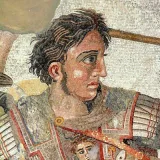
Alexander the Great272 questionsThirteen years that changed the world: 336—323 BC — the Granicus, Issus, Gaugamela, Tyre, Alexandria, the Hydaspes, death at Babylon at age 32.
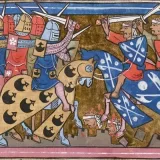
The Crusades272 questionsTwo hundred years of religious war between West and East: 1095—1291 — Clermont, Antioch, Jerusalem, Hattin, Saladin and Richard, the sack of Constantinople, the fall of Acre.
Genghis Khan and the Mongol Empire272 questionsThe largest contiguous empire in history: 1206—1260 — from Temüjin's unification of the steppe to the Kalka, Kyiv, Baghdad and Ain Jalut.
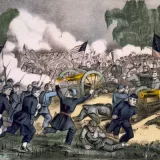
The American Civil War272 questionsThe war that ended slavery: 1861—1865 — Sumter, Antietam, the Emancipation Proclamation, Gettysburg, Appomattox, Lincoln's assassination.
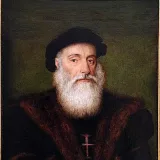
The Age of Discovery272 questionsThe era that made the world global: 1419—1543 — Sagres, the Cape of Good Hope, Columbus, Vasco da Gama, Magellan, the conquest of the Aztecs and Incas.
The Russian Revolution and Civil War272 questions1917—1922: the February and October revolutions, Brest-Litovsk, the Red Terror, the Ukrainian People's Republic and Makhno, Kronstadt, the founding of the USSR.
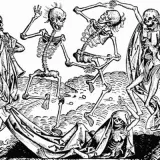
The Black Death272 questions1346—1353: the Black Death from the Mongol steppes through Caffa to Europe; 30—50% of the population dead, the end of serfdom, Tyler's revolt, the first quarantines.
Англійські фразові дієслова (B1–B2)47 questionsПідбірка найвживаніших фразових дієслів англійської мови з українським перекладом. Зручна для повторення на рівнях B1–B2 — більшість таких дієслів неможливо зрозуміти буквально, тому їх варто запам'ятовувати як цілісні вирази.
Когнітивні упередження38 questionsВиписав найвідоміші когнітивні упередження. Половину знав з подкастів про психологію, інші довелось довго розбирати в книжках. Корисно мати під рукою, бо в моменті це все важко помітити в собі.
Українські фразеологізми62 questionsЗібрав фразеологізми, які чую від батьків чи бачу в книжках, але часом не до кінця розумію. Тут їх трохи більше пів сотні, з короткими поясненнями. Думаю, корисно, бо мова без них якась плоска.